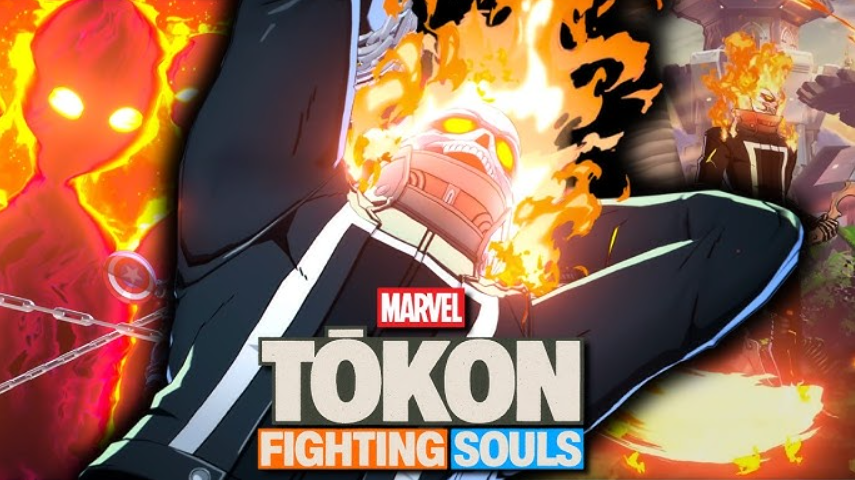
Developers from Arc System Works and Sony Interactive Entertainment have released a new guide for Robbie Reyes, aka Ghost Rider, in the fighting game Marvel Tōkon: Fighting Souls. The video breaks down the character’s combat kit to the bone: from long-range chain and scythe attacks to hellish fire that keeps enemies on their toes. The game releases on August 6th on PS5 and PC. But what’s even more exciting is that the developers have finally revealed the mechanics that will make Ghost Rider either the ultimate weapon or a helpless target. We’re talking about the Vengeance Gauge.
Table of Contents
Ghost Rider Moveset Overview in Marvel Tokon Fighting Souls
The creators did not just list the moves—they demonstrated how the character’s combat logic works. Ghost Rider is not about high-speed dashes or endless combos. It’s about controlling space and managing risk. His main tool is Hellcharger, a defense-breaking ability that allows him to literally ram through his opponent’s defense. Hellfire acts as a constant pressure weapon: while Racer is attacking, the enemy is forced to defend, losing ground.
By the way, the open beta is already on the horizon—from July 24th to 26th. You can try Racer and 14 other fighters on PS5, Steam, and the Epic Games Store. The beta will include the first three chapters of the story mode—now is the perfect time to add a new favorite to your roster.
How the Vengeance Gauge Works for Ghost Rider
It’s not just a bar that slowly fills. The Vengeance Gauge is a toggle between powering up and breaking down. The gauge increases when Robbie uses fire attacks. The higher it rises, the more powerful the strikes, the more hit points and damage each move deals. But there’s a catch: pushing the gauge to the red zone means overdoing it… right up until the point of overheating.
This is where things get interesting.
Features of the Gauge Zones ZONE1 ZONE2 and RED ZONE
The developers have broken the gauge down into three distinct stages:
In the red zone, the Racer exceeds their normal capabilities—but if they overdo it, the gauge fills to the limit, and the character simply freezes. Unable to move, unprotected—the perfect target. That’s why managing the gauge is not an option, but a mandatory requirement for playing.
Ways to Reset the Vengeance Gauge to Avoid Overheating
This is where moves that not only attack but also release accumulated tension come into play.
-
Revelator Chain is a short-to-medium-range attack, usable on both the ground and in the air. It deals multiple hits and simultaneously reduces the Vengeance Gauge. It’s the perfect tool for tempering your ardor without losing the initiative.
-
Hell Throttle is a dash that engulfs the Racer in flames, damaging nearby enemies. It reduces the gauge significantly more than Revelator Chain. It also helps dodge projectiles.
-
Penance Driver is a grab and a car strike. If the move connects, the gauge is reduced. If the enemy dodges, the gauge increases. High risk, high reward.
-
Judgement Cradle is a full-screen ranged attack. The Racer spins flaming chains, dealing multiple hits. Available in the air, it’s enhanced by the Vengeance Gauge.
Finally, the finishing touches are Infernal Engine, a super skill that involves a car strike, and Eternal Damnation, an ultimate that ensnares the enemy in chains and runs them over with a car. Both moves significantly reduce the Vengeance Gauge—the price of their destructive power.
Marvel Tokon Fighting Souls Release Date and Open Beta Details
Release Date: August 6, 2026. Platforms: PS5 and PC (Steam, Epic Games Store). Open Beta: July 24–27. The test includes 15 fighters, online matches, avatar lobbies, and the first three chapters of the story mode.
Ghost Rider requires tactical thinking and constant monitoring of the gauge. But those who master its mechanics will have a character capable of dominating at any range. Now all that’s left is to wait for the beta and test everything in action.