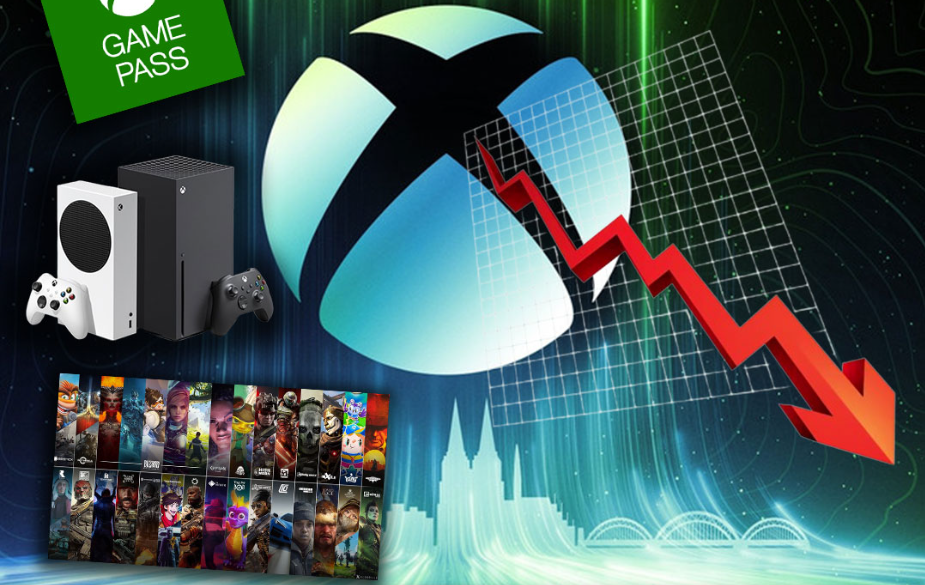
On July 30, 2026, during a quarterly conference call with investors, Microsoft CEO Satya Nadella stated that Xbox would return to growth by the end of fiscal year 2027. This statement came amid a 7% decline in the division’s annual revenue to $21.79 billion, and an admission by Xbox head Asha Sharma that the business had not grown with its audience.
Table of Contents
Microsoft Financial Report Console Revenue and Sales Decline
Microsoft’s gaming division is experiencing far from the best of times. For the third consecutive quarter, it has recorded declines: revenue from content and services fell 10% quarter-on-quarter, while console sales fell 13%. For the entire fiscal year 2026 (July 2025 – June 2026), Xbox revenue fell by $1.7 billion. This is due to a sharp decline in hardware sales: annual console revenue plummeted 29%. By comparison, Xbox’s revenue in the previous three quarters of FY26 ranged from $5.34 billion to $5.95 billion, while the most recent quarter barely reached $4.98 billion.
Meanwhile, Microsoft’s total revenue for the same period grew by 18%, reaching $331.8 billion, and net profit exceeded last year’s by 31%, at $133.7 billion. Cloud services drove this growth: Microsoft Cloud generated $59.3 billion in revenue for the quarter, a 27% increase year-over-year. The contrast between the thriving corporation and the other problems facing the gaming division is stark.
CFO Amy Hood warned that Xbox would continue to lose revenue in the next quarter. But Nadella confidently stated:
“We are making the necessary decisions across our content portfolio, platform, and operations to reposition our business for long-term growth. We have the best intellectual property in the industry and talented studios around the world. We believe we can combine these strengths and return the business to growth in fiscal year 2027.”
Xbox Paradox Player Growth Despite Layoffs and Revenue Declines
A paradox that has investors agitated: in fiscal year 2026, more than 200 million new players joined the Xbox ecosystem, yet the business hasn’t grown.
Xbox CEO Asha Sharma acknowledged this in a statement: “In FY26, more than 200 million new players joined Xbox and our games, but our business hasn’t grown at a comparable pace. We must close this gap by investing in what players truly want. It will take time, but we expect to return to growth by the end of fiscal year 2027.”
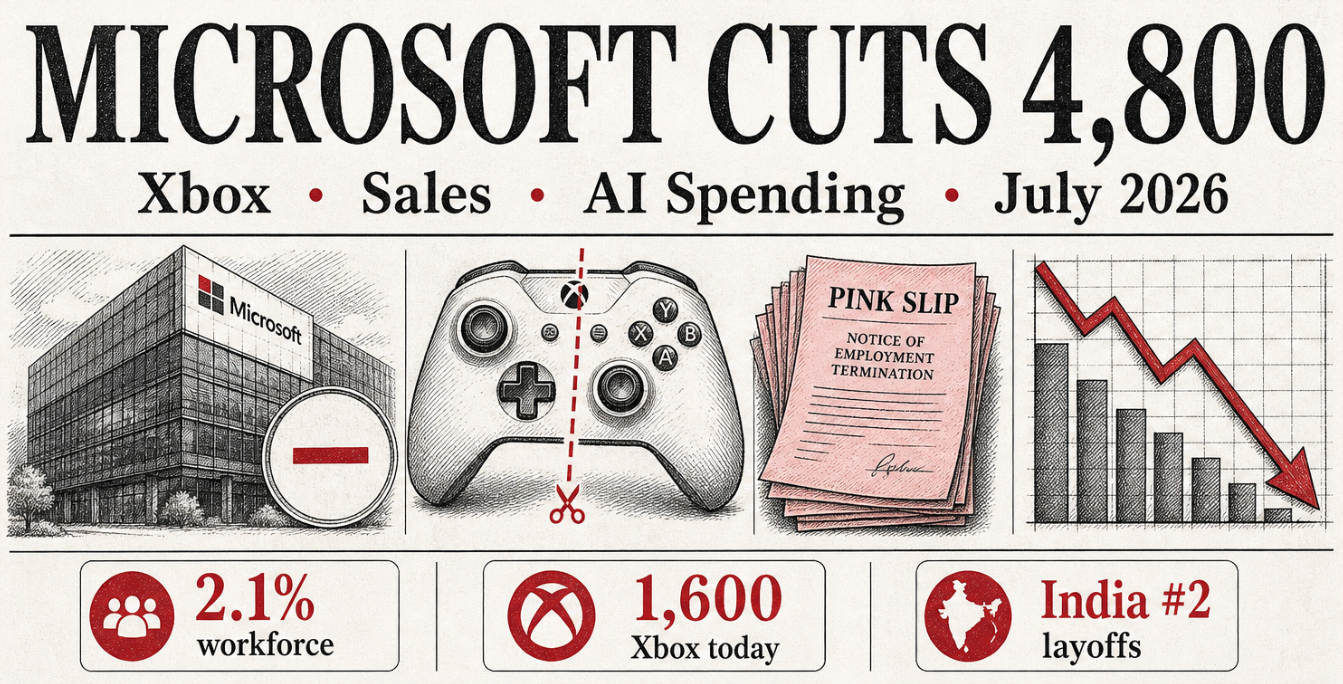
Earlier, on July 6, Sharma announced “the most significant restructuring in Xbox history“: 1,600 employees lost their jobs that day, and another 1,600 will leave the company by the end of FY27. A total of 3,200 employees were laid off, representing approximately 20% of the gaming division’s workforce. As part of its restructuring, Xbox parted ways with four studios: Double Fine and Compulsion Games returned to independent management, while Ninja Theory and Undead Labs were placed under new management.
Xbox Quarterly and Annual Financial Highlights
In the previous fiscal year, 2025, Xbox revenue was a record $23.45 billion, so comparing it to a higher baseline complicates valuation.
Future of Xbox Restructuring Key Games and New Hardware
Nadella emphasized that Xbox’s main asset is its franchises. Among them are The Elder Scrolls, Fallout, Call of Duty, Forza, and Gears of War—legacy of the Bethesda and Activision Blizzard acquisitions.
Project Helix, the next-generation Xbox, and new major releases, including GTA VI, are expected to play a key role in the return to growth. Meanwhile, starting August 1, Microsoft is raising console prices to $150—another step in an attempt to improve margins. Console prices are rising amid the overall rise in component costs and demand from AI centers.
“Companies don’t choose whether their industry changes—they choose whether to change with it,” said Microsoft Vice President Amy Coleman. Xbox has made its choice. The question is whether one year is enough to reverse the trend.