Final Fantasy VII Revelation will close Square Enix’s remake trilogy on PlayStation 5 on April 8, 2027. Its Tokyo Game Show demo did more than revisit the Whirlwind Maze. It placed Vincent and Cid under direct player control, introduced four role-based FITS uniforms, and ended with a new version of Jenova Death. The demonstration therefore offered a useful first answer to a difficult question: how can the final game expand a battle system that already supports a large party without making every encounter harder to read?
Table of Contents
The Whirlwind Maze is built as a threatening journey
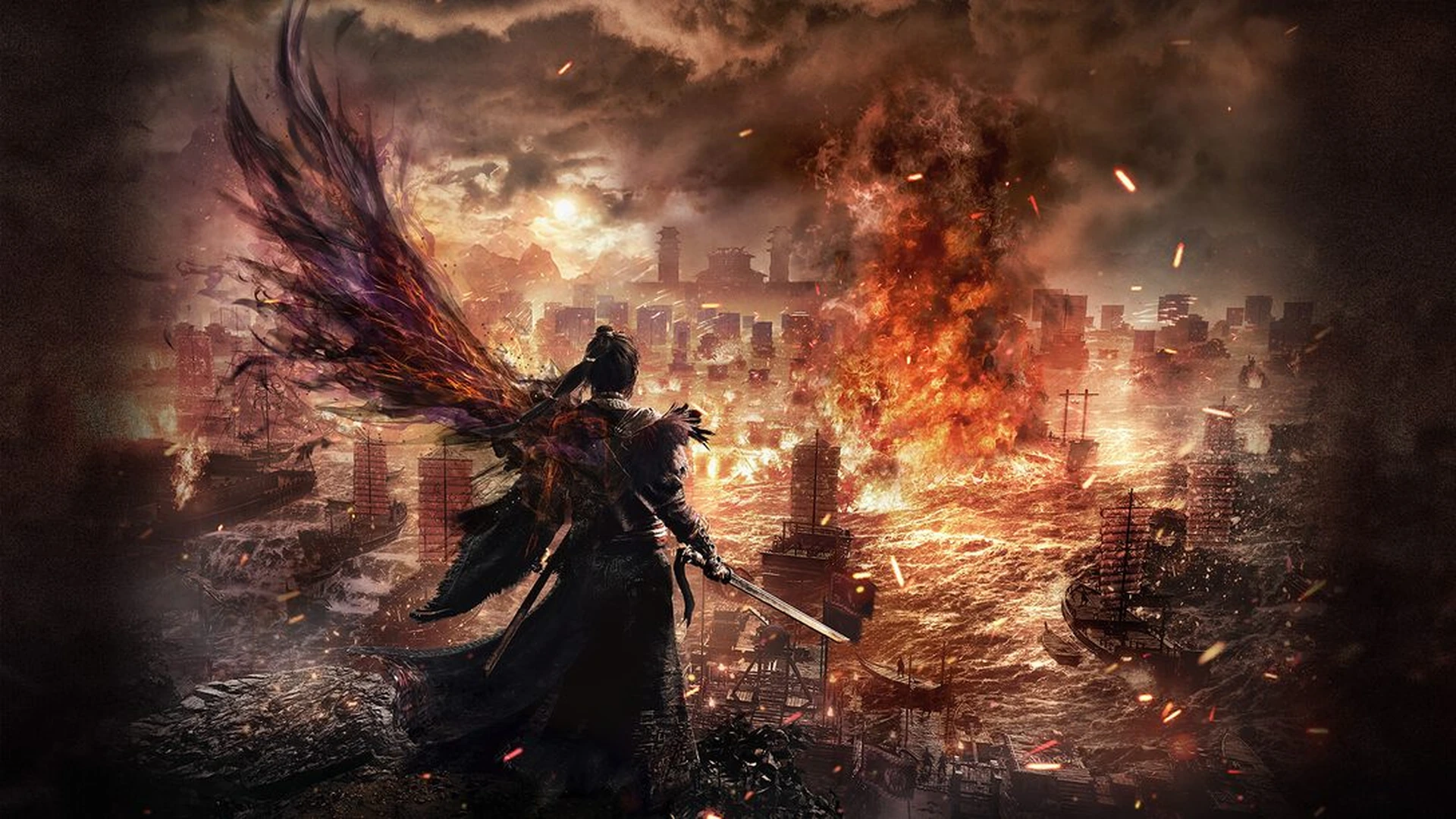
The playable section begins after Cid joins Cloud’s group. Eight characters move toward the Whirlwind Maze while black-robed figures stand along the route and Sephiroth remains somewhere ahead. The environment is not a flat corridor between battles. Characters edge along cliffs, cross broken ground and vault over obstacles while violent wind and bands of light make the area feel unstable. That combination gives the location a purpose before a boss appears: the party is advancing into a place where the landscape itself appears hostile.
Square Enix has shown only one controlled slice of the story, so the demo cannot reveal how long the maze lasts or how freely the whole region can be explored. What it does establish is a change of rhythm. Movement asks for more attention than a simple run to the next arena, while the full party gives the journey a sense of accumulated history. The final chapter is using familiar people and places, but it is not presenting them as a museum display of scenes from the original game.
Vincent uses gunfire at range and transforms for close combat
Vincent’s basic gunfire is designed to build momentum. Consecutive shots improve his unique command through three stages, moving from Blood Moon to Execration and then Retribution. The player does not have to aim each round manually, which keeps the input readable while the hit count becomes the important resource. A distant enemy can be pressured without forcing Vincent into danger, but the sequence can be interrupted if the player changes targets carelessly or loses the opportunity to continue attacking.
Holding the guard button transforms Vincent into a beast that moves on all fours and attacks with claws. This form is not governed by a short timer, yet remaining transformed raises the Chaos level and reduces his maximum health. That cost prevents the beast form from replacing his firearm. The interesting decision is when to accept the health pressure for faster staggering and close-range damage, then return to human form before the reduced health ceiling becomes more dangerous than the enemy.
| New element | Player decision |
|---|---|
| Vincent’s beast form | Lose some maximum health to deal more close-range damage |
| Cid’s Target Spear | Mark one target before using stronger abilities |
| FITS uniforms | Choose a combat role and manage its cost |
| Jenova Death tentacles | Destroy the tentacles before using major attacks on the boss |
Cid marks targets before using stronger aerial attacks
Cid uses a spear and spends much of his attack sequence above the ground. A blue visual cue appears during his standard chain. Pressing the attack button at that moment branches into moves such as Dragon Spin, Hyper Dive or Ground Pound. The timing requirement gives his long reach a distinct identity. He is not simply another character who exchanges an ability point for damage; the player must notice the cue and decide which continuation fits the number and position of enemies.
His Target Spear command can place several spears into an opponent. Other abilities become stronger against the marked target, so the setup has value only if Cid can stay involved long enough to use it. Groups may invite a broad spinning attack, while a durable target rewards careful spear placement before Skydive or Burst Spiral. The system connects his ranged preparation to his airborne finish and makes his role understandable even during a busy fight.
FITS uniforms give each character a chosen combat role
The new Function-Integrated Tactical Suitwear system offers Warrior, Knight, Black Mage and Summoner uniforms. Each one unlocks a different set of capabilities. In the demo, Cloud wore the Summoner FITS and could call Ifrit, Shiva or Titan for a limited period. Selecting FITS again while a summon was active triggered Pledge Roar, a powerful attack that consumed health. It is a clear trade: a dramatic burst is available, but the player must judge whether the party can afford its cost.
The four uniforms could help a player adjust the party without replacing a favorite character, although the full limits of changing FITS have not been detailed. That distinction matters. Revelation already has a large cast, and another layer of roles could become cluttered if every option is available without consequence. The demo instead suggests that a uniform creates a deliberate combat identity and a small collection of decisions that can be read in real time.
Jenova Death combines area attacks, protected targets and limited safe space
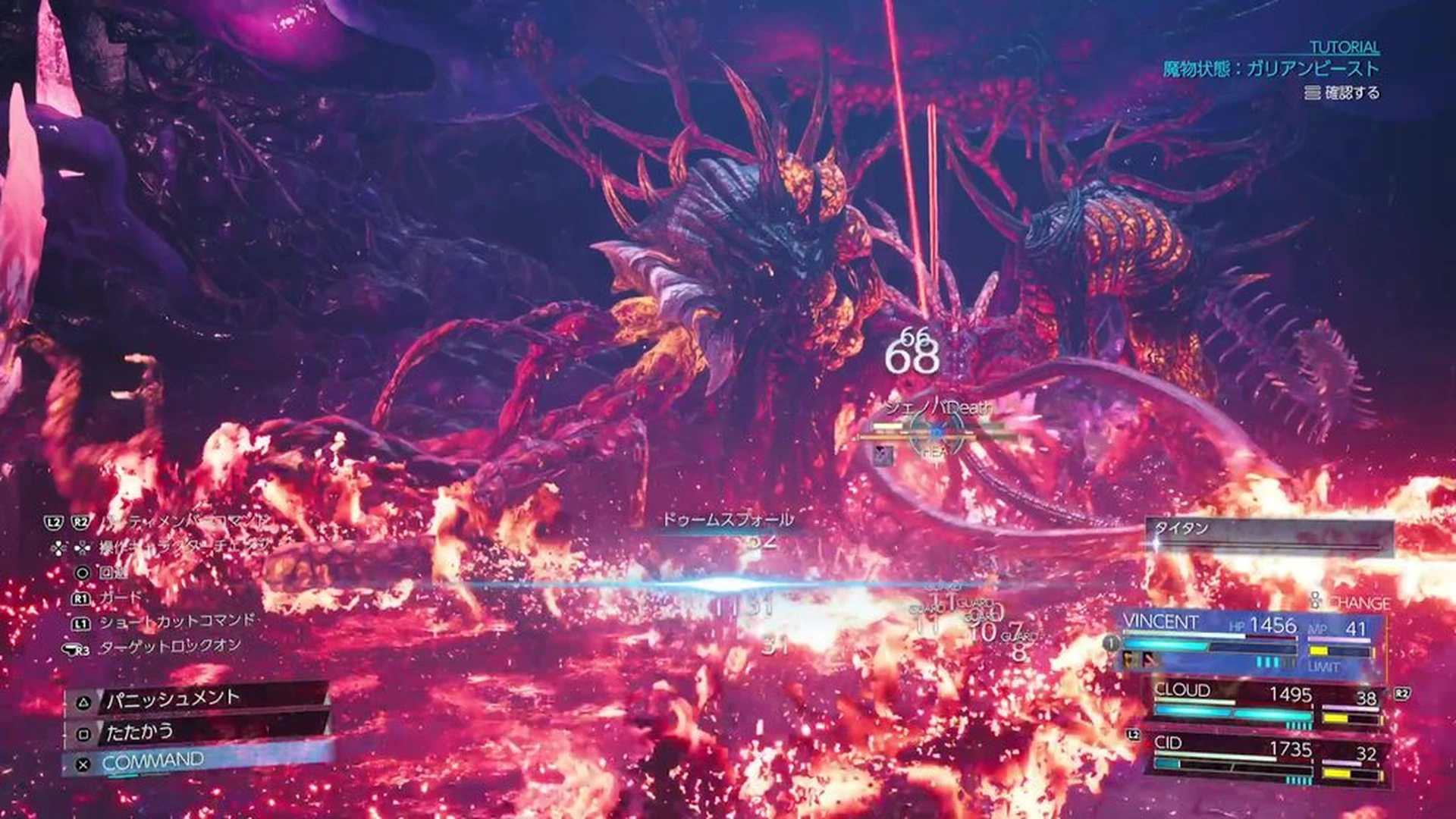
The demo’s final battle begins with wide fire attacks and develops when tentacles emerge to protect Jenova Death’s body. Those appendages must be destroyed before direct damage can continue. Later they project fire across the arena, reducing safe space and making slow decisions costly. The encounter asks the player to defend against area attacks, identify the current valid targets and reserve Synergy Abilities or Limit Breaks for a moment when they can actually reach the boss.
This is still a preview build, not evidence of the final difficulty balance. Its value is the way the pieces meet. Vincent manages the risk of transformation, Cid prepares marked targets, FITS creates a temporary role, and the boss changes which target matters. Revelation looks most promising when these systems produce one understandable decision after another. The April release will show whether that clarity survives across the complete final chapter.