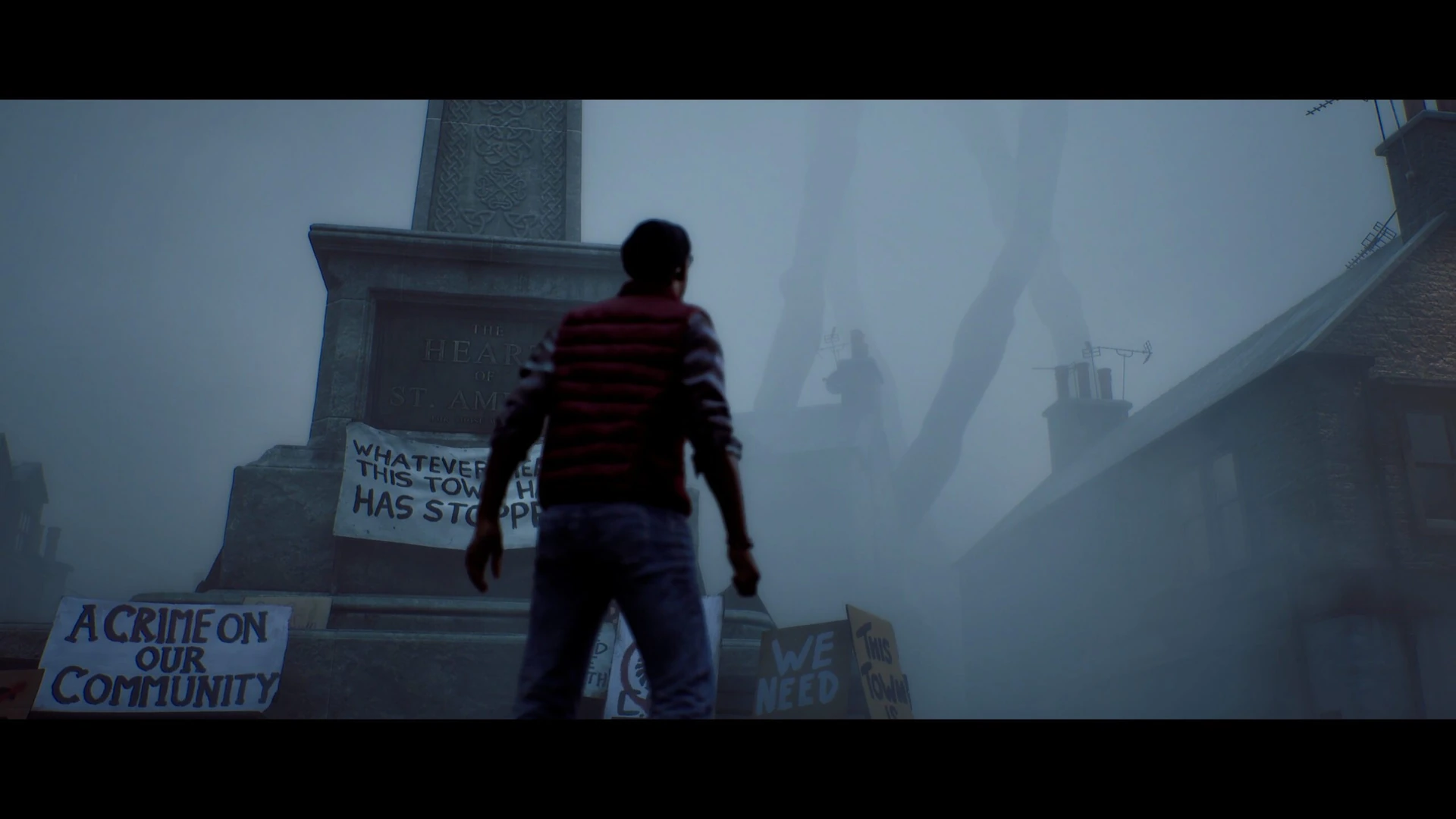
Silent Hill: Townfall launches for PlayStation 5 on September 24 as the series’ first full-length game presented entirely in first person. Screen Burn Interactive has built its horror around limited sight, detailed sound and a portable CRTV device that helps protagonist Simon find monsters and clues. The developers’ latest explanation is valuable because it describes how those features support one consistent objective. St. Amelia should feel like a recently wounded community, not an empty stage that exists only to deliver sudden shocks.
Table of Contents
First person makes uncertainty harder to avoid
A first-person camera removes the safety of seeing around Simon’s body. Doors, narrow passages and the edge of the screen become genuine blind spots. Townfall uses that restriction to increase the value of sound. A noise behind the player can indicate distance and direction before anything enters view, while the decision to turn toward it means abandoning whatever was visible a moment earlier. The camera is therefore tied to information, not merely chosen for a closer presentation.
The developers describe their horror as tension and increasing uncertainty rather than a constant sequence of jump scares. That distinction depends on pacing. A quiet corridor must remain believable long enough for a small change to matter. If every sound immediately produced an attack, players would learn the pattern and stop imagining other possibilities. Townfall’s systems are intended to react to the player’s pace and release pressure at selected moments.
The CRTV replaces the radio with a tool
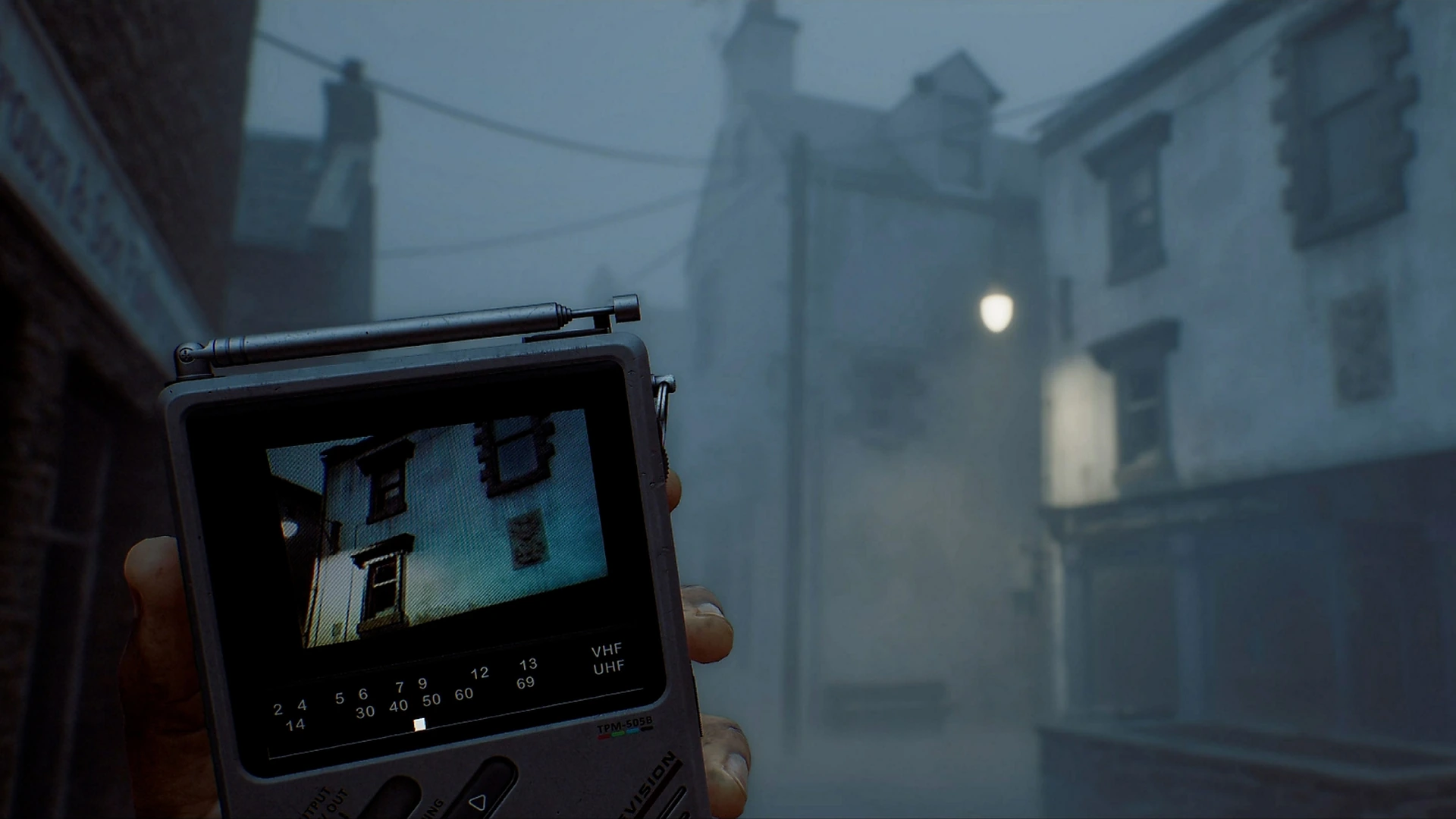
Simon reaches St. Amelia after drifting through cold water, guided by the need to put things right. He carries a CRTV in one hand. It can detect roaming monsters, support the search for puzzle clues and reveal information during exploration. The device echoes the warning function of Silent Hill’s radio while asking for more direct participation. A player must tune, inspect and interpret rather than simply hear static become louder.
Because the CRTV occupies attention, using it can create vulnerability. Looking for a signal may reveal a clue but also narrows awareness of the room. Motion controls can fine-tune the device, while standard controls remain available through customization. This keeps the feature tactile without making one input style mandatory. The important design question is whether each signal provides enough information to reward careful use without turning the device into a complete map of every threat.
St. Amelia is damaged, not ancient
The island town is designed to look recently lived in. Its buildings and objects reflect a community that has suffered a fresh trauma rather than decades of abandonment. That choice lets ordinary details carry narrative weight. A workplace, home or public space can show how people lived before the crisis and what they stood to lose. The horror becomes connected to a recognizable social environment instead of taking place in a collection of unrelated ruins.
Townfall also examines relationships between individuals, companies and society. Its story will be assembled through puzzles and scattered fragments rather than delivered only in long cinematics. That approach can make discovery feel personal, but it demands clarity. A good puzzle should deepen the player’s understanding when solved; it should not hide essential meaning behind an arbitrary combination that has no connection to the people who used the space.
Light and audio make the same location unstable
Ray-traced lighting allows fog, a handheld flashlight and alarm lamps to affect surfaces consistently. The shift from blue-grey streets to the red Otherworld can therefore change more than the color palette. Pipes, damaged walls and warning lights alter how a familiar route is read. A place that was understandable under soft outside light can become crowded and difficult to judge when red light breaks its shapes apart.
Custom three-dimensional audio is equally important because the player’s view is narrow. Environmental noise, creature movement and Pilotpriest’s score have separate jobs. Together they can suggest a space beyond the frame. On supported equipment, a heavy footstep should feel located rather than spread evenly through both channels. That precision helps the player make a decision while preserving uncertainty about what caused the sound.
Controller feedback must serve the scene
DualSense haptics give weapons, triggers and nearby impacts distinct physical responses. Adaptive triggers can make firearms feel different, and a heavy enemy step can travel through the controller before the creature appears. These effects work only when they remain readable. If every surface and action produces maximum vibration, the useful warning disappears inside constant noise. Townfall’s restrained style gives tactile feedback room to communicate.
The developers want players to forget the hardware while still using its features. That is the right standard for this type of horror. The CRTV, audio, lighting and controller should agree about the same unseen threat instead of competing for attention.
Townfall arrives soon enough that those claims will be tested in the finished game, but the design explanation presents a coherent reason for each PlayStation 5 feature rather than a checklist added after the story was built.