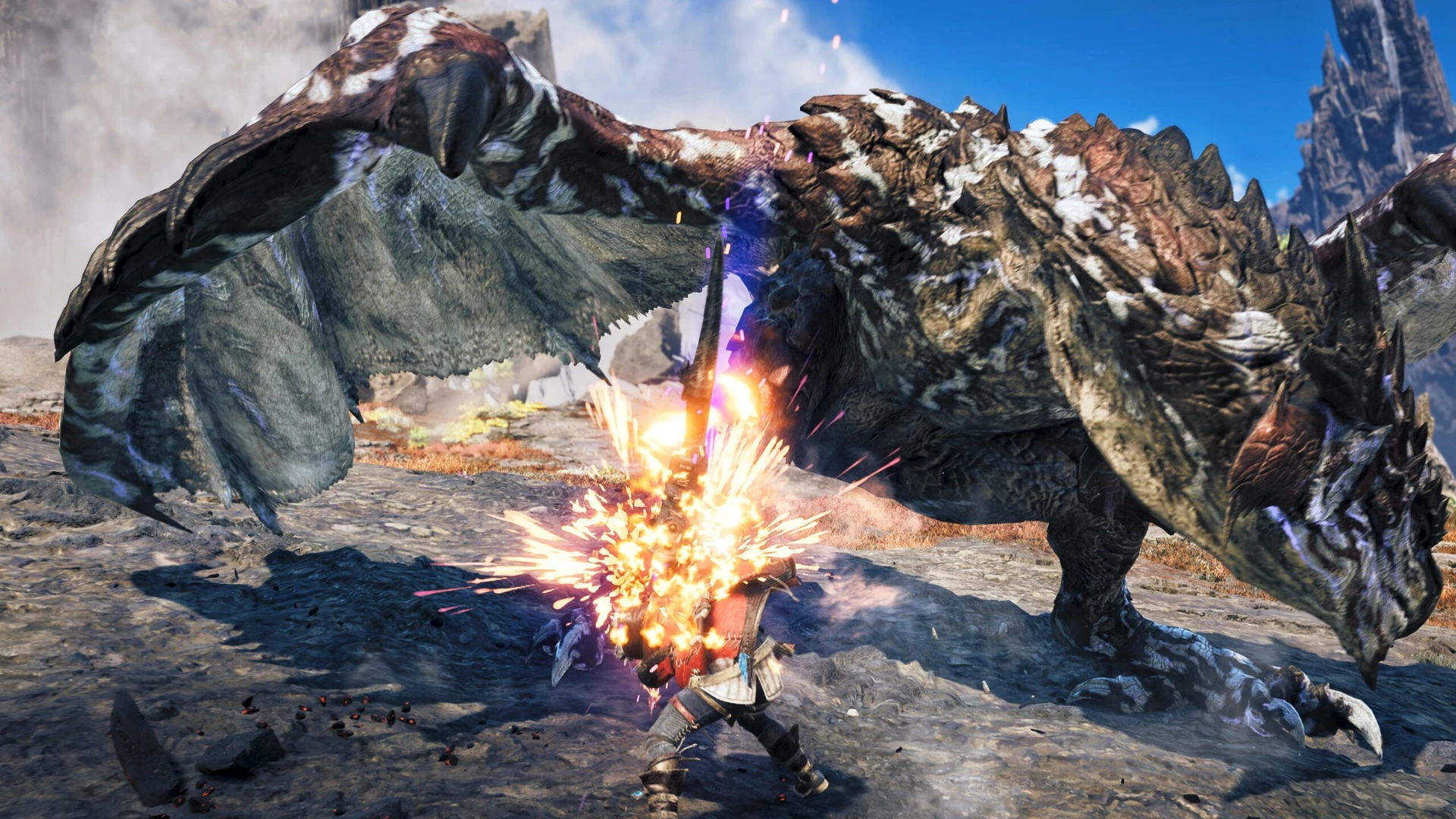
Monster Hunter Wilds: Ascendance is a large 2027 expansion that adds Master Rank, a later chapter of the story, new regions and unfamiliar monsters. A Tokyo Game Show demo joined those promises to a practical combat system called Boost Action. The most revealing hunt placed a pack of Araketa in the floating Skybound Eyrie, where movement, wound management and the behavior of smaller creatures all affected the same encounter. It looked less like a separate collection of additions and more like an attempt to keep a hunt moving without removing its danger.
Table of Contents
Boost Action becomes stronger through active and accurate play
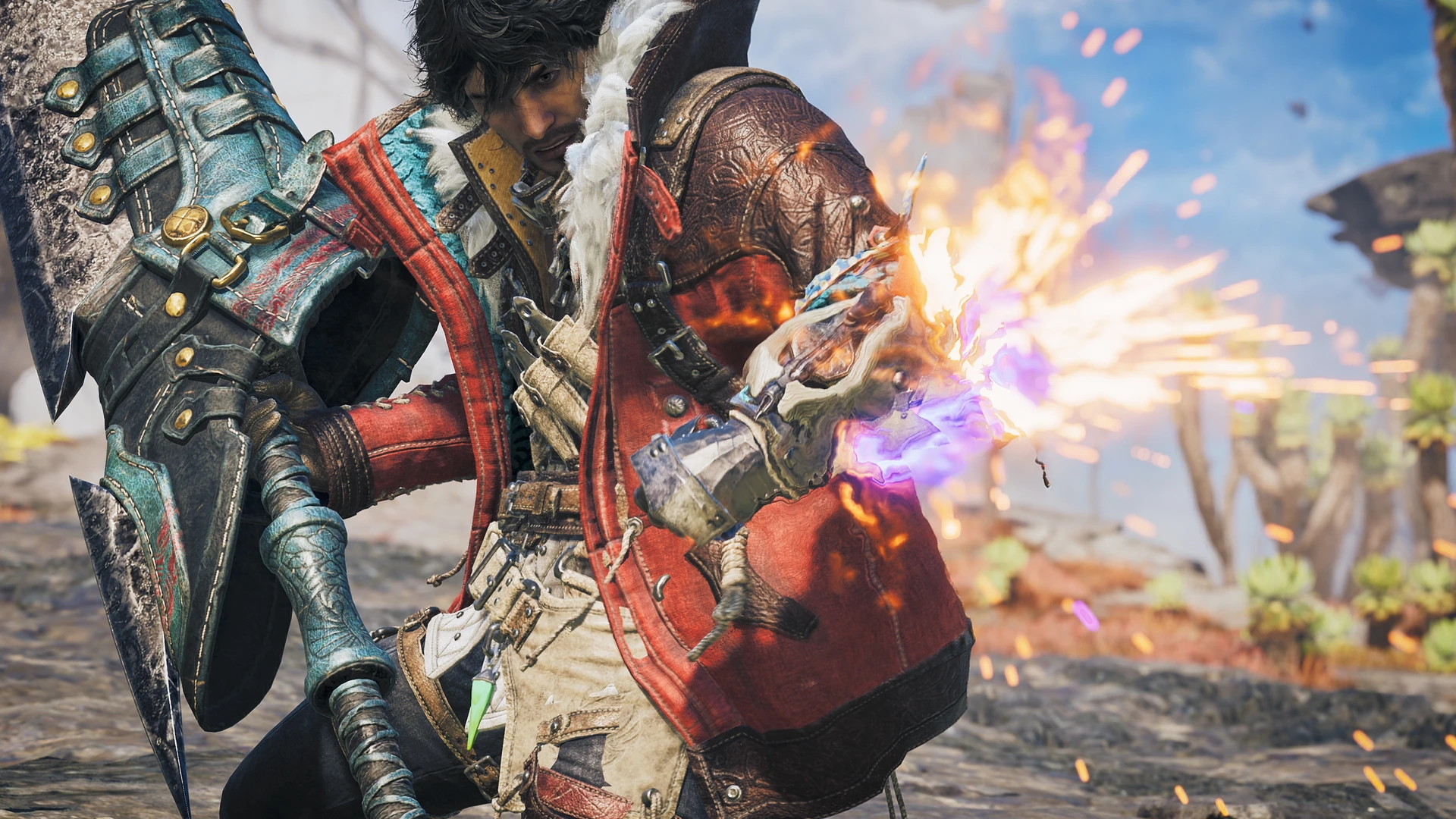
The Boost Bracer temporarily strengthens actions that already belong to each weapon. Its gauge fills with time and successful strikes, so the player gains access by remaining active rather than waiting outside the fight. Activation can be inserted into a combination or used when a heavy move would normally leave the hunter exposed. With Sword and Shield, the opening slash closes distance quickly and can carry the hunter around a monster’s side, turning one input into both pressure and repositioning.
A limited state becomes more interesting when the player can extend it through skill. Destroying a wound with Focus Strike while Boost is active restores part of the draining gauge. The hunter therefore has a reason to leave a prepared wound intact until the correct moment. Breaking it too early loses that extension; waiting too long risks losing the opening. The mechanic connects earlier wound placement to a later attack sequence instead of behaving like an isolated damage bonus.
Skybound Eyrie makes travel part of the encounter
The new region is formed from elevated land and old ruins above the clouds. A Seikret can catch rising air and glide between separated areas, which gives vertical movement a practical role. The landscape is attractive, but the demo does not treat it only as a view. A hunter needs to keep pace with flying targets and understand where the next safe landing lies. The route toward a monster can become part of the chase rather than an empty interval before combat resumes.
Small Gundoraja creatures add another environmental choice. Their hard bodies can be lifted and thrown at a target. Hitting the fast Araketa is difficult, but a successful throw can stagger it and create a brief opening. This is a good example of environmental design that supports the hunt without replacing weapon mastery. The creature is useful because the hunter notices it, positions correctly and lands the throw under pressure.
Araketa attack as a coordinated group
Araketa uses air inside its wings to push hunters back or propel a heavy charge. The swelling wing gives advance warning, but the real threat comes from coordination. A dominant monster can direct smaller members of the pack, sending them into a sequence of attacks before the entire group rises and dives together. A guard may prevent immediate defeat, yet it does not make poor positioning harmless when several bodies arrive from different angles.
The command also creates a point of counterplay. The leader exposes a vulnerable throat while calling to the pack, and a precise Focus Strike can interrupt the order. That design is stronger than simply increasing health or damage. It lets the player observe behavior and turn the monster’s strongest action into an opportunity. Dung Bombs can separate a pack in a normal hunt, but the demo deliberately removed that easy answer so the coordination system could be tested directly.
Teostra shows how old enemies can feel different
The final demo challenge returned to Teostra in the Oilwell Basin. Familiar flames, charges and explosions remained, but a new two-foreleg slam tracked the hunter as the Elder Dragon pivoted upright. A timed Switch Axe Offset Rising Slash could deflect the impact. The attack was frightening because it corrected its angle, yet it also provided a readable wind-up for a player prepared to answer with the right technique.
Oil on the ground made the fight harder by slowing escape from blast zones. This pairing demonstrates why location matters in Monster Hunter. The dragon’s move set cannot be evaluated separately from the surface under the hunter. Boost Action and Focus Mode created ways to fight back, but recovery items and time still ran out in the preview. Failure preserved the sense that new tools expand choices without guaranteeing success.
Ascendance must keep its new systems useful across many hunts
Capcom says the expansion will move the story several years forward and require the base game. Players will need Hunter Rank 40 and completion of the relevant story quest before entering Master Rank. Those requirements place Ascendance after a substantial journey, so its new systems must remain interesting for people who already understand fourteen weapon types, wounds and Focus Strikes.
The demo offers a credible direction. Boost is sustained through accurate play, Araketa can be interrupted by reading a command, the terrain changes pursuit, and Teostra combines a new attack with a hazardous arena. None of those ideas depends on a single cinematic surprise. Their value will come from repetition, variation and the decisions they create across many hunts when Ascendance reaches PlayStation 5 in 2027.