Marvel’s Wolverine is now available for PlayStation 5 following its September 15, 2026 release. Insomniac’s creative, art, animation and narrative leads have explained how they built a fighter who feels unlike Spider-Man. Logan stays close to opponents, takes visible damage and moves with a heavier physical presence. The team also links his anger to his concern for vulnerable mutants. These production choices, rather than a list of release bonuses, are the central subject of the developer interview.
Table of Contents
A different distance between hero and world
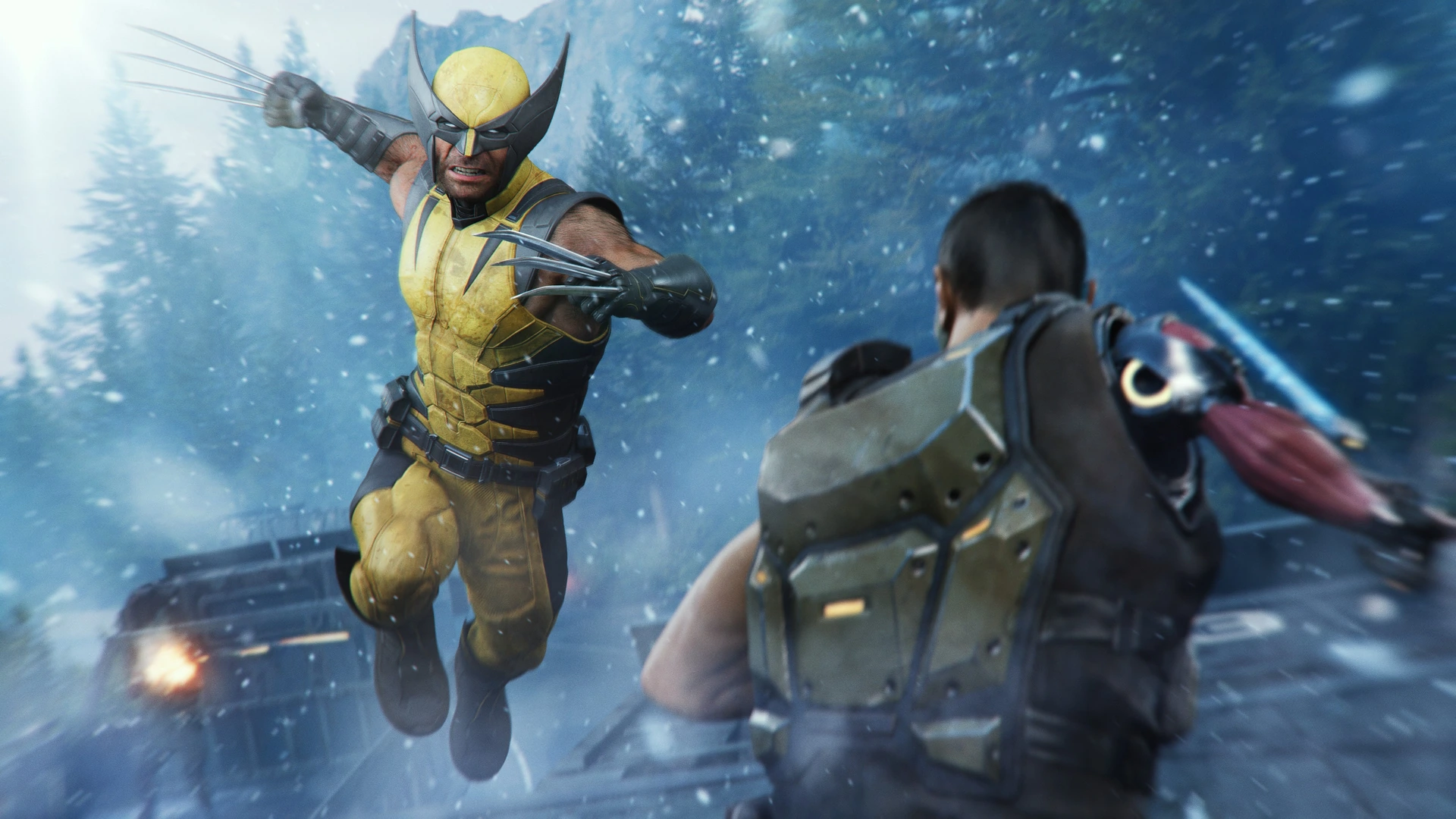
Creative director Marcus Smith says the team began by identifying what separates Logan from Peter Parker and Miles Morales. Spider-Man’s movement is closely tied to New York and wide urban traversal. Wolverine required a more grounded approach, with closer contact between the player, enemies and the environment. That does not automatically define every level as small or linear, but it tells us what the team wants a moment-to-moment encounter to feel like.
The distinction is important because a familiar superhero production could otherwise encourage misleading comparisons. A claw strike cannot be judged as though it were a web swing, and Logan’s presence cannot be measured only by how quickly he crosses a map. Insomniac is describing a game in which proximity carries weight. The player should see the material around a fight, the impact of a collision and the risk of remaining within reach of an opponent.
Combat animation starts with a trained brawler
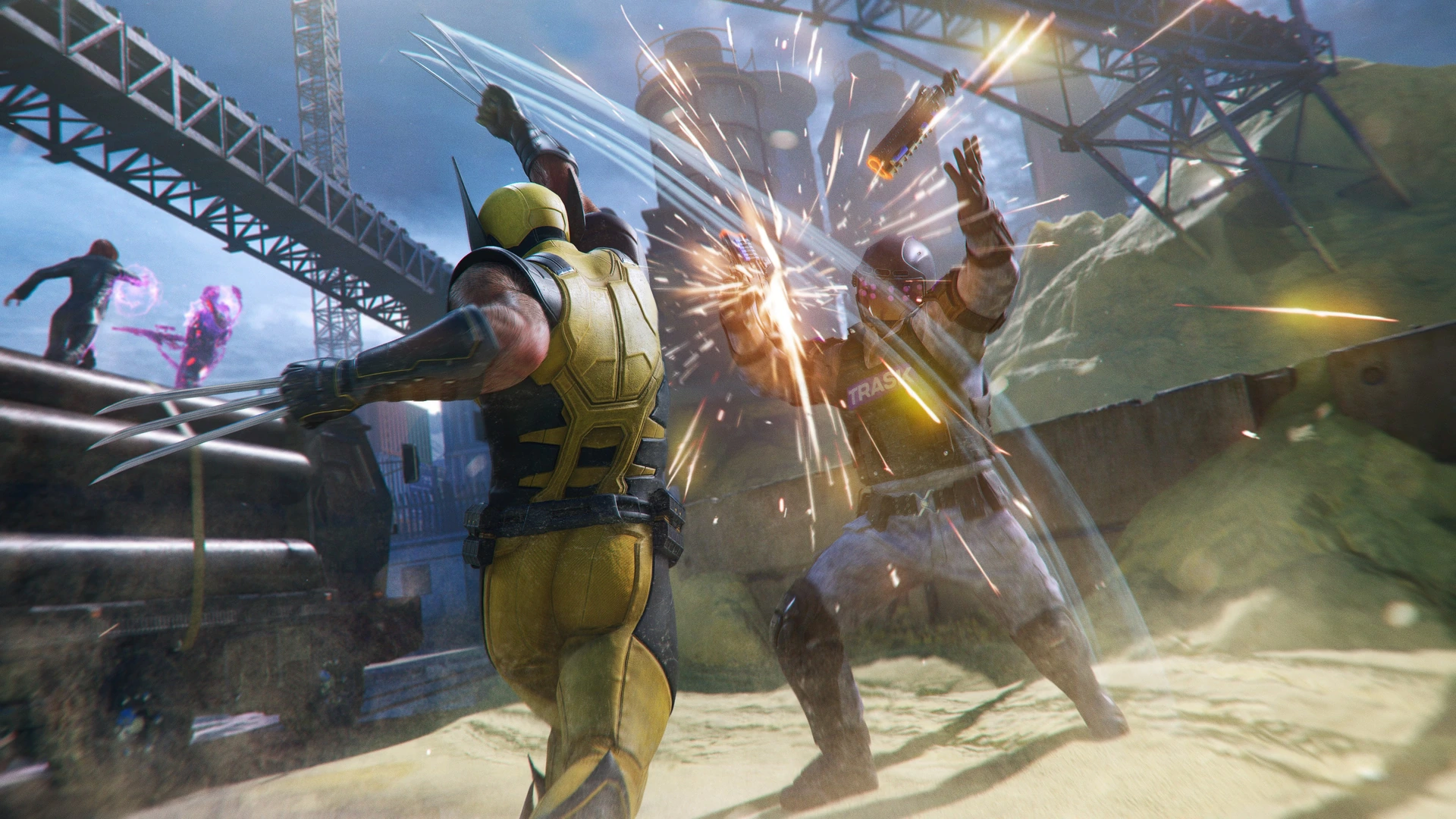
Senior animation director Brian Wyser describes Logan as a fighter trained in many martial arts, but the team did not want that background to produce a neat, distant style. Their animation goal was a brawler capable of hitting several enemies in close quarters. They also worked on an animal quality in his movement, including a four-limbed stride at the beginning of a run. That choice gives traversal and combat a common physical language.
Art director Grant Hollis connects the same idea to damage and destruction. The claws are essential, but the surrounding response is part of the effect: Logan breaks things, receives damage and leaves evidence of a rough fight. The interview does not disclose exact damage numbers or a new combat ability. It does explain the visual standard by which the team judged the action. A clean animation alone would not be enough if the world and opponents failed to react to it.
The costume belongs in a lived-in story
The Battle Reborn suit began with a recognizable two-color idea inspired by older Wolverine designs. Hollis says the team wanted to give that history its own tactical edge, because this game’s universe is more grounded and lived in. This is not simply a discussion of which classic color combination looks best on a promotional image. The costume has to sit naturally on the same character who travels, fights and suffers through the story.
That design question reaches beyond Logan’s silhouette. A suit can tell the player how the hero prepares for danger and how long he has carried the cost of that preparation. The interview does not ask readers to choose a preferred outfit, and it does not announce a new one. Its value is that the developers describe the reasoning behind the original look. The costume is meant to connect comic history to the game’s harsher physical tone without pretending Logan is a polished copy of another hero.
Rage has a cause in the narrative
Narrative director Walt Williams points to Liam McIntyre’s range as a key part of shaping Logan. The actor had to express ferocity while leaving room for kindness and restraint. Smith links the fiercest reactions to Logan’s work protecting mutants and to what happens when he sees them used as experiments. That gives the violence a stated emotional cause. The team is not presenting anger as a permanent personality switch with no relationship to the people around him.
Game director Mike Daly argues that playing through such a conflict can make it feel different from merely watching a cinematic scene. That is a design intention, not proof that every player will respond in one prescribed way. What can be said from the interview is simpler: Insomniac wants the force of the action to coexist with the story of a man trying to protect others. A serious article should preserve both sides rather than reduce the character to the intensity of a trailer clip.
Allies are more than names on a cast list
The developers discuss how other characters can challenge Logan’s choices. Jean Grey shares a concern for vulnerable people, but the interview notes that parallel obligations do not always lead to identical methods. Mystique is described as carrying a different outlook that may surprise players. These comments reveal relationships the writers are interested in, not an outcome for a scene the studio has yet to show in full.
The useful question for readers is how those relationships change the meaning of an encounter. A battle against an enemy can be visually striking, but a conversation afterward may explain why Logan fought, who disagreed with his approach and what it cost someone he meant to help. The interview gives the editorial frame for that question. It does not provide a complete plot summary, and preserving that limit makes the article more accurate than a story assembled from guesses about famous comic characters.
The experience the team wants to leave behind
Williams says he hopes players finish the game with empathy for Logan’s losses and sacrifices, not only excitement about the action. That aspiration brings the discussion back to the opening comparison with Spider-Man. The goal is not to reproduce Insomniac’s earlier formula with a darker hero. It is to build a different rhythm of movement, a rougher style of contact and a story where those choices support a recognizable human being.
Marvel’s Wolverine was released for PlayStation 5 on September 15. The interview was published immediately before release, but it remains a developer account of intent rather than an independent review of the finished game. Players can now judge how consistently the suit, animation, fights and relationships work together.
The developer comments provide a clear set of creative decisions to examine without claiming that every ambition has already been achieved.