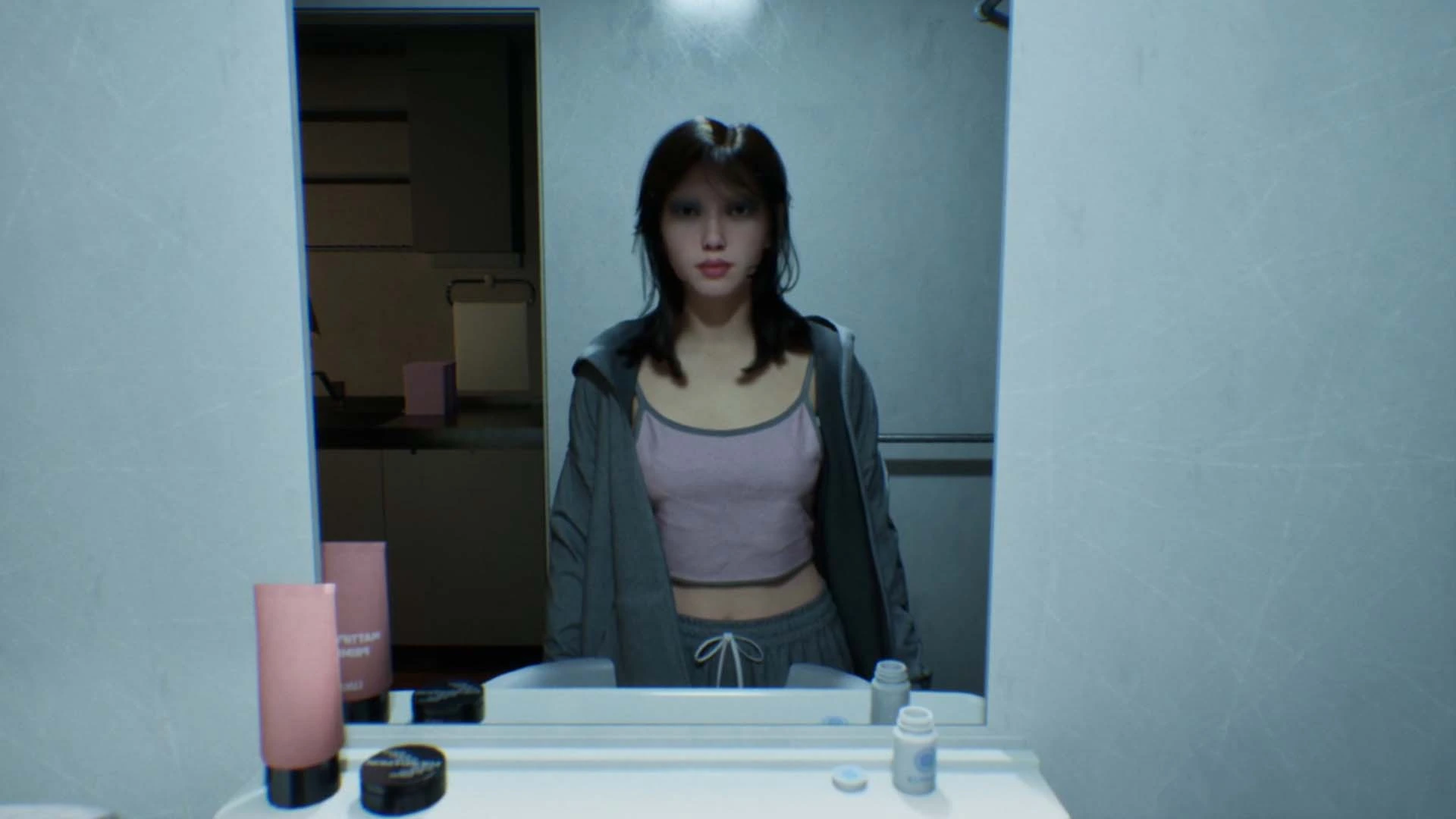
BrokenLore: Don’t Lie is a first-person psychological horror game about a home that cannot be trusted. Serafina returns to a place tied to her family and finds rooms, memories and explanations changing around her. The developers use that instability to explore denial, inherited pain and the difference between remembering an event and controlling its meaning. Its most promising idea is not a single monster. It is the way an ordinary interior becomes evidence that can contradict the player.
Table of Contents
A familiar building becomes unreliable
Domestic spaces normally help a player build a mental map. A corridor leads to the same room, an object remains where it was left, and returning to a safe area reduces tension. Don’t Lie weakens those assumptions. Small changes in layout or detail can make a known route uncertain. The player must look again instead of moving through the house from memory.
This approach works best when changes have meaning. A moved photograph or altered room can point to what Serafina avoids rather than functioning as a random scare. The game asks the player to compare versions of the same place and decide which details belong to memory, which are present reality and which may be a deliberate defence. Observation becomes part of the story instead of a hunt for arbitrary objects.
The title describes the central conflict
The command not to lie can be aimed in several directions. Serafina may be hiding information from other people, from the player or from herself. Family members can also shape a shared account that protects them from responsibility. The horror grows because a confident explanation may be emotionally useful while still being false. The player cannot assume that a spoken memory closes the question.
An unreliable viewpoint does not mean that every scene is meaningless. For the mystery to remain fair, repeated symbols and physical clues need a stable relationship to the truth. Contradictions should narrow possibilities instead of making any interpretation equally valid. The developers’ focus on themes suggests that the changing house is intended to reveal a pattern, not merely reset the rules whenever a surprise is needed.

Fear comes from recognition before pursuit
A chase creates immediate danger, but the quieter moment before it can be more unsettling. A player notices that a door has changed, a voice remembers the wrong detail or an object appears in a room where it does not belong. Nothing has attacked yet, but the space is no longer dependable. Don’t Lie builds its identity around that recognition.
Sound and pacing are especially important in such scenes. A repeated noise can mark a loop, while a sudden absence can be as useful as a loud cue. The player needs enough time to notice the difference before the game confirms it. If every room interrupts observation with an attack, the central idea would disappear. The most effective pressure comes from wondering whether to inspect one more detail.
Puzzles can test interpretation rather than arithmetic
The house provides objects and memories that can be read in more than one way. A strong puzzle can ask the player to place events in a truthful order, identify the detail that changed or decide which room belongs to a particular account. These tasks fit the subject because solving them requires attention to the same contradictions that trouble Serafina.
Clear feedback remains necessary. The player should understand why an answer failed without receiving the entire solution. Environmental horror often becomes frustrating when a tiny hotspot, not reasoning, blocks progress. The developers can preserve uncertainty in the story while making interaction rules consistent. That division lets the player feel disoriented by the house without feeling misled by the controls.
A smaller horror game with a precise goal
Don’t Lie is not presented as a large open-world production. Its value lies in concentrating on one character, one family history and a place that changes as the truth approaches. A limited setting can support more deliberate detail because the player revisits spaces and learns how they normally look. Every alteration then has a chance to register.
The preview does not disclose the final explanation, the exact play time or every threat. Keeping those details private is appropriate for a mystery. What it does establish is a coherent method: use an unstable home to make denial visible, let observation guide puzzles and place emotional consequences behind the supernatural changes. The finished game will succeed if those ideas remain connected when the pressure rises.