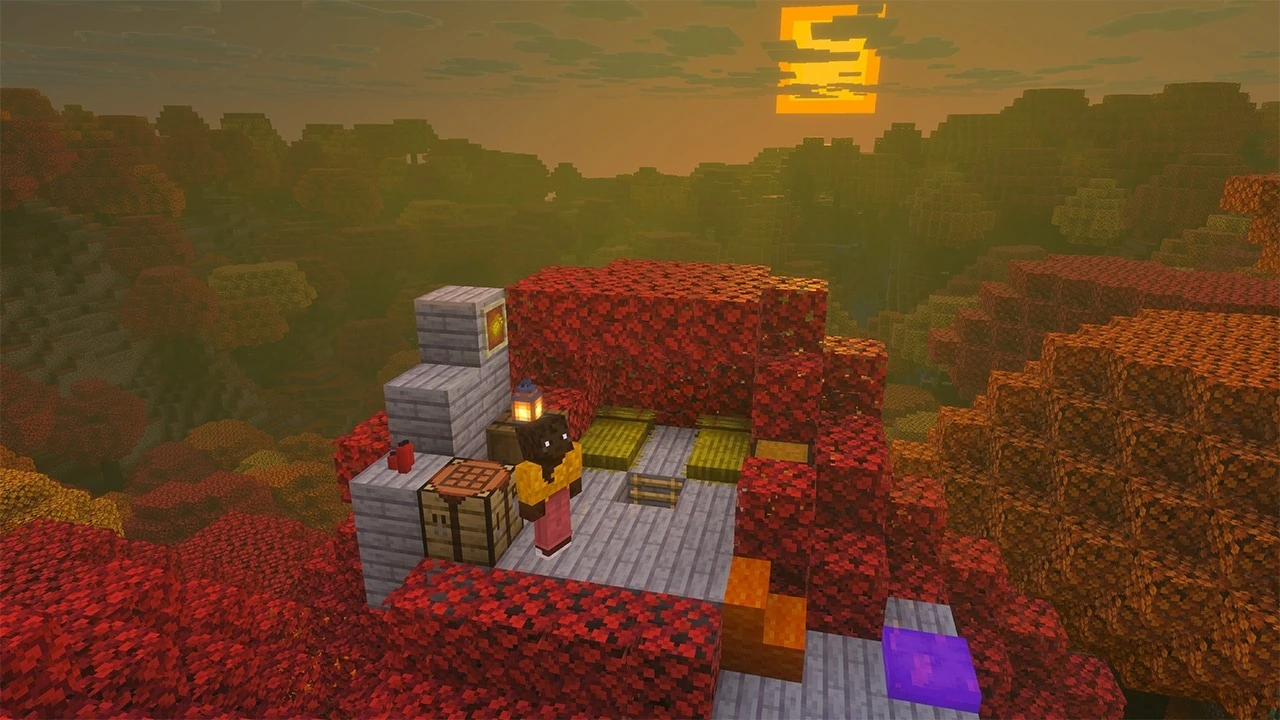
Minecraft has named its next content release Wilderness Bound. The update is built around travel through the Dappled Forest, where tall poplar trees, mushrooms that form platforms on tree trunks and abandoned camps give exploration a clear visual identity. Straw beds will let players skip the night without changing their main respawn point, while poplar wood, expanded concrete and wool sets support new camp designs. Cushions can be found or crafted for gathering around a campfire. Mojang says the features remain in development for Java and Bedrock editions.
Table of Contents
The name brings several systems into one theme
Wilderness Bound connects exploration, temporary rest and construction instead of presenting the drop as a list of unrelated blocks. The dappled forest gives players a destination, while abandoned camps suggest short pauses during a longer journey. Poplar wood and cushions then let a group build its own version of that idea. The theme is practical because each feature supports movement or preparation. Players can use the new materials in any world, but the strongest first impression will come from finding them together in the new landscape.
The dappled forest should be easy to recognize
Tall poplar trees define the outline of the dappled forest and separate it visually from familiar wooded areas. Colorful foliage and pale trunks can also help players read the edge of the area from a distance. A strong biome needs more than a new palette, so the position of paths, mushrooms and camps will determine how it feels to cross. Explorers should mark the direction home before moving under a dense canopy. A distinctive tree line is useful for navigation only when the same landmark remains visible on the return trip.
| Feature | Confirmed purpose |
|---|---|
| New area | Dappled Forest with tall poplar trees |
| Exploration | Abandoned camps and mushrooms used as platforms |
| Rest | Straw beds skip night without changing the main respawn point |
| Building | Poplar wood plus expanded concrete and wool sets |
| Camp life | Craftable cushions around a campfire |
Straw beds support a temporary camp
A straw bed is crafted from three hay bales and allows a player to skip the night without resetting the main respawn point. That difference gives expeditions a safer pause without replacing a permanent base. It is especially useful when several days of travel separate the group from stored equipment. Players still need to protect the camp and understand that skipping darkness is not the same as setting a new respawn point. Keeping the regular bed at the main base preserves the intended destination if the journey ends badly.
Abandoned camps add purpose to exploration
Abandoned camps place signs of earlier activity inside the forest and give players a reason to inspect the area instead of only collecting wood. Mojang has not described every possible camp layout or reward, so expectations should remain limited to what the preview confirms. Their value can come from storytelling, orientation and a convenient place to stop. A discovered camp may also serve as a meeting point in a shared world. Players should examine the surroundings before using a camp as a base because the original layout may reveal a nearby route.
Mushrooms on tree trunks create climbing routes
Mushrooms appear along poplar trunks and can be used as platforms for climbing. This makes the vertical shape of a tree part of navigation rather than decoration alone. The useful route will depend on spacing and collision in the finished build, so players should not assume that every mushroom supports the same jump. Moving upward can reveal a better view of the forest, but it also creates a risk of a longer fall. Carrying food and choosing a clear landing area makes the first attempt a measured exploration rather than a blind climb.
Poplar wood gives camps a local material
The new trees introduce poplar wood and a matching door, allowing a shelter to reflect the place in which it was built. Expanded concrete and wool options add more color choices for signs, tents and practical markers. A camp does not need a large footprint to show the new set clearly. A small roof, storage point and door can establish the palette while leaving the surrounding trees visible. Builders who collect everything immediately may flatten the character of the area, so selective harvesting keeps the forest recognizable.
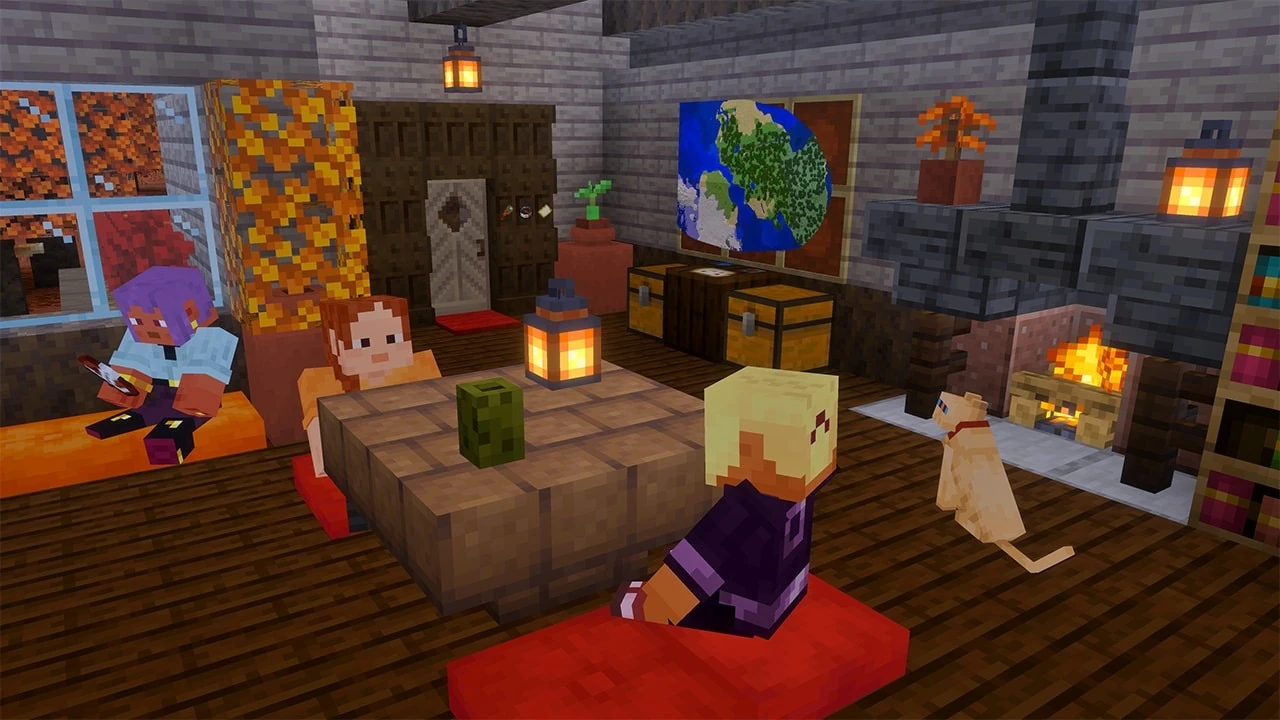
Cushions make the campfire area functional
Cushions can be found in abandoned camps or crafted from three wool slabs of the same color. They are intended for sitting around a campfire and add a social use to the camp theme. In a shared world, a simple circle of cushions can define where players meet before dividing supplies or choosing a direction. Their color also helps mark a place for each participant without adding signs. Because the drop remains in development, exact placement behavior should be tested in snapshots or previews before a permanent design depends on it.
The preview is not a final specification
Mojang says the Wilderness Bound features will arrive later for Java and Bedrock editions and may change during development. The announcement confirms the theme and central features, but it does not provide a final release date or complete technical notes. Players should separate the named design from details that appear only in experimental builds. Feedback from test releases is most useful when it describes a repeatable issue, the platform and the exact feature involved.
Final survival plans should wait until crafting and world-generation behavior are confirmed.