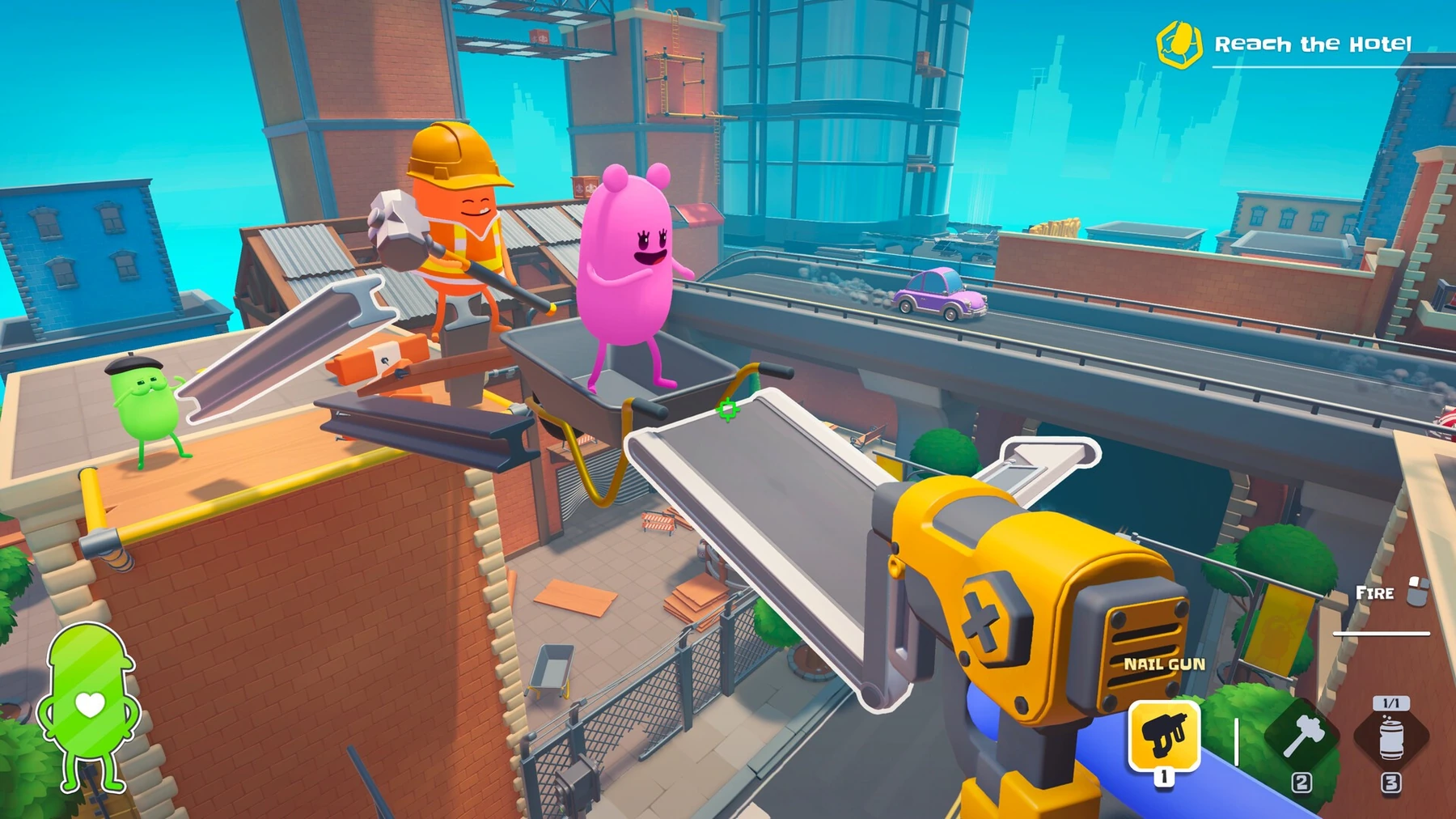
Dumb Ways to Build sends a customizable crew into construction jobs designed around exaggerated physics. Players move materials, operate equipment and cross unfinished structures alone or in online cooperation. The comedy comes from unstable results and poor planning, but each contract still has a readable goal. Progress depends on assigning tasks, carrying objects together and recovering when one mistake changes the whole structure.
Table of Contents
Every job needs a shared definition of finished
One player may focus on making a structure stand while another assumes every optional piece must be placed. The crew should inspect the objective and identify required parts before lifting anything. A clear finish condition prevents useful materials from being buried under decoration. Once the basic job is stable, the group can decide whether a faster or more elaborate solution is worth trying.
Heavy objects turn communication into a control
When two players carry the same beam, direction and timing affect both ends. Short calls such as lift, hold and rotate are more useful than a long explanation during movement. The person walking backward needs warning about edges. Agreeing who leads each carry prevents both players from correcting in opposite directions and turning a simple placement into a fall.
| Feature | Confirmed form |
|---|---|
| View | First-person |
| Play | Solo or online cooperative work |
| Challenges | Construction, movement and physics puzzles |
| Crew | Customizable characters |
| Release | 10 September |
Physics mistakes should create recoverable problems
An unstable wall can block a route, scatter tools or force the crew to rebuild in another order. The most enjoyable failure leaves evidence of what went wrong and a path to repair it. Instant resets may be appropriate after a complete collapse, but smaller errors are better when players can brace, dismantle or reuse the result. Recovery turns the joke into cooperative play.
Tool choice begins with the material
A machine that moves weight quickly may be too imprecise for a narrow platform. Hand tools give control but cost time and expose the crew to movement errors. Players should match the tool to distance, weight and available space. Bringing every device to the work area can make navigation harder. A small staging zone keeps the next tool visible without filling the route.
Platforming should be planned around what is carried
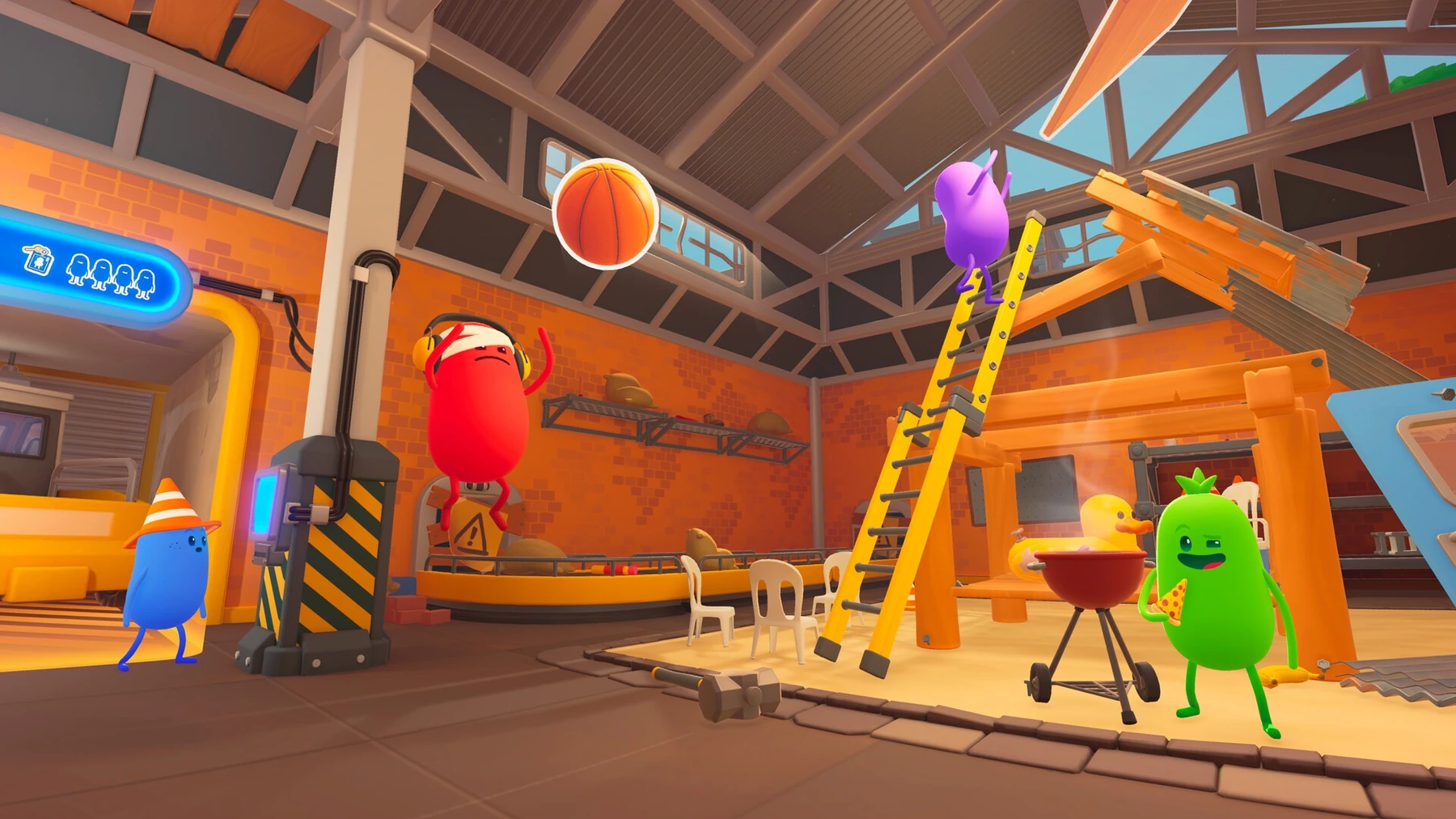
A jump that is easy with empty hands can become unreliable while holding a long or swinging object. The crew can build a temporary step, pass the item between positions or clear the path first. Treating every delivery as a solo sprint wastes the cooperative options. A safe route may take longer to prepare but save several full attempts.
Roles should change as the structure grows
At the start, gathering and transport may need most of the team. Later, one person can stabilize the build while another prepares the next piece and a third retrieves equipment. Fixed roles become inefficient when the bottleneck moves. A quick status call after each stage lets the crew redistribute without abandoning unfinished work or duplicating the same task.
Customization helps identify people in a busy scene
Distinct clothing and colors are practical when several characters cluster around machinery. A player can call a teammate by name, but visual identity makes it faster to see who is holding which side. The choice should remain readable under dust, shadows and safety equipment. It is a small interface benefit inside a feature presented mainly for humor.
A successful contract can be reviewed without removing the comedy
After finishing, the crew can identify one delay, one useful tool and one placement that remained stable. That short review creates a better second attempt without turning the session into formal engineering. The game works when improved coordination produces a cleaner result while physics still allows unexpected moments. Skill and comedy can grow together rather than cancel each other.
Solo play needs a readable substitute for conversation
A lone player cannot ask a partner to hold the far side of a beam, so controls and helpers must provide another method. Temporary supports, clear grip points or quick switching between tasks can preserve the same construction logic. Solo mode should not remove all instability, but it needs to avoid puzzles that depend only on a second simultaneous input.
The best adaptation keeps planning and recovery while changing how coordination is expressed.