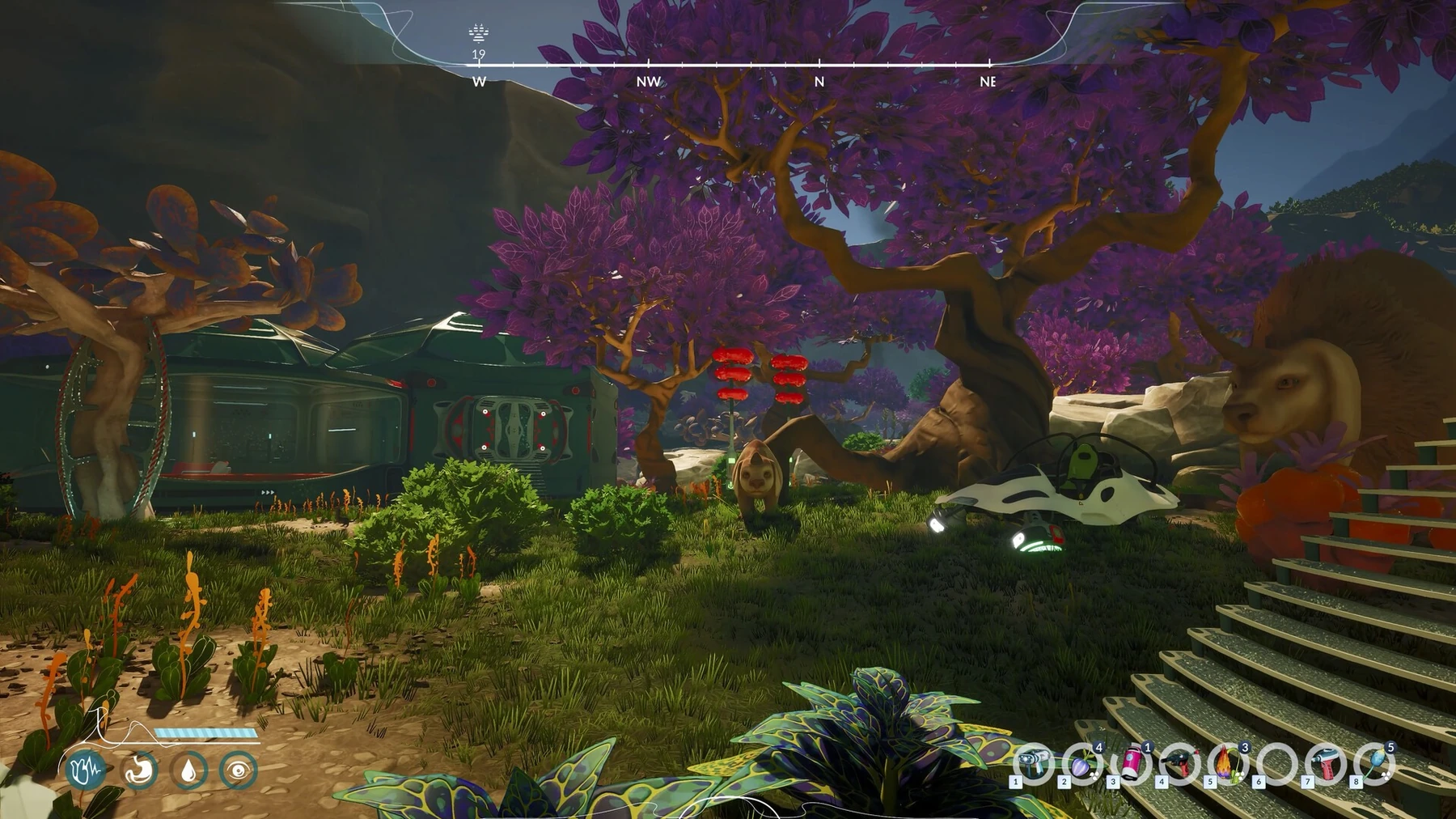
Honeycomb: The World Beyond places bioengineer Hennessy on Sota7, a planet whose plants, animals and caves may contain knowledge needed by Earth. Exploration supplies samples and resources, while a base provides laboratories, storage and crafted tools. The distinctive system is bioengineering: observed traits can be compared and combined, but each experiment must also fit the local ecosystem and the player’s ability to support it.
Table of Contents
Observation should come before collection
An unfamiliar organism may be useful, harmless or dangerous depending on its habitat and behavior. Running directly toward every specimen turns scientific exploration into guesswork. Players can first watch movement, nearby plants and reactions to distance. A short observation often reveals whether a tool is required and prevents a rare sample from being damaged before it reaches the laboratory.
The base is a working research chain
A laboratory without storage creates clutter, while fabrication without steady resources leaves essential tools unfinished. Layout should follow the order in which material moves: return from the field, store samples, analyze them and then produce the next item. A compact chain saves travel and makes shortages visible. Decoration can grow around that reliable core instead of hiding poorly connected rooms.
| Area | Purpose |
|---|---|
| Sota7 biomes | Exploration and specimen discovery |
| Base | Research, storage and fabrication |
| Bioengineering | Cross plants or creatures and evaluate traits |
| Play style | Single-player survival adventure |
| Release | 8 September on Xbox and PC |
Bioengineering needs a stated question
Combining two organisms is most useful when the player knows which trait is being tested. Resistance to a climate, better yield or safer behavior are clear goals. Mixing specimens only to see a surprising model may consume material without improving the mission. Recording the parents and observed result creates a small research history that can guide the next experiment.
A hybrid still belongs to an ecosystem
A successful laboratory result may behave differently when placed outside. It can require a particular soil, compete with another species or attract a creature that was previously distant. The player should introduce one change at a time and inspect the surrounding area afterward. That caution makes ecology part of play rather than a background image behind a crafting system.
Caves change preparation and visibility
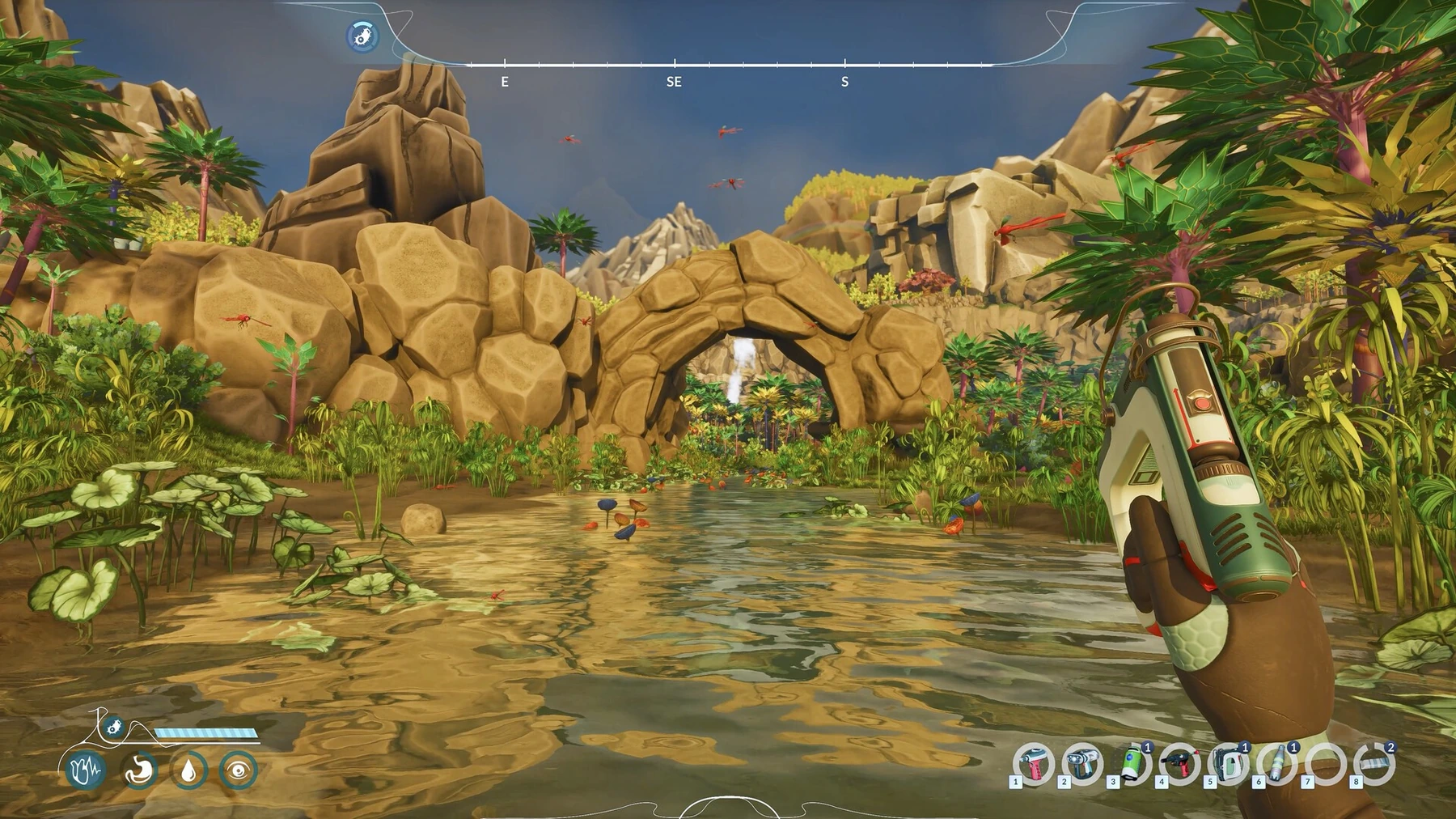
Underground spaces reduce easy landmarks and can separate Hennessy from the base for longer periods. Before entering, the player needs light, free inventory space and a return route. A cave sample may justify the risk, but collecting common material while supplies run low does not. Marking junctions and leaving with a safety margin protects the research already gathered.
Danger does not erase the scientific role
Sota7 contains threats, yet the protagonist is not presented as a soldier clearing a hostile map. Avoidance, tools and understanding can be more appropriate than direct confrontation. That distinction supports the premise: Hennessy is trying to learn which life can help humanity. Treating every moving creature as an enemy would contradict the information-gathering systems around it.
The mission report should separate evidence from hope
Earth’s need gives every discovery emotional weight, but one promising trait is not automatically a solution. A responsible report records the environment, the tested combination and the limits of the observation. This approach also helps players follow the story. They can see why a result matters without the narrative pretending that an early experiment has already solved a planetary problem.
The first expedition can establish a repeatable routine
A sensible opening day maps the nearest safe route, gathers only known materials and returns before storage is full. The player can then build one complete research station and test a single specimen. This modest loop teaches how exploration, base design and bioengineering connect. Longer journeys become easier because they extend a process that already works.
Field notes can keep the science understandable
A simple record with location, organism, observed trait and experiment result prevents several similar samples from becoming interchangeable. The player does not need to document every leaf. Notes are most useful when a later recipe or hybrid asks for a property seen earlier. Returning to a marked habitat then feels like applying knowledge rather than searching the whole planet again. Good information design can make Hennessy’s expertise visible without turning exploration into paperwork.