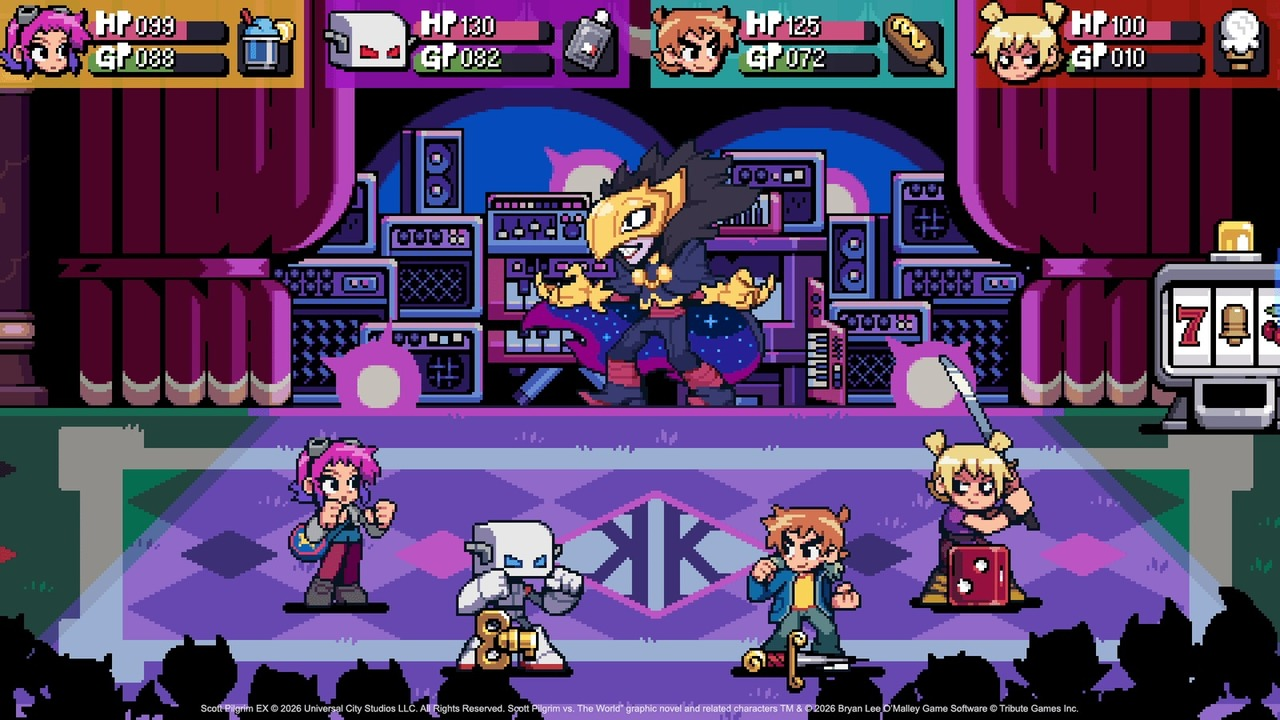
The Back in the Band DLC is now available for Scott Pilgrim EX. Stephen Stills, Kim Pine and Knives Chau join the playable roster with separate combat styles.
Table of Contents
Each fighter has a clear role
Stephen, Kim and Knives do not share one copied move set. Their speed, reach and recovery create different ways to handle groups of enemies. Knives uses quick movement and scarf attacks to control short distances. Her strongest sequences depend on entering a gap and leaving before nearby enemies can respond. Stephen Stills enters the roster as more than a visual variation of Scott. His movement and attacks have their own rhythm, giving cooperative groups another way to control a crowd. Kim Pine also receives a distinct set of animations and recovery timing. Players can choose them for how they handle a fight, not only for their place in the story.
Cooperative battles make silhouette and colour equally useful. Several heroes may stand near the same enemies, and effects can fill much of the screen. Stephen, Kim and Knives need to remain recognizable during that overlap. Their separate shapes and motions help a player follow the selected character after a launch or knockdown. The DLC also extends the band’s presence in the playable cast. Stephen and Kim move from familiar supporting roles into direct action, while Knives gains a combat style that matches her energy. Tribute Games used character-specific poses rather than one shared skeleton wherever practical.
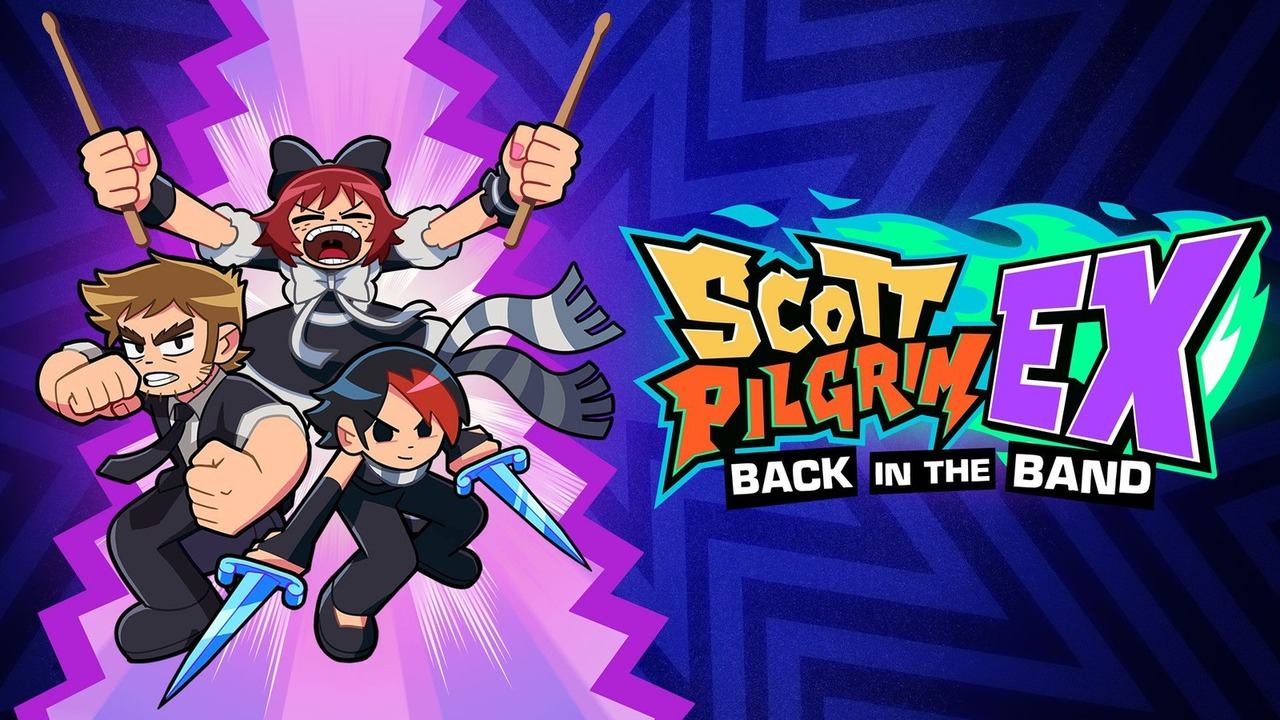
That work connects animation choices to the identity of each fighter.
Animation supports both style and timing
Tribute Games built each fighter around recognizable poses and expressions. The animation also shows when an attack starts, connects and ends. Clear timing is important in cooperative fights. Several players and enemies may share the screen, so every character needs a readable silhouette. Knives Chau is built around speed and short-range pressure. Her scarf extends some attacks beyond the immediate punch distance, but she still relies on quick entry and exit. A player who remains inside a large group after the sequence ends can be punished. Her design rewards choosing an opening before committing.
Back in the Band is the paid character package. Coin-Op Chaos arrives as a free update for the wider game. A player can receive the free changes without buying the three fighters, while access to Stephen, Kim and Knives requires the DLC. This division is stated on the store page and avoids treating both releases as one purchase. Players deciding whether to buy the pack can focus on roster value. No separate campaign was announced as part of Back in the Band. The main confirmed addition is three playable move sets. Coin-Op Chaos should be evaluated separately because it changes the base game for everyone who installs the free update.
The paid DLC arrives with a free update
Back in the Band is paid roster content. Coin-Op Chaos is a separate free update for the wider game. Store pages show which part requires an additional purchase. The existing roster and campaign remain available. The three new fighters add options without replacing earlier characters. Readable animation matters in a side-scrolling brawler. The pose before an attack tells teammates and opponents when an action has started.
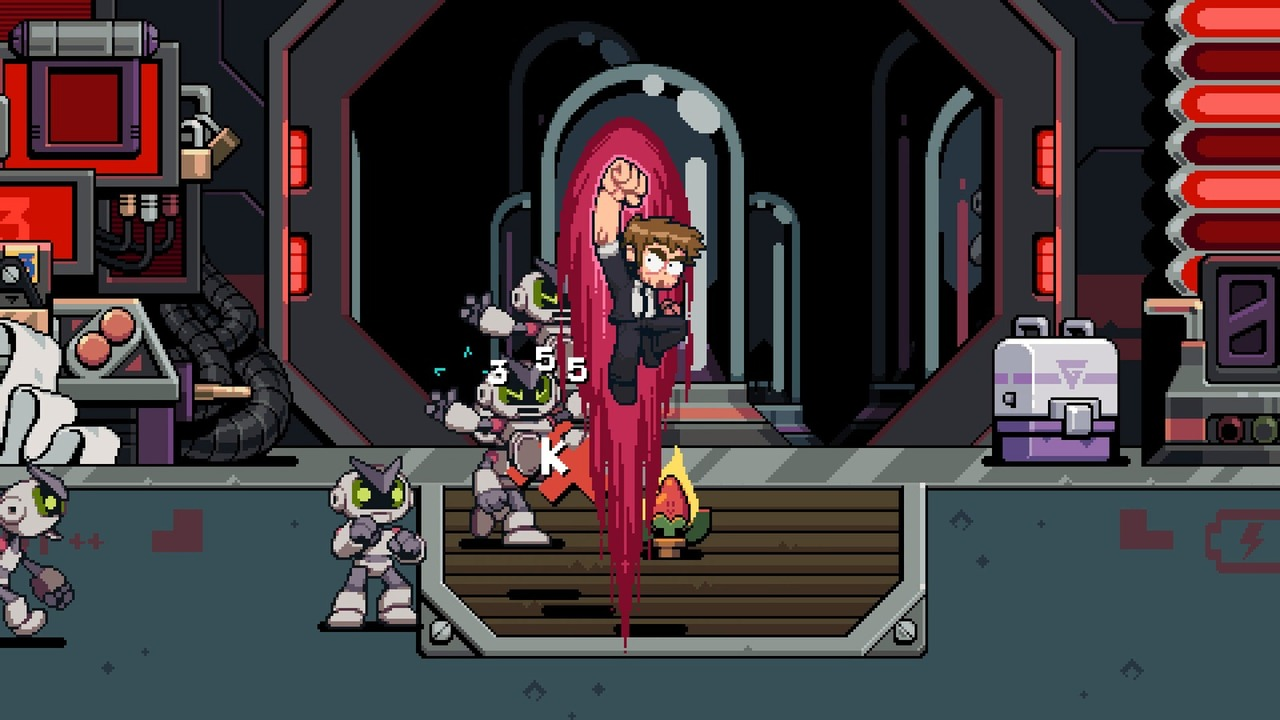
The contact frame communicates the hit, while the recovery shows when the character can move again. Tribute Games uses those stages to preserve personality without hiding the timing needed for play.
The campaign and original roster remain in place. The newcomers can be selected for existing stages and cooperative sessions without removing earlier heroes. Their arrival increases the number of possible team combinations. A group may use one fighter for crowd control, another for fast movement and another for safer reach. The three additions can also change repeated campaign runs. A stage learned with a slower fighter may feel different with Knives’ quick movement or another hero’s reach. Cooperative partners can reorganize their roles without changing the level itself. That replay value is the practical purpose of expanding a brawler roster after release.