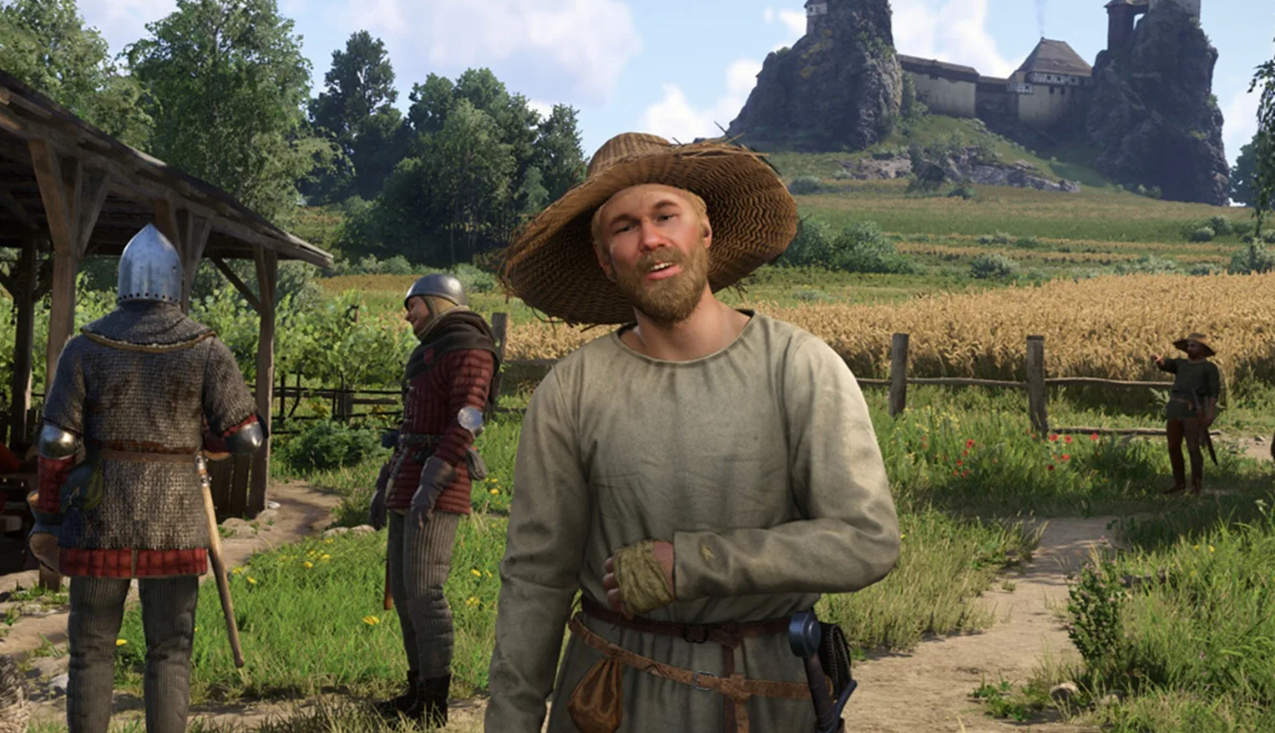
Some studios, once they land a hit, rush to soften the formula — stripping out complex systems, adding fast travel shortcuts, cutting anything that might scare off newcomers. Warhorse Studios is doing the exact opposite. And that’s despite Kingdom Come: Deliverance II selling significantly better than the original and proving noticeably more welcoming to new players. This would seem like the perfect moment to cash in on that success and court the mainstream. The studio chose a different path.
Warhorse’s Public Relations Director, Tobias Stolz-Zwilling, made that clear in a conversation with Shanghai Daily at ChinaJoy 2026 in Shanghai: the next game in the series will remain just as meticulous, historically grounded, and unforgiving as its predecessors. Market trends won’t be dictating the direction here.
Table of Contents
When the Next Kingdom Come: Deliverance Game Is Coming Out
The most practical part of this news is the timing. According to Stolz-Zwilling, the studio is still targeting a release within the 2027–2028 fiscal year. Translated into a normal calendar, that’s a window stretching from April 2027 to March 2028.
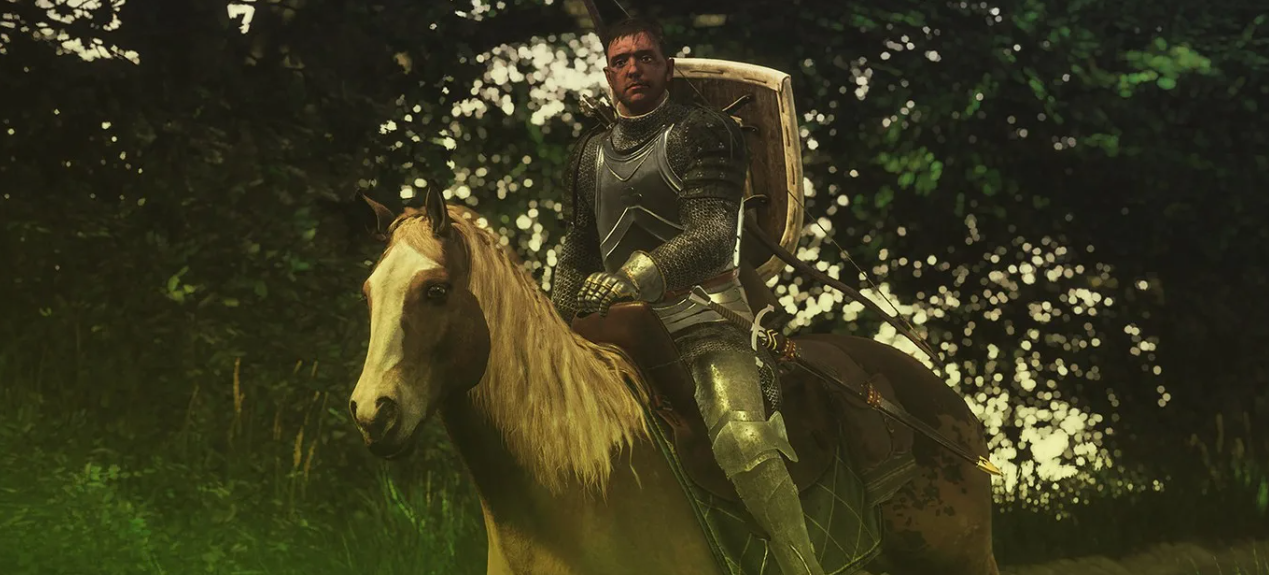
At first glance, that timeline looks almost too optimistic: KCD II launched in February 2025, and delivering a full-fledged successor in under three years is rare even for much larger studios with far bigger headcounts. The likely explanation lies in the project’s scope. This probably isn’t a massive story-driven sequel on the scale of KCD II, but rather a more compact game set within the same universe — essentially a spin-off built on the technical foundation already established by KCD II: its engine, animation systems, combat mechanics, and NPC simulation. The trademark “Kingdom Come: Salvation,” registered by the studio, hints at exactly that.
| Parameter | Kingdom Come: Deliverance II | Next Game in the Series |
|---|---|---|
| Release date | February 2025 | FY 2027–2028 (April 2027 — March 2028) |
| Official title | confirmed | not yet announced, not “KCD3” |
| Creative director | Prokop Jirsa | Prokop Jirsa |
| Scope | full-scale AAA entry | presumably more compact |
| Platforms | PC, PS5, Xbox Series X|S | not yet specified |
Why the Game Isn’t Being Called Kingdom Come: Deliverance 3 (Yet)
One detail that’s caught fans’ attention: the studio is deliberately avoiding the name “Kingdom Come: Deliverance 3.” Officially, the project will belong to the series, but its form apparently doesn’t have to be a direct narrative continuation featuring the same protagonist.
That’s not a minor technicality. The first two games told a single, continuous story — Henry’s journey from a humble blacksmith’s son to a seasoned warrior during the Hussite Wars in 15th-century Bohemia. By avoiding a numbered title, Warhorse keeps its options open: the next entry could feature a new protagonist, a different time period, or an adjacent storyline that formally extends the universe without being obligated to continue Henry’s specific arc.
The project will be led by Prokop Jirsa, the creative director behind Kingdom Come: Deliverance II. That’s a meaningful signal of continuity — this isn’t a fresh team starting from scratch, but people who already understand how the world and tone of the series work.
Historical Realism as a Trademark — What Won’t Be Changing
The core message from the interview is a commitment to the concept of an authentic, historically grounded RPG. In practical terms, for anyone who’s already played both games, that likely means:
-
No minimap with a precise route — navigation still relies on visual landmarks and player attentiveness;
-
Full NPC simulation — characters live on their own schedules, crimes carry consequences, and reputation forms organically;
-
Demanding, timing-based combat — no button-mashing shortcuts to victory;
-
Historical accuracy down to the details — from weapons and armor to everyday minutiae of the era;
-
No stripping of genre conventions for the sake of convenience — illness, hunger, fatigue, and other survival-style systems typically among the first things cut when a studio “simplifies for a broader audience” are staying intact.
In other words, Warhorse is deliberately rejecting the standard playbook many studios follow after a successful sequel: make the next entry softer, faster, and more accessible to casual players. Here, the bet is on the opposite approach — deepening the series’ identity rather than diluting it.
Kingdom Come: Deliverance and the Parallel Middle-earth Project
This news doesn’t exist in a vacuum. Earlier in 2026, Warhorse officially confirmed it’s working on a second major project — an open-world RPG set in Middle-earth, based on Tolkien’s works. That effort is being led by Viktor Bocan, the design director on KCD II.
Technically these are two separate tracks within the studio, but the fact that both are happening simultaneously says a lot about Warhorse’s ambitions: a studio of roughly 300 people is pushing out the next entry in its flagship franchise while also stepping into one of the most recognizable fantasy universes in existence. That’s clearly no small undertaking — and some in the gaming community have already voiced cautious concerns that this kind of dual workload risks stretching the studio thin or weakening one or both projects if resources can’t keep pace.
What This Means for Players Right Now
To sum up the practical takeaways from this news for anyone following the series:
-
Don’t expect a formal Kingdom Come: Deliverance 3 announcement just yet — there’s still no official title or exact release date, only a fiscal-year window.
-
No need to worry about the series being “casualized” — the studio is explicitly signaling the opposite direction.
-
The likely format for the next game is a more compact project built on KCD II’s technology, rather than a massive story-first sequel.
-
A narrative connection to Henry isn’t guaranteed — a new protagonist or different time period isn’t off the table.
-
Development is running on two major fronts at once, meaning studio resources are split between the new Kingdom Come game and the Middle-earth RPG.
Editorial Takeaway
Warhorse Studios is currently in a rare position for the industry: it has a commercial hit, a recognizable brand, and every temptation to take the path of least resistance by making the next entry simpler and more mass-market. Stolz-Zwilling’s statement reads as a deliberate rejection of that scenario — the studio isn’t betting on growing its audience at any cost, but on deepening exactly what made the series beloved in the first place: meticulous historical grounding, demanding gameplay, and a genuine sense of immersion in the 15th century.
What to expect next: more concrete details about the story and scope of the game, an official title to replace the working “Kingdom Come 3” label, and updates on how the studio is managing the simultaneous development of two major RPGs. For fans of the series, the key signal is already here — there won’t be compromises on game design, which means the next entry is shaping up to be just as demanding, and just as rewarding, as the ones that came before it.