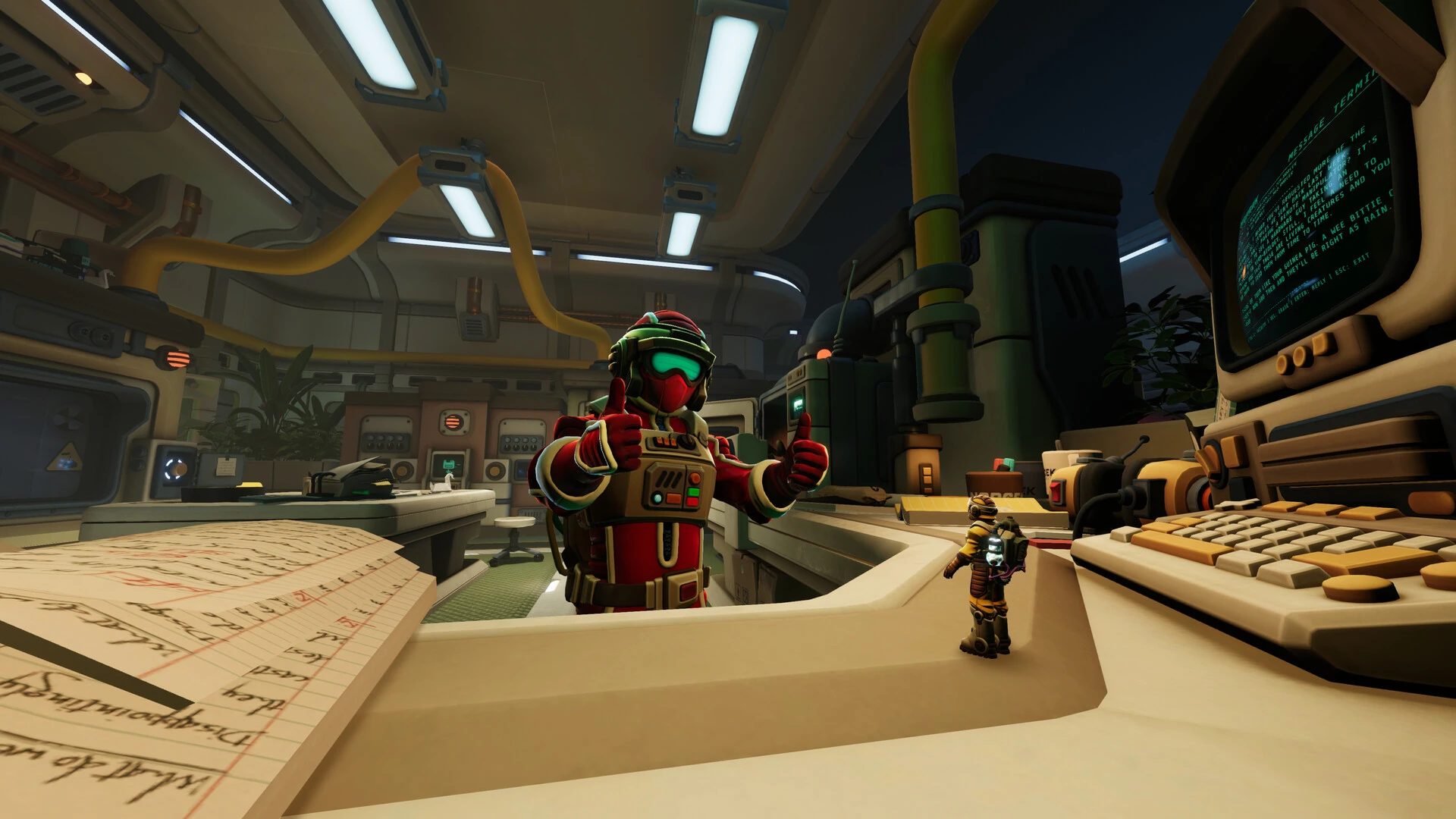
We Were Here Tomorrow will launch on Steam on October 20. Total Mayhem Games places two Explorers beneath the Antarctic ice inside a retro-futuristic Norček Industries facility, where each player sees different information and must communicate through a walkie-talkie. The game supports online cooperative play and cross-platform multiplayer, but it is designed for exactly two participants and requires a working microphone and internet connection.
Table of Contents
Two viewpoints create the central puzzle
The partners do not receive identical rooms, clues or tools. Progress depends on describing useful details instead of waiting for one player to solve everything.
A good callout identifies shape, order and position without flooding the conversation. The design turns language into an active part of the puzzle rather than background chat. The strongest puzzles give each Explorer incomplete but equally important information. One player may see a symbol sequence while the other controls the machine that uses it, so neither can progress by issuing orders without listening. Useful communication begins with a shared vocabulary for direction, colour and position. When a first description fails, the pair should be able to correct it through new evidence rather than repeat the same words more loudly.
Norček Industries changes the setting
The Explorers awaken in a facility whose research team has disappeared. Director Kathleen Bowe asks them to complete unfinished work while a wider crisis approaches.
That request gives each mechanical task a reason without revealing whether the Director can be trusted. Environmental details can carry the mystery while the pair remain separated. Norček Industries provides a reason for the machinery beneath the ice and a structure for the mystery. Empty work areas, interrupted recordings and equipment left in place can explain what the missing team attempted without a long speech. Kathleen Bowe’s instructions may help the Explorers, yet the separation between her request and the evidence in each room leaves space for doubt. The story can therefore advance through cooperation while the players decide how much of the official explanation they trust.
| Requirement | Confirmed detail |
|---|---|
| Players | Exactly two online partners |
| Communication | Working PC microphone |
| Steam launch | October 20, 2026 |
| Storage | 50 GB available |
New tools support different roles
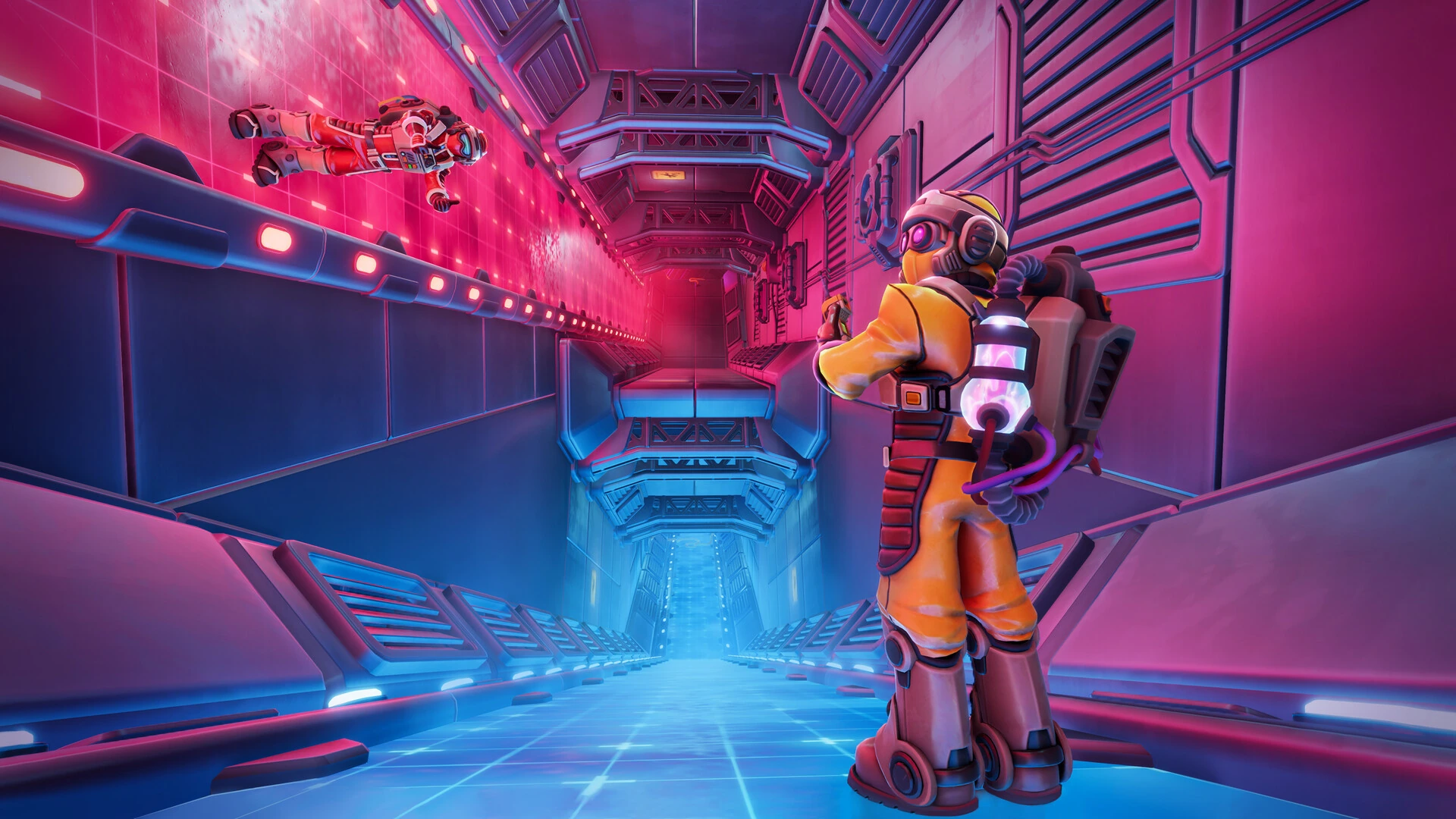
Each Explorer has a separate high-technology device. The partners must combine those functions when time, gravity or space behaves differently between rooms.
Clear feedback is vital because one player may never see the effect produced for the other. The best solutions should create a shared moment of understanding after careful communication. Separate devices should create complementary jobs rather than a stronger and weaker player. If one tool changes gravity and another reads a hidden state, both actions need immediate feedback that can be described over the radio. A solution feels fair when the pair can reconstruct why it worked after the final step. That understanding is especially important when time behaves differently between rooms, because an unclear delay can otherwise look like a connection problem instead of part of the puzzle.
The imagined 1980s shape the atmosphere
The facility combines industrial machinery with a future imagined through older technology. A synth-led soundtrack and physical controls can support that period without weakening puzzle clarity.
The visual identity separates Tomorrow from a generic laboratory setting. It also gives the mystery a consistent language for screens, warnings and recorded messages. The retro-futuristic design can make every control panel part of the same visual language. Physical switches, monochrome displays and industrial labels help players identify what can be operated even in an unfamiliar room. Music should support the isolation without covering radio speech, since voices carry essential information. A consistent style also lets unusual technology stand out: when one device breaks the established rules, both players can recognise that it deserves closer attention.
Steam requirements should be checked as a pair
Both players need Windows 11, broadband access and compatible microphones. The store lists 50 GB of available storage and does not support integrated graphics at minimum specification.
Because the game is cooperative only, a solo purchase cannot replace the second participant. Planning the platform and voice setup before October 20 will prevent the first session from becoming technical troubleshooting. Both participants should check the requirements before buying because the game cannot be completed alone. Each needs a supported PC, stable broadband, available storage and a microphone that remains clear during long conversations. Cross-platform support widens the possible pair, but it does not remove the need to agree on the same play time and voice setup. Testing those details before October 20 protects the first session from avoidable delays and lets the pair begin with the puzzle instead of technical diagnosis.