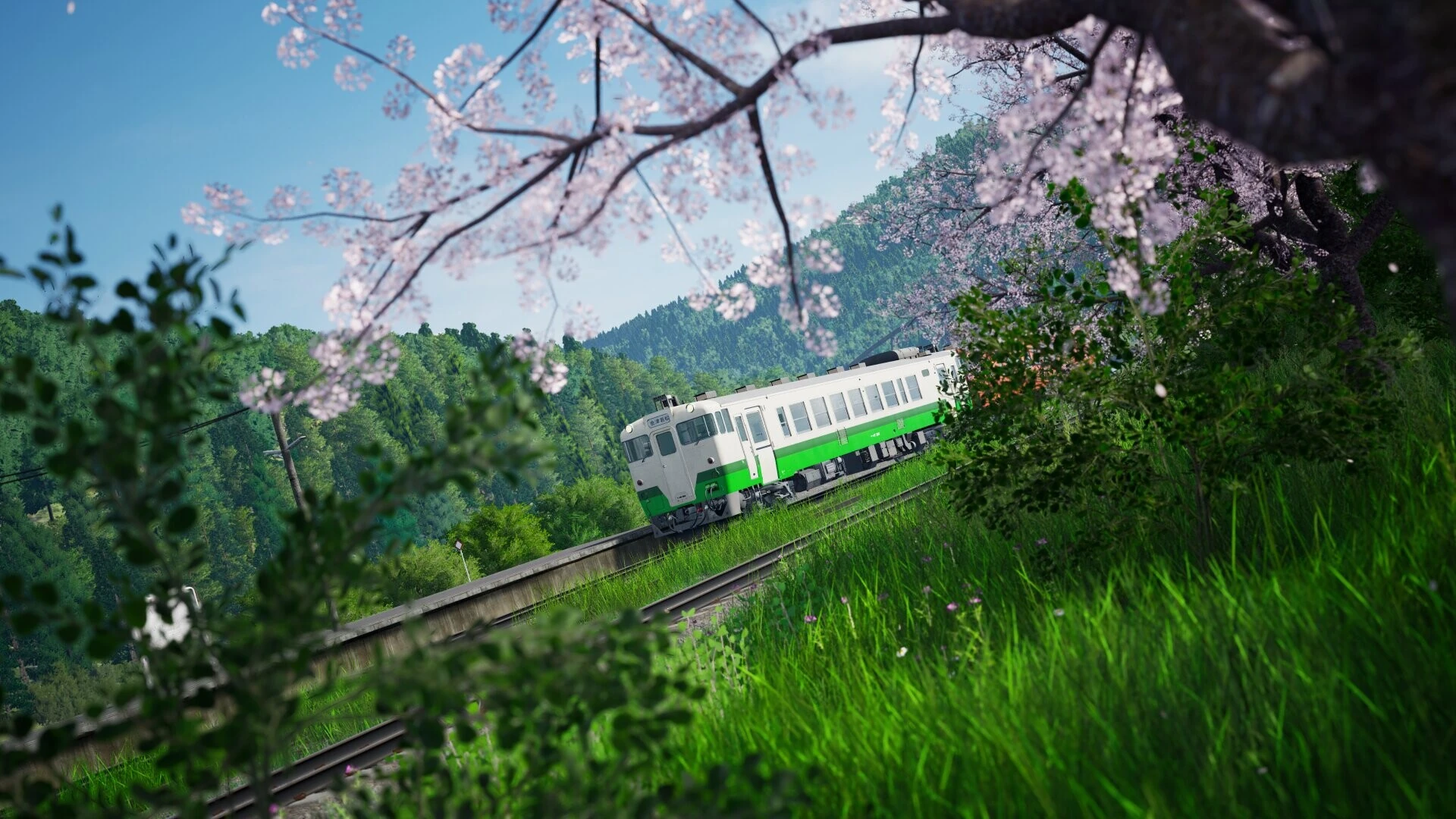
Train Sim World 7 has added the Tadami Line on Steam, taking the simulator to Japan for the first time. Union Workshop has modelled 88 kilometres of single-track railway between Aizu-Wakamatsu and Tadami, including 28 stations, mountain valleys, bridges and the KiHa 40 diesel railcar in three liveries. The route works with the free Train Sim World 7 Starter Edition, so Steam players can buy this line without first purchasing one of the larger core bundles.
Table of Contents
The free Starter Edition keeps the Steam entry cost focused on the route
Tadami Line is paid downloadable content, but the underlying Train Sim World 7 shell can be installed at no charge. New players receive the Training Center and core tools through the Starter Edition, then add the Japanese route they actually want. Returning players can use the same route with compatible parts of an existing collection. This is clearer than forcing a purchase of unrelated British, German or American lines before the Japanese content can start.
Steam users should check that they are viewing the renewed Train Sim World 7 listing. An older Tadami page was created before the route moved from the previous game and is being retired. The current DLC requires Train Sim World 7, not Train Sim World 6. Wishlists made on the legacy page do not automatically replace the correct product entry.
Eighty-eight kilometres create a rural operating rhythm
The route leaves the busier Aizu-Wakamatsu area and follows the Tadami River through Oku Aizu. Twenty-eight stations on a single track mean that timetable discipline matters: two trains cannot simply pass wherever they meet. The driver must respect planned crossing points, dwell times and signals while long quiet stretches create room to monitor speed rather than constantly accelerating between urban stops.
The landscape is part of the workload rather than a background postcard. Bridges, curves, gradients and changing visibility affect where braking begins and how the next signal is approached. Driving, riding as a passenger and exploring on foot provide different views of the same route. A complete run should feel like a connected railway day, not 28 isolated station scenes.
| Route detail | Tadami Line |
|---|---|
| Steam access | Train Sim World 7 required; free Starter Edition is sufficient |
| Distance | 88 km |
| Stations | 28 |
| Train | KiHa 40 in three liveries |
The KiHa 40 introduces Japanese diesel practice
Union Workshop includes the classic KiHa 40 in three liveries. A diesel railcar on a rural branch has a different operating rhythm from a high-speed multiple unit: acceleration is more measured, braking needs anticipation and station accuracy comes from reading the route rather than relying on excessive performance. Tutorials must explain the cab sequence and safety systems before asking a new player to keep the full timetable.
Japanese signalling and ATS are central to the route’s identity. The player needs to understand what an indication requires and how the automatic protection reacts, not merely acknowledge an alarm after it sounds. A useful scenario introduces one rule at a time, then combines it with weather, gradients and crossing traffic once the basic response is reliable.
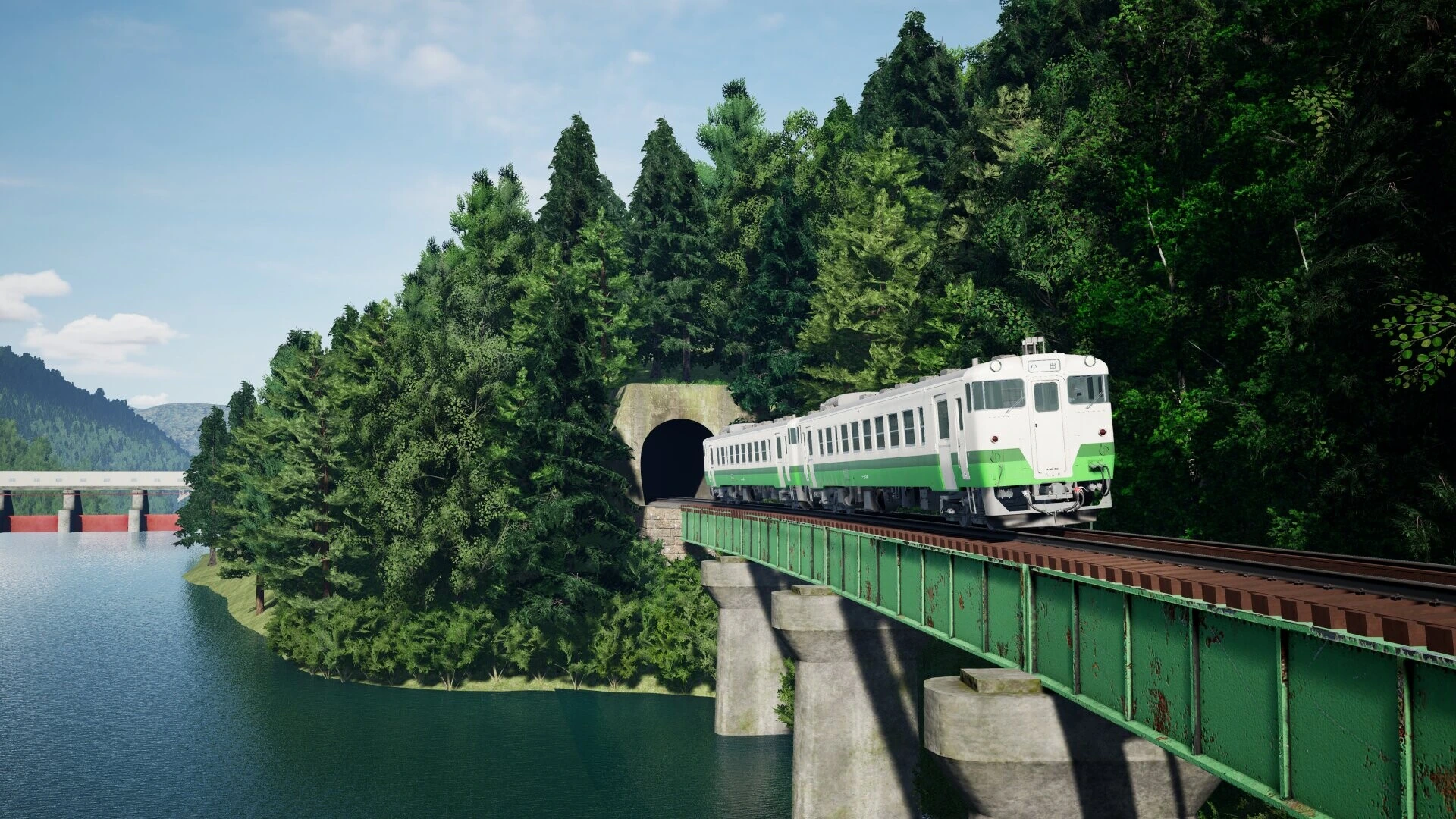
Single track makes dispatching visible to the driver
On a double-track main line, the opposing service may pass with little effect. Here, a late arrival at a loop can delay another train and alter the feel of the whole section. Even when the timetable is scripted, the player can see why a station stop matters. Recovering time by speeding between curves is rarely a good answer because one safety intervention can lose more than the original delay.
This gives shorter services strategic weight. A careful approach, accurate stop and prompt departure protect the next meeting point. Scenario designers can create pressure without artificial emergencies simply by combining a wet rail, a restrictive signal and an opposing train that needs the line. The railway itself supplies the problem.
Seasonal scenery needs stable performance on long runs
Dense forests, river views and traditional architecture make the route visually distinctive, but a simulator must sustain them for an entire duty. Texture streaming, distant foliage and station detail should not cause repeated stutter when the train enters a new valley. The September core update already targeted memory use and blurred textures on another route, so the first Steam sessions should be judged for consistency as well as screenshots.
Players with modest PCs can begin with fewer foliage and shadow settings before changing resolution scale. Altering several options at once makes it difficult to know which one improved the route. A fixed test service, run in the same weather, provides a fair comparison and helps preserve signal readability while performance is tuned.