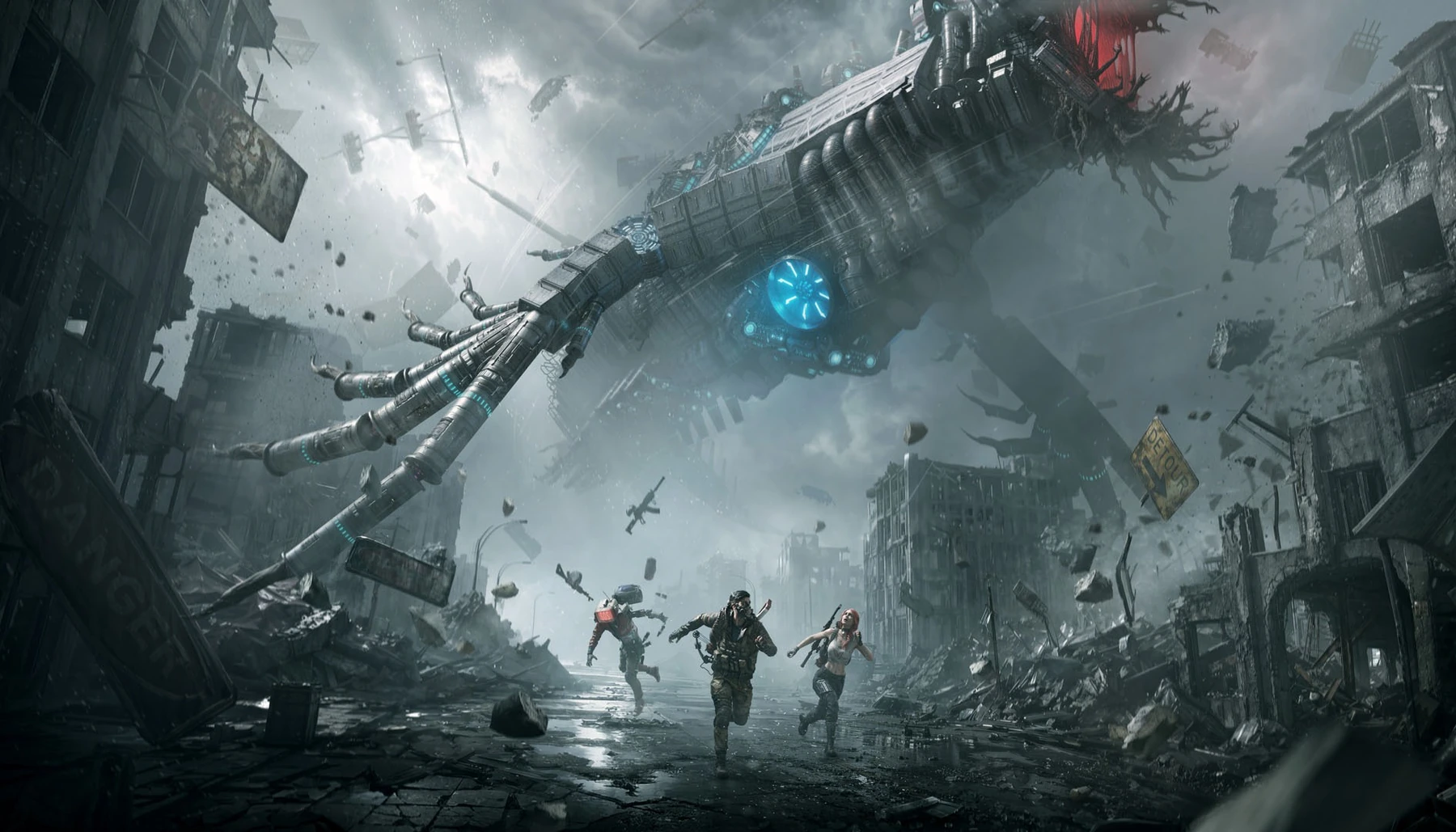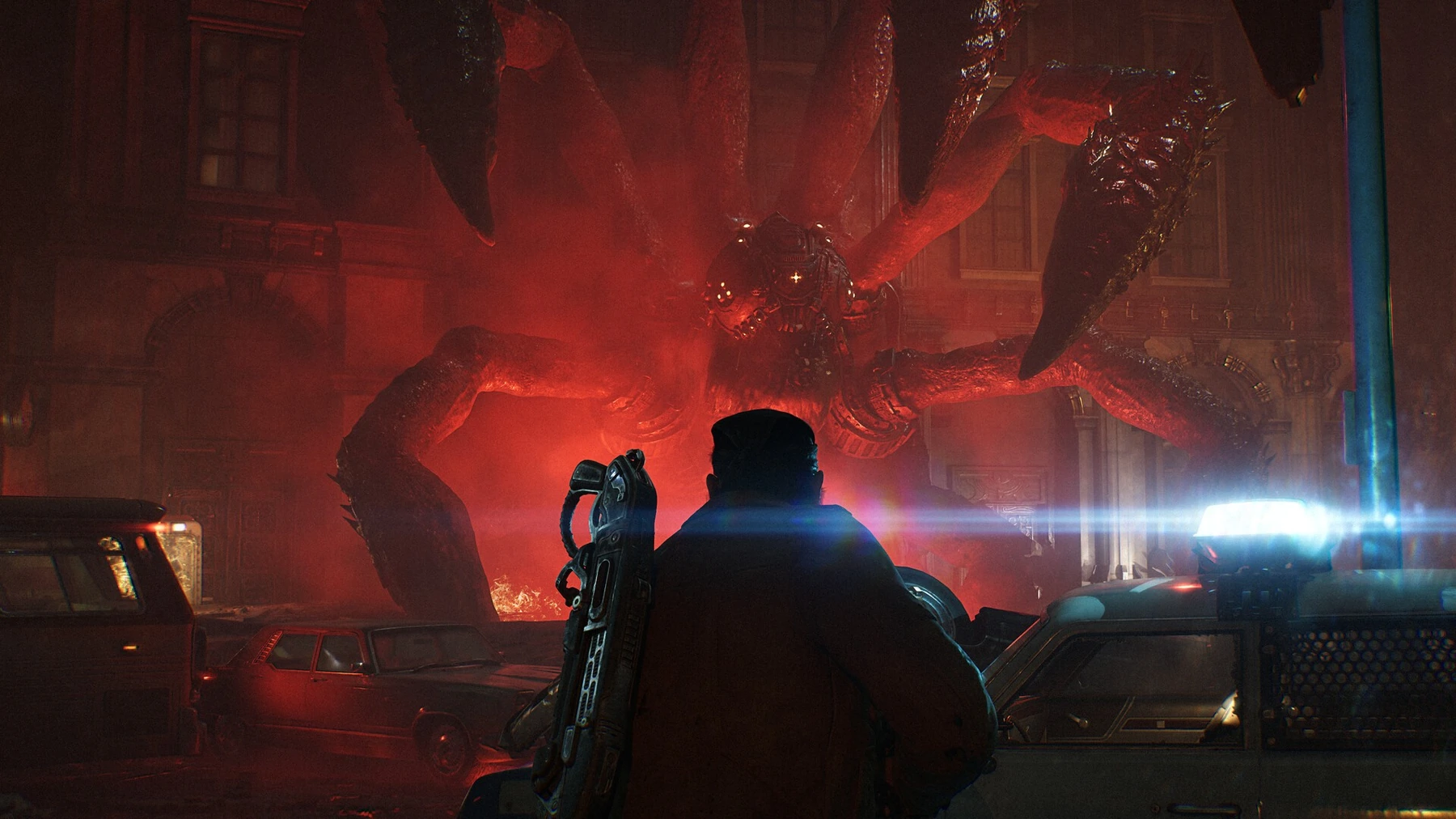
The Coalition has explained how Gears of War: E-Day uses the first Locust attack to tell a personal story about Marcus Fenix, Dominic Santiago and Bravo Squad. The campaign is set in Kalona and shows the city before, during and immediately after the invasion. Vraahk commands the Scorched Legion as a central threat, while soldiers and civilians respond without the knowledge that characters possess in later Gears games. The result is a prequel built around uncertainty rather than nostalgia alone.
Table of Contents
Kalona is designed as more than a battlefield
The developers built Kalona as a functioning city so its destruction has a human cost. Streets, institutions and familiar routines appear before the attack changes them. This approach gives the player a reason to notice a district instead of treating it as a corridor between fights. When the route returns through a damaged area, recognition can carry the story without a long explanation. The city becomes a record of what has been lost during a very short period.
The prequel restores uncertainty to familiar enemies
Players know the Locust from earlier games, but Marcus and Dom encounter many enemy types for the first time. A Wretch, Drone or Brumak is not yet part of an established military handbook. That difference lets the campaign present observation and improvisation as real needs. Tutorials can emerge through the characters’ discovery rather than through a veteran repeating facts that everyone in the world should already understand.
| Element | Confirmed role |
|---|---|
| Setting | Kalona during the first two days of E-Day |
| Leads | Marcus Fenix and Dominic Santiago |
| Squad | Bravo Squad and other defenders |
| Enemy commander | Vraahk |
| Theme | Brotherhood, loss and limited hope |
Vraahk gives the invasion a visible command structure
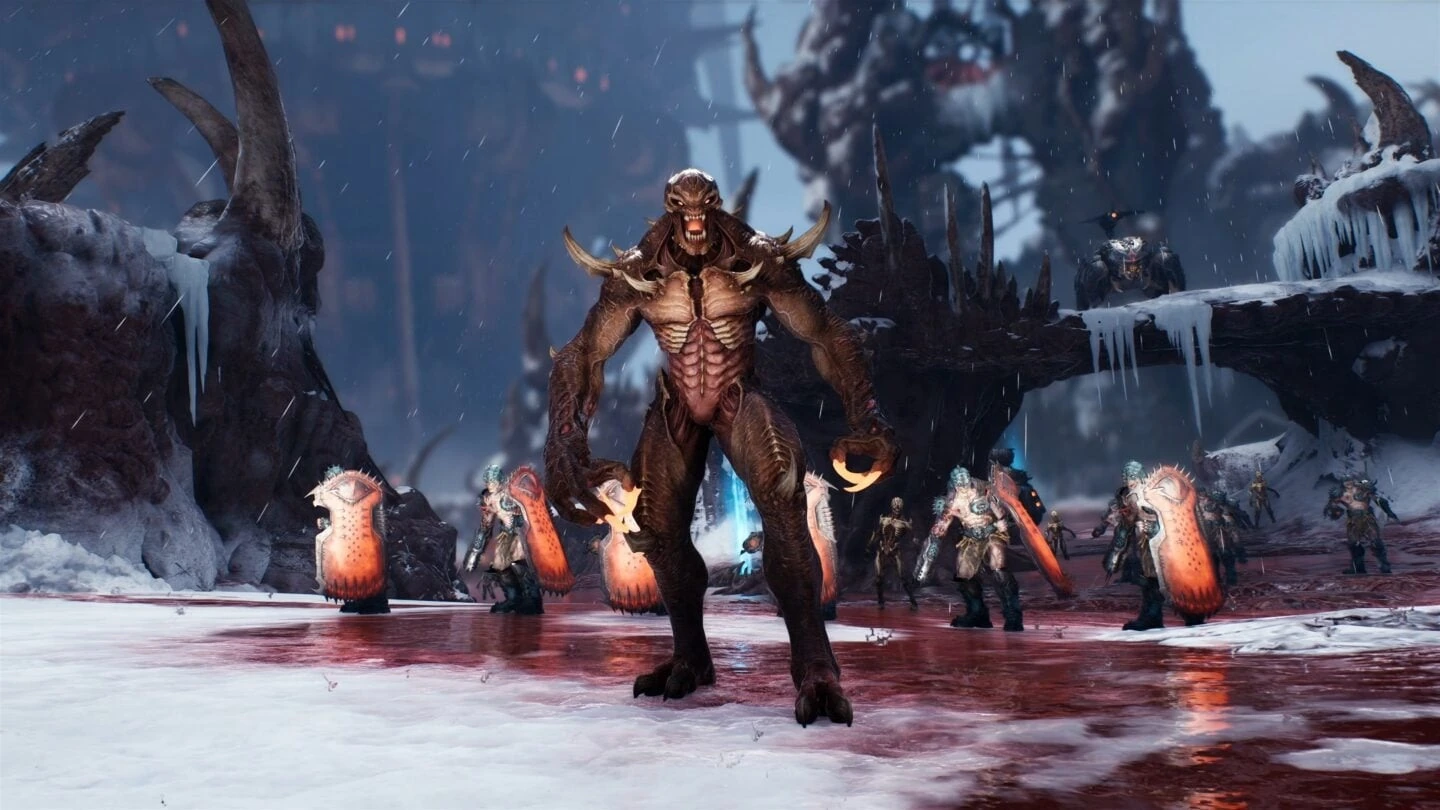
Vraahk is described as a commander shaped by the earlier Lambent War and committed to destroying humanity. His Scorched Legion reflects his brutality through its armor and appearance. A named commander helps connect individual encounters to the larger invasion, but the campaign still needs room for local decisions. The strongest conflict will show how his orders affect Kalona’s people instead of using him only as a final obstacle.
Marcus and Dom begin from a different emotional place
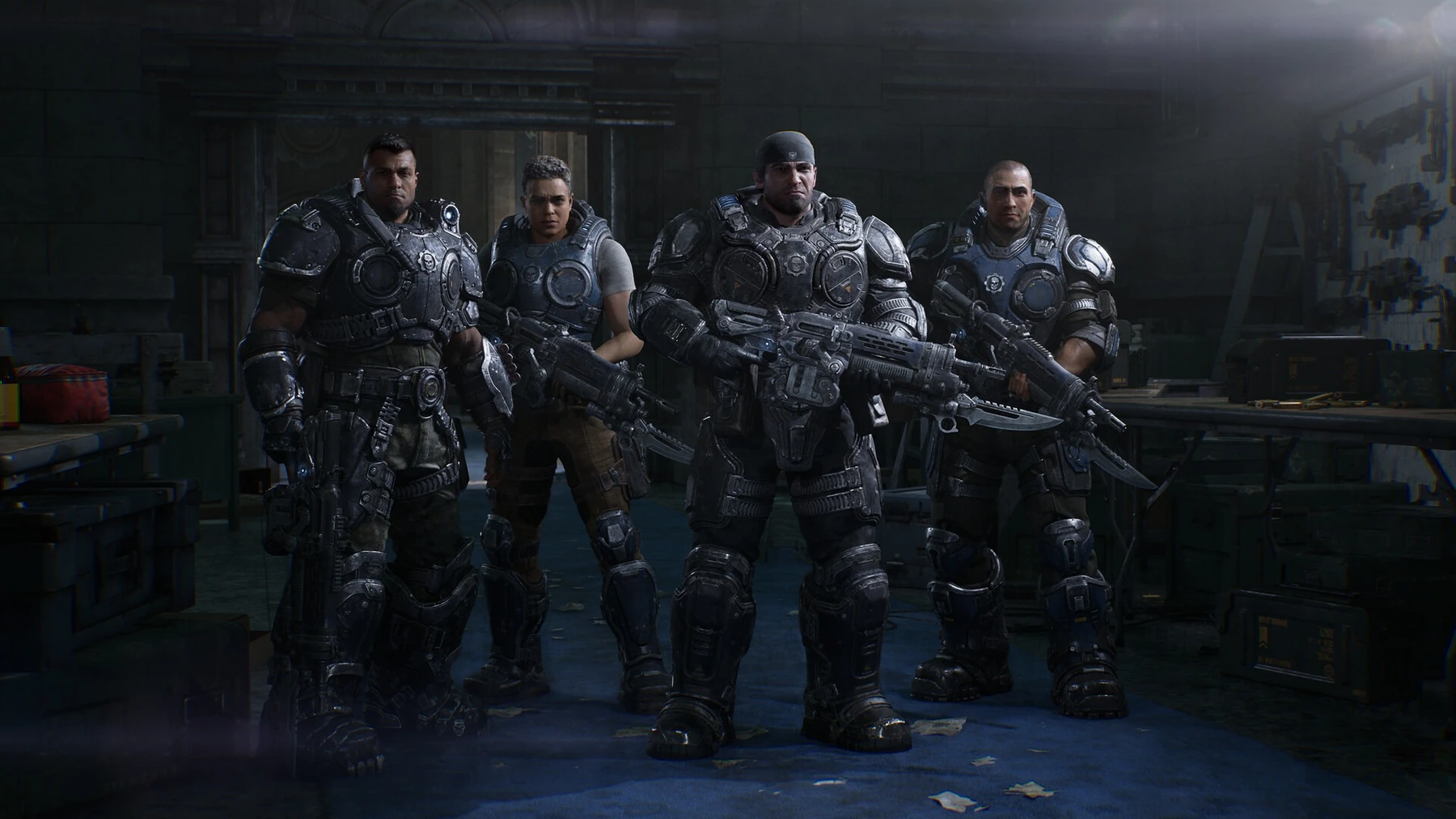
E-Day takes place before the long history that defines their partnership in the original series. Their trust exists, yet it has not been tested by every later loss. The campaign can therefore show small acts of support, disagreement and responsibility that explain why the bond endures. This is more useful than simply placing younger models into familiar combat. Character growth must be visible in choices made under pressure.
Bravo Squad belongs to a wider defensive effort
The story trailer introduces officers, city leaders and other soldiers with their own priorities. The mayor and colonel represent competing forms of authority while the attack is still being understood. Those tensions can make a rescue or retreat complicated without inventing a second enemy faction. A mission may succeed tactically while leaving a civic problem unresolved, which fits a disaster that no single squad can control.
The scale grows from a block to a war
The Coalition describes an escalation from local creature attacks to the realization that an organized army is emerging from below. Level order can make that change tangible: early spaces support close observation, while later battles expose the size of the invasion. Keeping the first hours intimate prevents the largest scenes from becoming routine. The player should feel that the rules of the crisis are expanding faster than Kalona can respond.
Brutality is intended to support horror
Gears combat has always been physical, but E-Day pushes the Locust closer to an unknown horror at the beginning of the conflict. Violence alone cannot maintain that feeling. Sound, incomplete information and the vulnerability of familiar spaces are equally important. A quieter approach before a major encounter can make the enemy more threatening than constant explosions. The campaign’s tone will depend on how carefully those contrasts are controlled.
A known historical outcome does not remove local stakes
Players already know that E-Day devastates Sera, yet they do not know which people escape Kalona or what a limited victory looks like there. The developers frame hope at the level of one city and two days. Saving a group, holding a route or preserving trust can matter even when the wider war begins badly.
That focus allows the prequel to create suspense without pretending the established timeline can be rewritten.