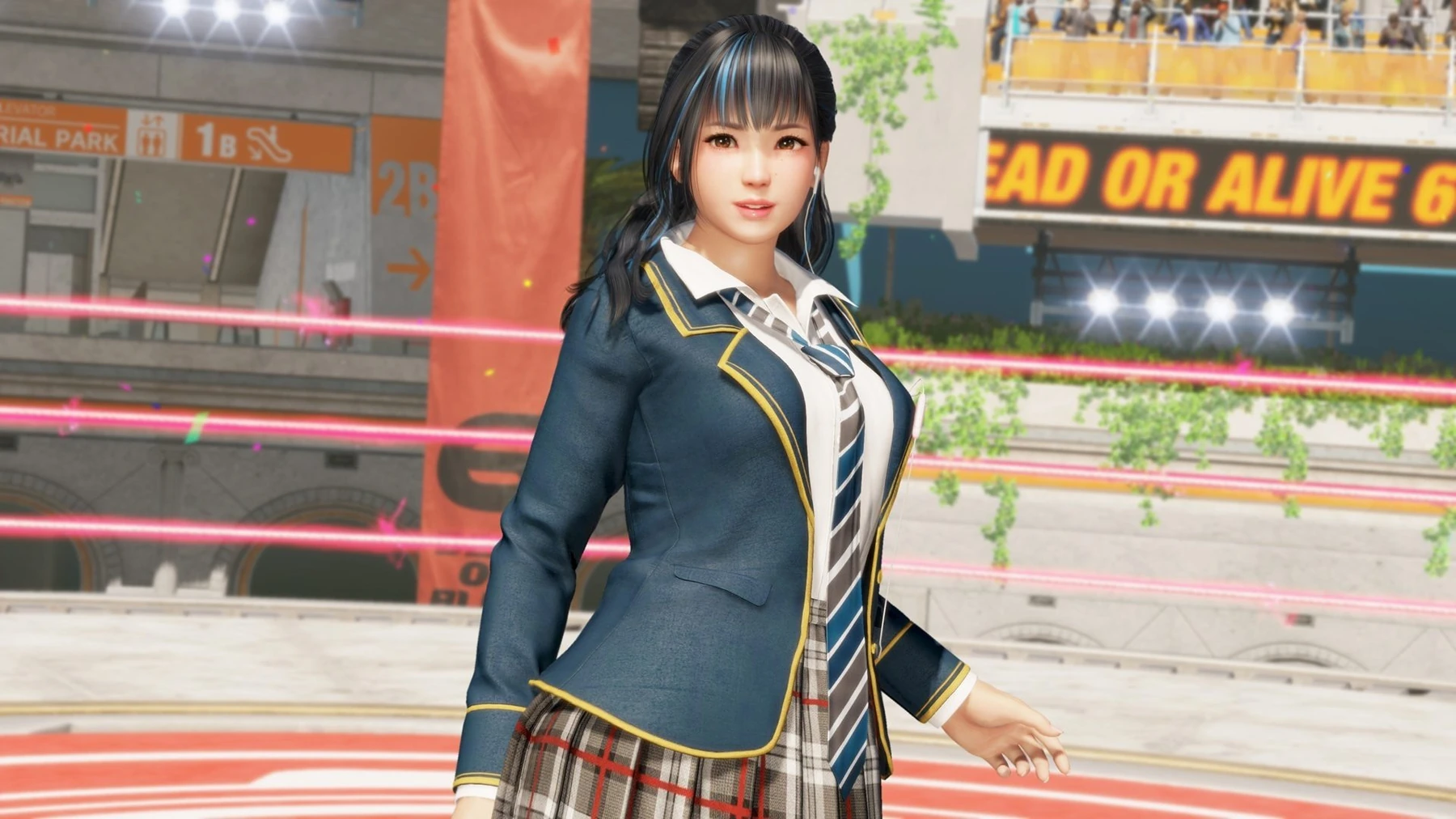
Koei Tecmo has introduced Minato for Dead or Alive 6 Last Round. The Tokyo student is an accomplished dancer whose unusual physical ability becomes the basis of her fighting style. A contact-lens device developed by NiCO converts the movements of other fighters into signals that Minato can reproduce. Her key stance, the Minato Shuffle, begins from specific attacks and branches into several follow-ups. The design is intended to be approachable for new players while retaining decisions for experienced competitors.
Table of Contents
The Shuffle is a decision point, not a free attack
Entering the Minato Shuffle creates access to several follow-ups, but the opponent also sees the transition. A beginner should first learn one safe entry and two different endings. Repeating the same option makes the stance easy to challenge. One follow-up can cover an immediate response while another can punish hesitation. Training becomes clearer when the player records which attack created the opening. The goal is to recognize a situation, not to perform the longest sequence every time the stance appears.
Vertical and horizontal spins change what the rival reads
Minato’s motion uses dance rhythm and broad turns. That visual style can hide the exact side of an incoming strike until the animation is familiar. Defenders should watch the starting position and distance rather than following every flourish. Minato players, meanwhile, need to understand when a spin leaves them exposed. A move that looks fast in isolation may be unsafe after it is blocked. Practice against a recording that alternates between standing guard, a quick counter and a sidestep to identify the real limits.
| Feature | Purpose |
|---|---|
| Minato Shuffle | Branches from selected attacks |
| Copied movement | Uses techniques inspired by the wider roster |
| Spins | Changes attack direction and timing |
| Story role | Independent character linked to NiCO |
Borrowed techniques still need one coherent plan
The contact-lens idea explains why Minato can reproduce movements associated with other competitors. A wide toolkit can tempt players to switch plans after every exchange. It is more effective to choose a basic route: establish a safe mid-range attack, force a defensive answer and then use a copied technique that addresses that answer. The identity of the character comes from how those pieces connect. A list of familiar animations only becomes a useful style when the player knows the purpose of each one.

New players can begin with three reliable actions
A first session does not need the complete command list. Find a quick attack for close pressure, a mid-range option and one answer against an opponent who attacks immediately. Add the Shuffle only after these actions feel stable. This creates a simple neutral game and prevents a beginner from entering a stance without a reason. After several matches, review where damage was lost. If the problem was distance, learn a movement option. If it was defense, add one hold or punish rather than another long combination.
Experienced players will test transitions and gaps
Competitive players should examine every Shuffle entry, the advantage after block and the point at which an opponent can interrupt. The answer may change by character and distance. Use training recordings with several defensive responses and keep damage settings consistent. A sequence that works against one slow defensive reply is not automatically a true combination. Clear testing protects both sides from early assumptions. It also reveals where Minato can stop, delay or choose a safer end instead of committing to the most visible follow-up.
Her story connection leaves room for later development
Minato lives away from her parents, is popular at school and disappears for work connected to NiCO. The game deliberately keeps her full identity uncertain. She does not begin as a member of one established faction, which lets her meet several groups of characters without a long explanation. Story scenes should therefore be read as clues rather than final answers. Her friendship with NiCO and the experimental device provide the strongest confirmed links, while future updates can explain who employs her and why the technology is being tested.
Presentation should not distract from match clarity
A dance-based fighter needs expressive animation, but players still require readable impact, timing and direction. Adjust camera effects and visual settings if the movement becomes difficult to follow. Online practice should begin in a stable connection because missed frames can make a stance transition look safer or faster than it is. When reviewing a replay, slow the moment before the hit rather than only watching the final combination. The useful information is often the first mistake that allowed the sequence to begin.
The first week will define practical defensive responses
Early character guides often emphasize successful attacks because they are easy to demonstrate. Defenders will gradually discover where to sidestep, keep blocking or interrupt an attack. Minato players should expect those answers and keep notes on common reactions. A loss against a new defensive response is useful if it identifies the exact transition that failed. The character’s broad move set gives room to adapt, but adaptation should remain controlled. Change one choice, test it across several rounds and keep the options that solve a repeated problem.