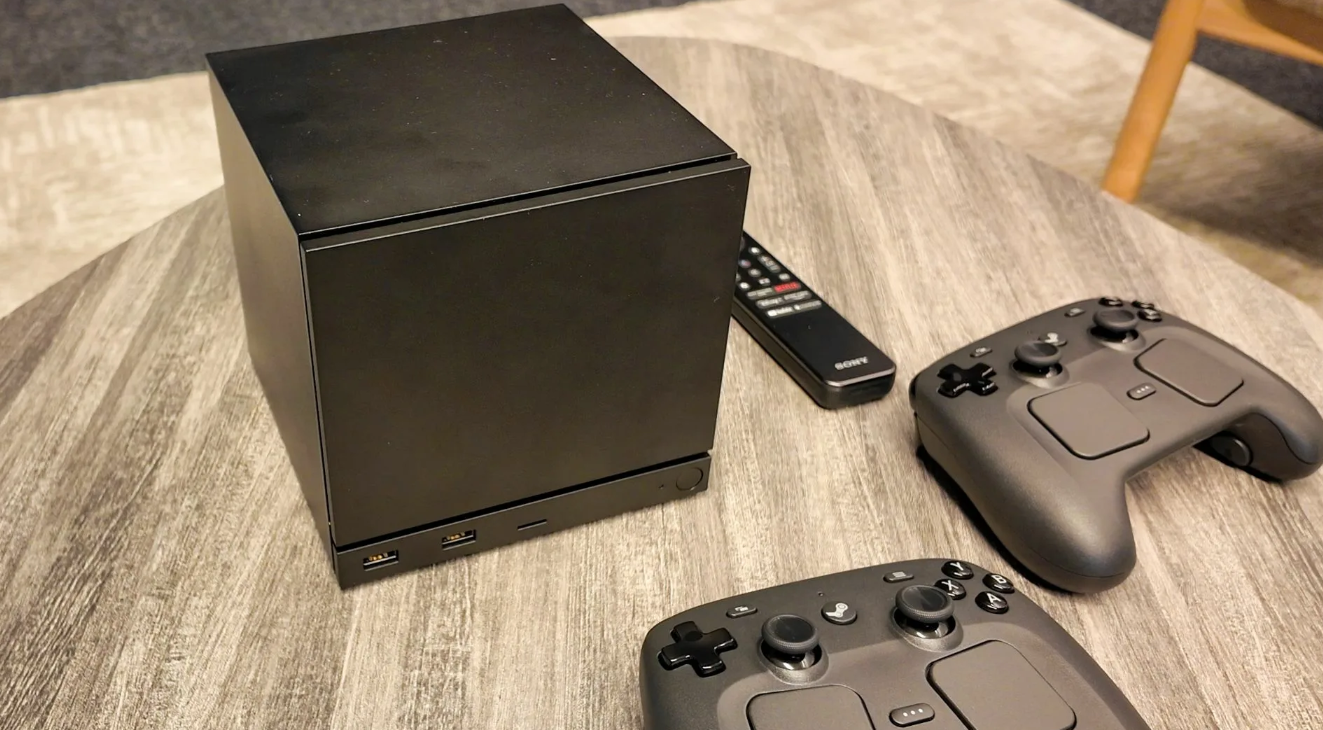
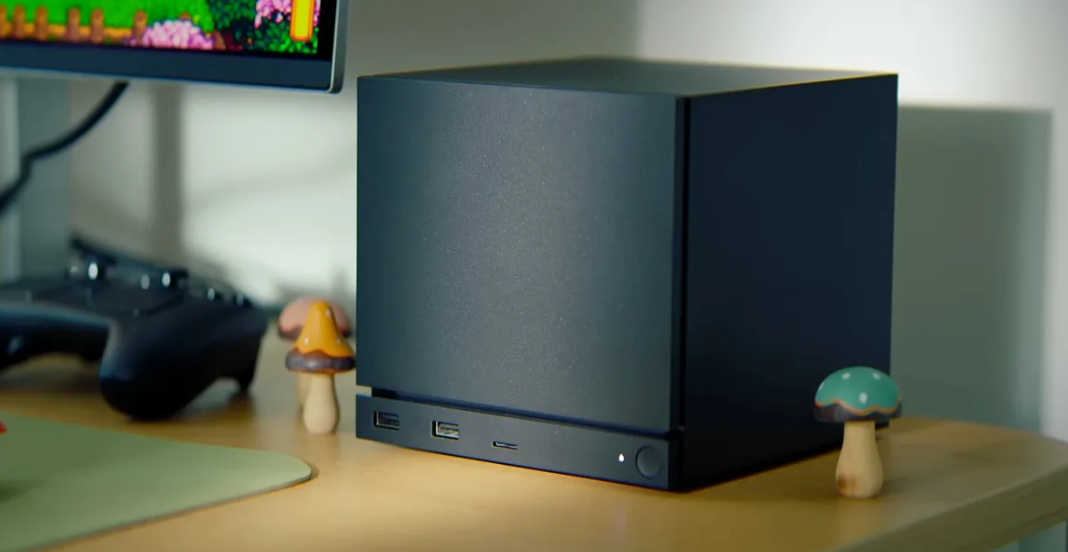
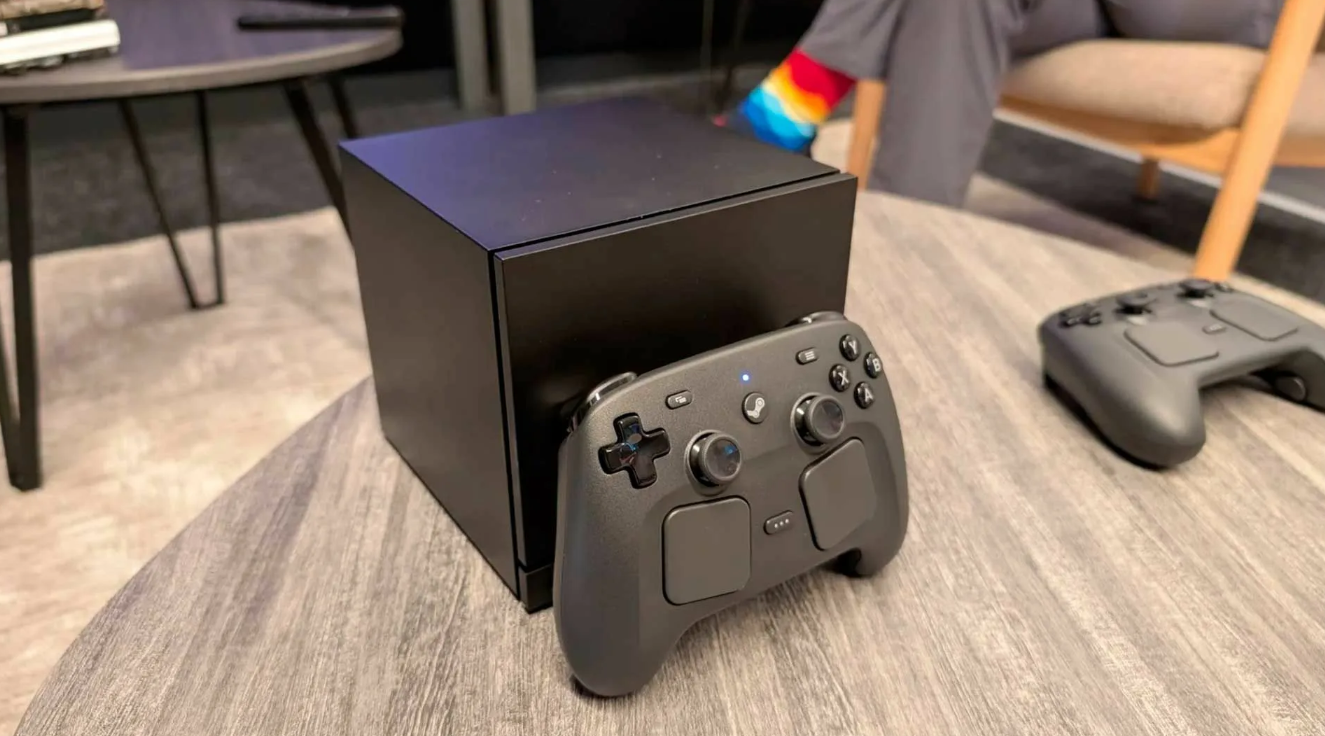
Steam Machine has an odd trajectory: the device still hasn’t reached most of the people who signed up for it, yet Valve is already busy refining it. While part of the buyer base keeps checking their inbox for that long-awaited invite, the company just shipped an update that changes the actual picture on screen — support for AMD FSR 4.1 through Proton Experimental. And alongside it, Valve did something it rarely does: it released the console’s engineering CAD files to the public.
Two announcements in one update — and each one solves a different problem for the same device.
Table of Contents
What the New Steam Machine Update Actually Changes
According to Valve’s own announcement, consoles running SteamOS can now use FSR 4.1 — not through the stable branch, but via Proton Experimental. That’s the testing channel where new features land before they make it into the main Proton release. The logic is simple: not everyone wants to wait months for the next “stable” build, and there’s already plenty of demand to try the new upscaler right now.
On paper, this looks like a narrow technical tweak. In practice, it answers one of the biggest questions hanging over the console at launch: how well can it actually run modern games on relatively modest hardware.
Why FSR 4.1 Isn’t Just Another Driver Update
Until recently, AMD drew a hard line: full FSR 4 with frame generation and ray reconstruction was RDNA 4-exclusive, while everything else was stuck with the aging FSR 3.1. The image quality gap between the two was obvious to the naked eye, especially in motion and at lower resolutions.
FSR 4.1 closes that gap for RDNA 3 owners — the same architecture powering Steam Machine itself. The technology relies on an INT8 upscaler instead of the FP8 pipeline reserved for newer chips, but it gets remarkably close to the “senior” version in image quality. The jump over the old FSR 3.1 is significant enough that outlets like TechSpot, after testing it on discrete Radeon RX 7000 cards, essentially recommended never going back to the old algorithm.
For Steam Machine, that translates into something concrete: the console should be able to push more demanding titles at a decent resolution without the sharpness loss and artifacting that plagued FSR 3.1.
Which Games Support FSR 4.1 on Steam Machine
It’s worth separating two levels of support here:
-
Games with native FSR integration — the upscaler version switches automatically at the driver and Proton level, no extra work needed from developers.
-
Games without any FSR support — the update won’t do anything for these; the picture stays exactly the same regardless of the Proton version.
In other words, Valve isn’t adding FSR to titles that never had it — it’s pulling in a newer version of the algorithm wherever basic support already exists. According to AMD, that list runs into the hundreds of games, and it keeps growing.
| Parameter | Before | Now |
|---|---|---|
| FSR version | FSR 3.1 via standard Proton | FSR 4.1 via Proton Experimental |
| Image quality | Noticeable artifacts at lower resolutions | Cleaner image, closer to FSR 4 on RDNA 4 |
| Frame generation | Not available | Still limited to RDNA 4 |
| Access to updates | Stable Proton only | Early access, no wait for a stable release |
It’s worth stressing: frame generation and ray reconstruction — what AMD calls the FSR Redstone lineup — still aren’t available on Steam Machine. Those remain tied to the newer RDNA 4 architecture. What the console gets here is upscaling, not the full FSR 4 feature set.
How to Enable FSR 4.1 on Steam Machine
Step by step, it looks like this:
-
Open Steam settings on the console.
-
Go to the Compatibility (Steam Play) section.
-
Switch the branch to Proton Experimental instead of the stable version.
-
Relaunch a game that already has FSR support built in.
-
Check the in-game graphics settings to confirm upscaling is active — the version should switch automatically.
No extra downloads or manual patching required — the switch happens entirely at the compatibility layer.
Why Valve Released the Steam Machine CAD Files
The second part of the announcement sounds more modest, but it matters to a different audience — the people who already have the console in hand, or will in the coming months.
Valve published precise 3D blueprints of the console’s chassis. On paper, that’s just a set of files with measurements. In practice, it’s a green light to the modding community: build whatever you want without the risk of being off by a couple of millimeters and wasting a batch of 3D-printed parts.
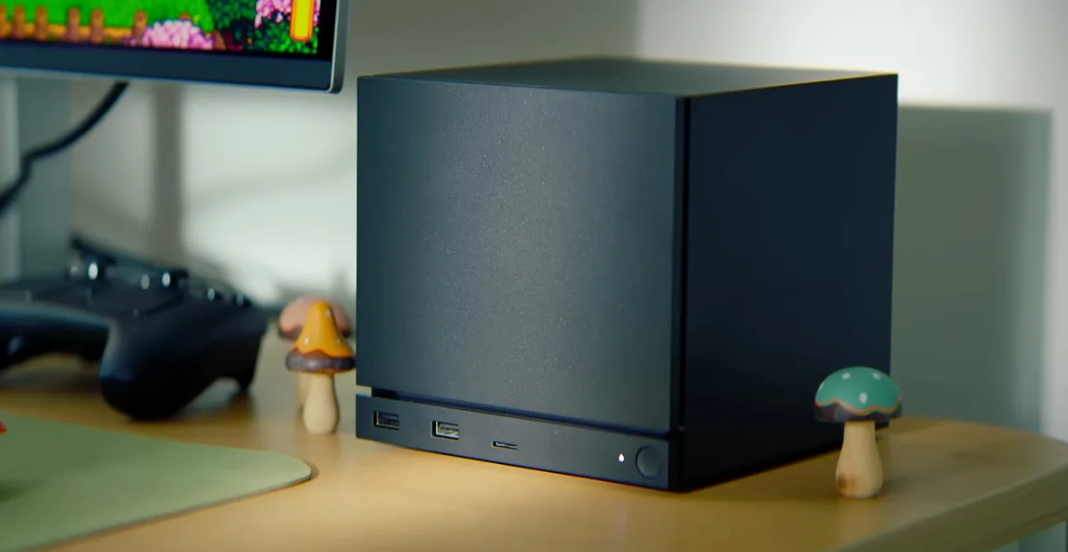
What You Can Actually Build With the Steam Machine CAD Files
-
Stands and mounts — vertical stands, TV brackets, shelf mounts.
-
Interchangeable panels — customize the look without risking damage to the original shell.
-
Protective cases — useful for anyone planning to carry the console around more than originally intended.
-
Docks and cooling stands — designed around the exact vents and port placements.
This fits Valve’s broader playbook from the Steam Deck era: the company has never been shy about an open ecosystem around its hardware, and third-party accessory makers have historically kept a device’s momentum going long before it became mainstream. It looks like Steam Machine is set up for the same trajectory.
Where the Steam Machine Purchase Queue Stands Right Now
While part of the community is busy flipping Proton branches, another part is still waiting for the chance to actually buy the thing. Some context: Valve launched sales through a randomized queue system — you register interest first, then get slotted in as component availability allows in your region.
The status shown in your account determines everything:
-
“Reservation queue” — guaranteed purchase availability through the end of 2026.
-
“Waitlist” — no specific timeline or guarantee attached.
The base 512GB configuration starts at $1,049, with the higher-end 2TB model priced considerably higher — a reflection of the broader memory and storage shortage partly driven by the ongoing AI boom. Some buyers have already received their invite to purchase, but for many others, the wait continues — which is exactly what makes the FSR 4.1 update land differently. Valve is clearly polishing the console ahead of the moment when the bulk of buyers finally get it into their hands.
What This Means for Players
Put both pieces of news together and the picture makes sense. Valve isn’t just shipping hardware and walking away — the console is being refined on the software side well before most of its audience even unboxes it. FSR 4.1 upscaling directly affects how sharp and smooth demanding games will look on Steam Machine’s relatively modest RDNA 3 hardware by today’s standards. And the open CAD files turn the device from a sealed box into a platform the community can build an accessory ecosystem around — the same thing that worked for Steam Deck.
If you’ve already got a Steam Machine, switch to Proton Experimental and try your favorite FSR-supported games — the difference from the old upscaler is noticeable without any side-by-side comparison tools. If you’re still in the queue, keep an eye on your status — and expect the console to be noticeably more polished by the time your invite arrives than it was at launch.