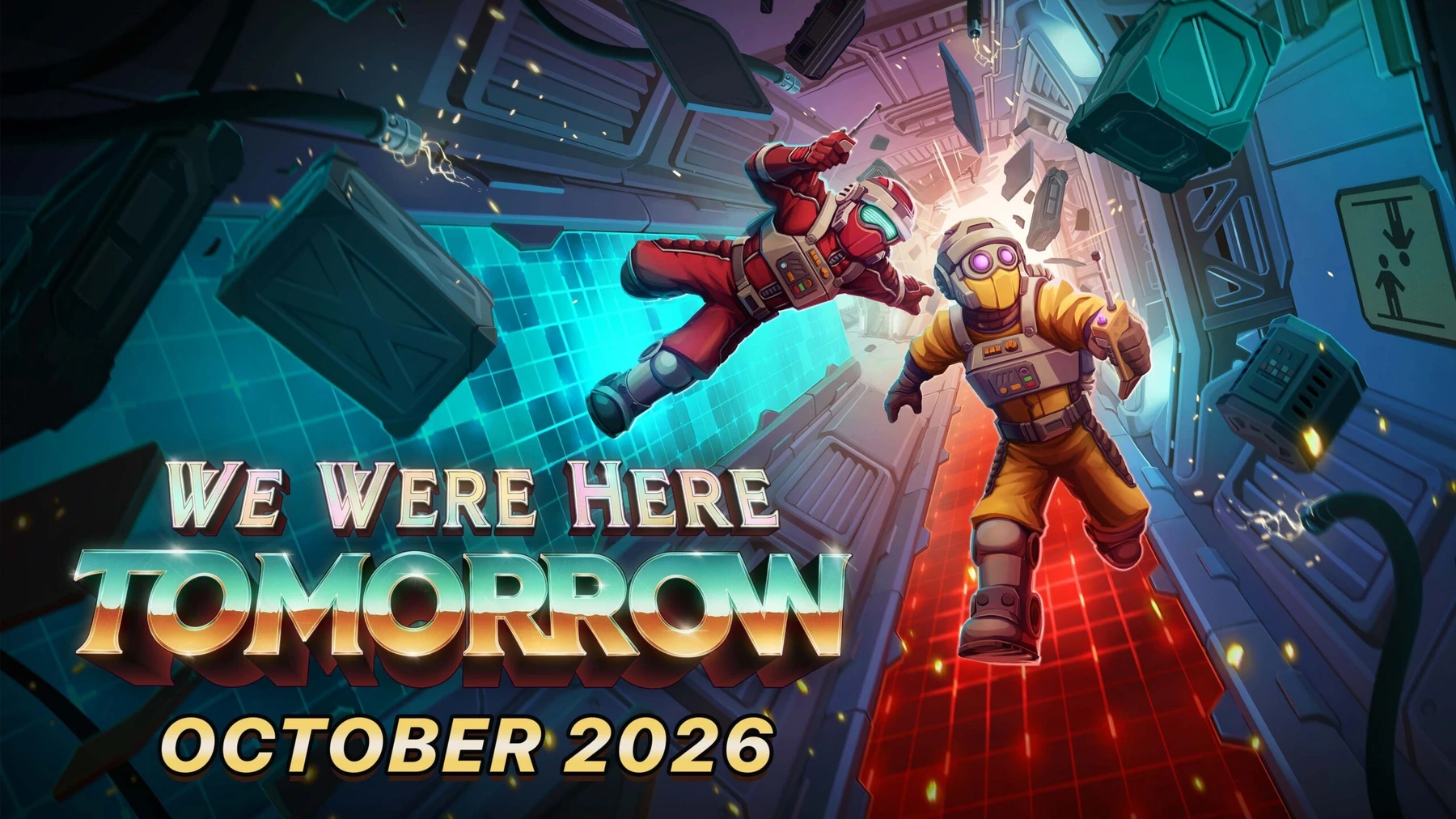
We Were Here Tomorrow sends two players into Norček Industries in Antarctica, where Director Kathleen Bowe and an interdimensional rift frame a new cooperative mystery. The Greenhouse can separate partners across past and future states, the Office of Tomorrow changes gravity and architecture, and the Optics Lab uses laser refraction. Each player sees only part of the information, so the walkie-talkie remains the central tool.
Table of Contents
Partial information is the real obstacle
A We Were Here puzzle rarely fails because one player cannot press a button quickly enough. The difficulty comes from one partner seeing a symbol, route or effect that the other cannot inspect. Communication has to turn that private view into a shared model. Players should describe shape, position and change before guessing at meaning. A sentence such as left symbol is too vague when both people face different directions. Agreeing on a reference point prevents several minutes of avoidable confusion.
The Greenhouse separates cause from result
When one partner occupies a past state and the other sees the future, an action may not produce an immediate effect in the same room. The pair should record what changed, not only what was touched. Moving an object in the past can open a route or alter growth later. If both players act at once, they may lose the chain of cause and effect. A deliberate sequence of one change, one observation and one report keeps the puzzle understandable.
| Area | Puzzle idea |
|---|---|
| Greenhouse | Partners work across different states of time |
| Office of Tomorrow | Gravity and architecture change orientation |
| Optics Lab | Laser refraction and incomplete visibility |
| Team | Exactly two cooperating players |
| Platform | Xbox Series X|S, planned for October |
Gravity makes ordinary directions unreliable
The Office of Tomorrow can change orientation and architectural relationships. Left and right remain relative to the person speaking, while floor and ceiling may no longer be shared assumptions. Partners can name visible landmarks and use clock positions around a fixed object. They should also say when their view rotates. A correct instruction given from an old orientation can appear wrong to the listener. Clear vocabulary becomes part of the solution rather than a convenience outside the game.
The Optics Lab needs precise descriptions of light
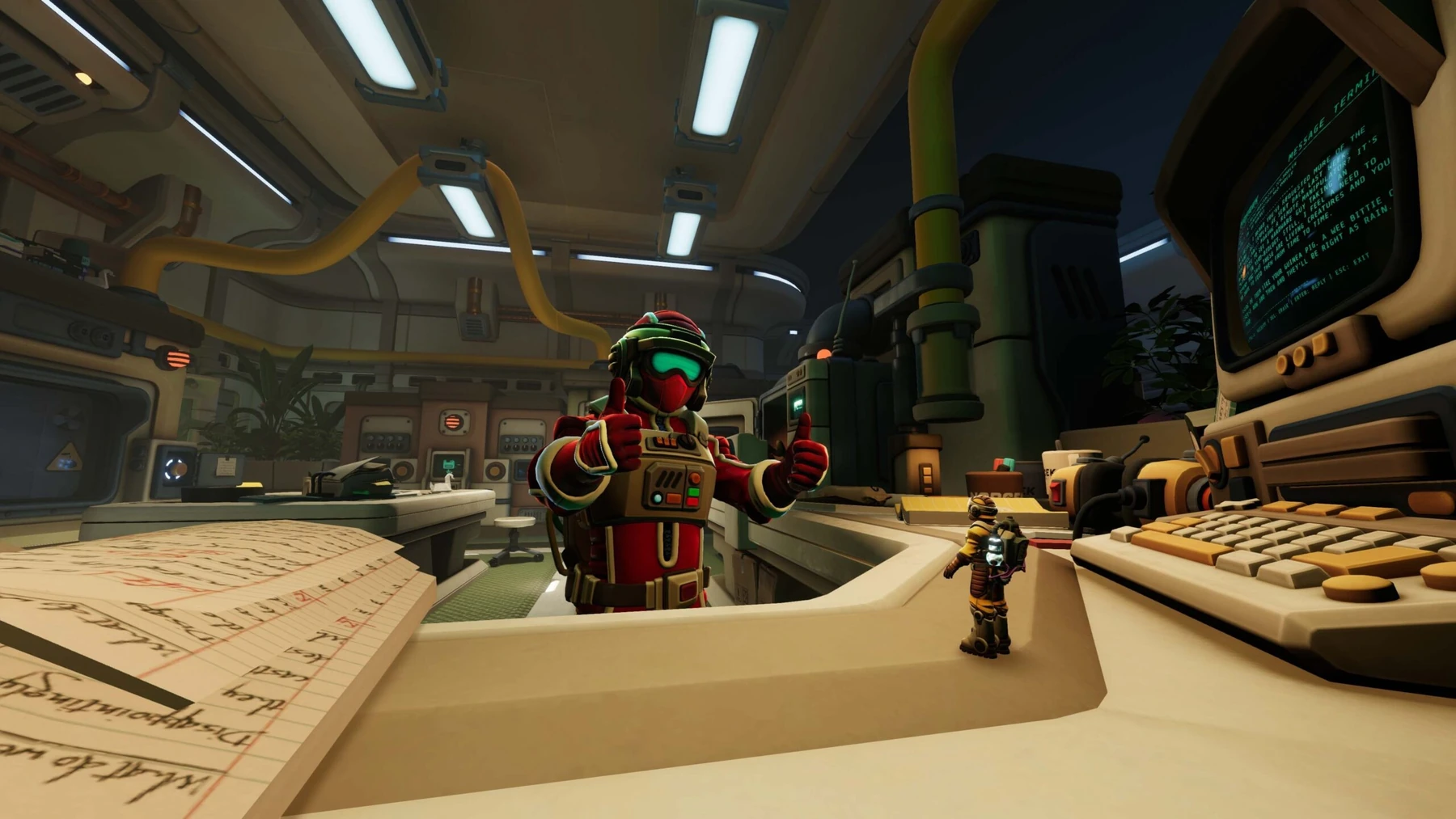
Laser refraction puzzles depend on direction, color, surfaces and the order of optical elements. One player may see the source while the other sees where the beam arrives. The team should identify each mirror or prism with a consistent label and change one element at a time. Randomly rotating several pieces can accidentally produce progress without teaching the solution, leaving the next stage harder. A short verbal map makes experimentation faster and allows both players to understand the final path.
Walkie-talkie discipline reduces overlapping information
Because the series uses radio-style communication, both players should avoid speaking through each other during a detailed observation. One person reports, the other repeats the key point, and then the pair decides the next action. Silence is also information when a sound or visual effect needs attention. The method may sound formal, but it quickly becomes natural. It protects important details during a puzzle whose design intentionally withholds a complete view from either person.
The setting gives the puzzles a common mystery
Norček Industries is not only a container for unrelated rooms. Director Kathleen Bowe, the Antarctic facility and the rift give the spaces a reason to behave beyond normal rules. Environmental details can therefore matter both as clues and as story evidence. Players should distinguish an object that explains the facility from one that controls the current mechanism. The best cooperative discoveries happen when one partner notices a narrative detail that helps the other interpret a technical puzzle.
A two-player game requires both copies and working audio
Each participant needs access to the game and a reliable way to communicate. Before beginning a long chapter, partners should confirm microphone level, language preference and whether the platform invitation works. Streaming a voice call through another device can be a useful backup if in-game audio fails, but it should not hide a wider connection problem. The game is planned for Xbox Series X|S in October, and final store details should be checked for online requirements.
Good cooperation leaves both players with the solution
One person can sometimes direct every action after solving the pattern alone, but that approach weakens the experience and becomes fragile when roles reverse. A stronger pair explains why the instruction works. After a successful step, they briefly summarize the rule before moving on. That shared understanding helps when time, gravity or light changes again under a new visual form. We Were Here Tomorrow is most effective when communication creates knowledge, not only compliance.
Descriptions should separate observations from instructions
A partner who says only that a room looks strange gives the other player little to use. The pair should name an object, its position and the change caused by an action. Time, gravity and light puzzles may alter the same space in different ways, so precise language prevents one clue from being applied to the wrong state. This communication method also reduces repeated experiments and keeps both players involved in the solution.