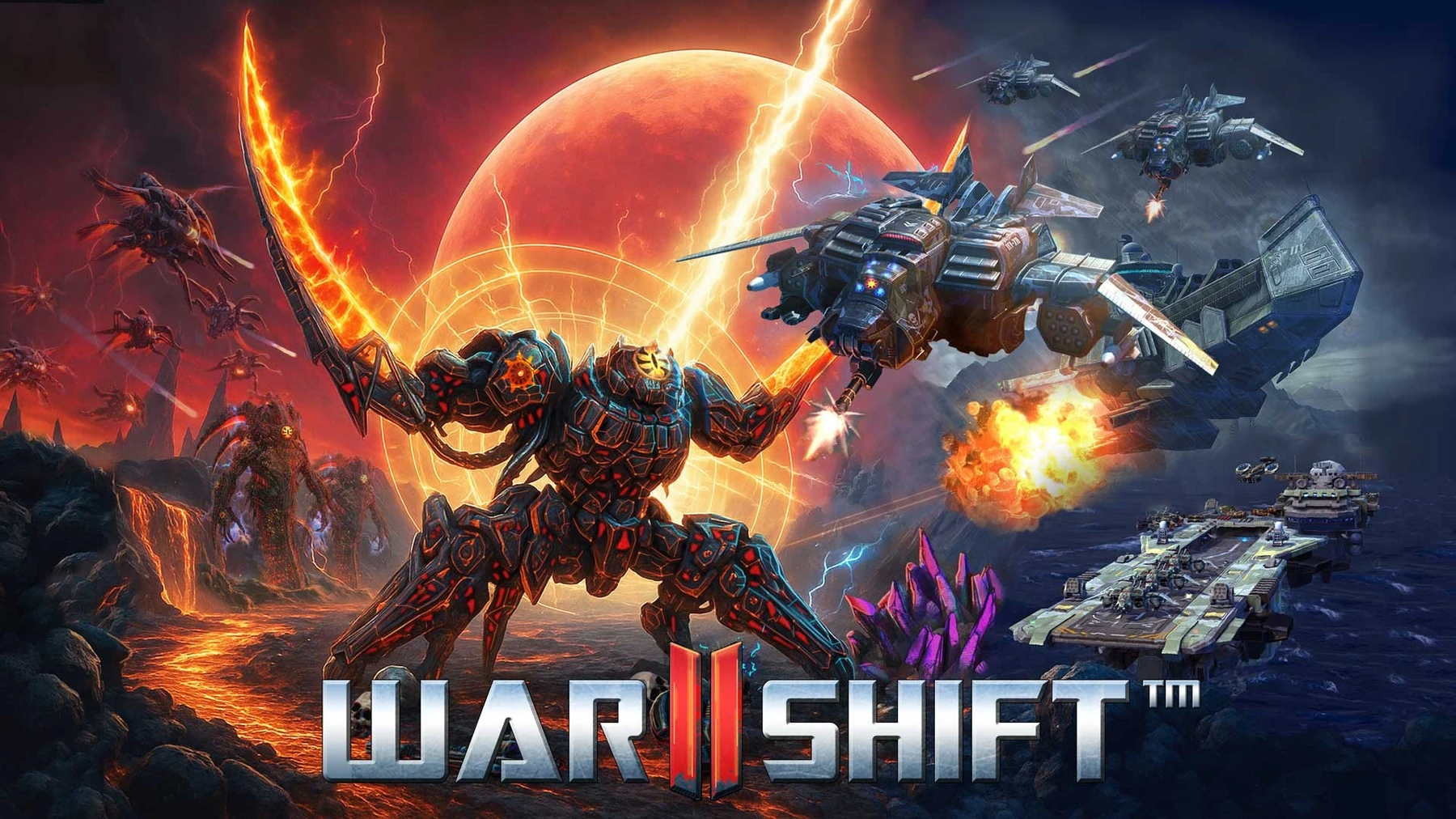
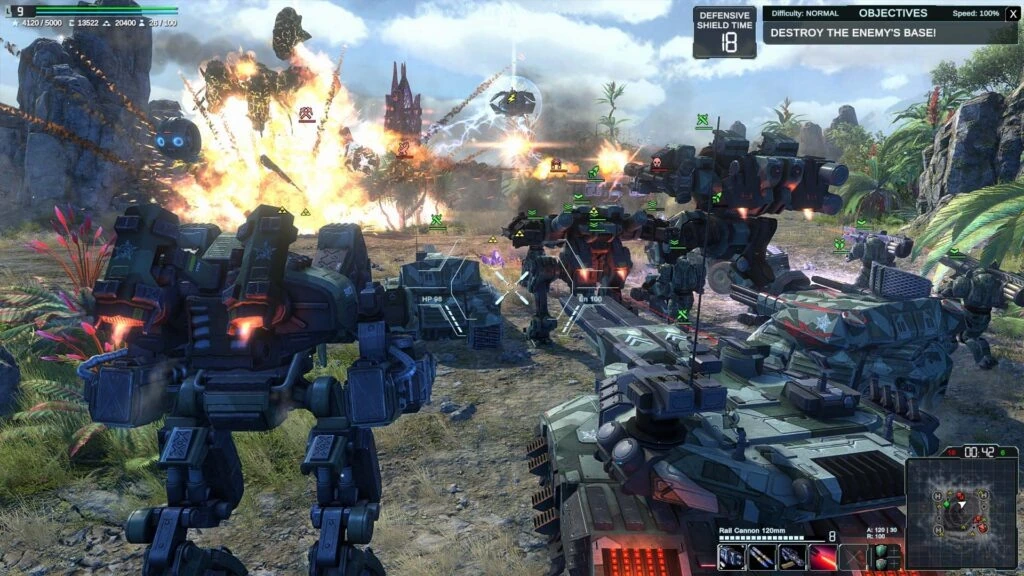
Warshift 2: Machines of Madness allows the player to switch between an overhead strategy view and direct third-person action at any time. Energy nodes fund production, the Ark base can move among four landing zones, and automated factories, support turrets and drones keep the wider battle active while the commander controls one unit. Seven modes, evolving alien enemies, aircraft and superunits expand the possible scale.
Table of Contents
The view switch is a tool, not a permanent choice
A player does not select strategy or action at the beginning and remain there. The useful skill is recognizing which layer can solve the current problem. Strategy view is better for checking several fronts, production and energy. Direct control is valuable when one unit can exploit terrain, protect a weak point or finish a priority target. Staying in action for too long can hide an economic collapse, while constant map control may waste the precision that a personally controlled unit provides.
Energy nodes define the shape of expansion
Production depends on captured energy, so territory has value beyond distance. A forward node can support a stronger army but may be expensive to defend. Capturing everything at once spreads units thin and gives the opponent several easy targets. A stable route takes the closest useful node, protects the connection and expands only when production can use the extra income. Direct control can help secure one difficult position, but the wider map still needs a defensive plan.
| Layer | Main decision |
|---|---|
| Strategy view | Economy, production, groups and base position |
| Action view | Direct control of a chosen unit |
| Resource | Capture energy nodes |
| Mobile base | Ark can use four landing zones |
| Modes | Seven |
| Development | Created by solo developer Cyril Megem |
Groups make action control less isolated
Warshift 2 allows nearby units to operate as a group while the player directly controls a lead unit. This keeps the action layer connected to army composition. A fast unit with slow support may leave the group behind, while a durable leader can create space for ranged allies. Before entering direct control, the commander should check formation, target priority and retreat route. The group needs simple orders that remain useful after attention moves back to the strategic map.
The Ark is a base with positional consequences
The Ark can move between four landing zones. Relocation can shorten reinforcement routes, protect a new energy area or escape a threat, but the move should not be made only because another zone is available. A base in transit may leave production or defence exposed. The player should identify what the new position solves and which old route becomes longer. A mobile headquarters is strongest when movement follows the campaign plan instead of reacting to every local attack.
Automation protects attention
Factories, support turrets and drones can continue useful work while the player controls a unit personally. Automation does not mean the systems should be ignored. Production queues need the correct mix, turrets require useful fields of fire and support drones must remain close enough to the units they serve. The goal is to reduce routine input so attention can move to a decisive action. A poor automated setup simply repeats the wrong decision without asking again.
Aircraft need repair as well as targets
Air units offer speed and reach, but repeated missions can leave them too damaged for the next attack. Carriers provide repair support, making their position part of air planning. A commander should avoid sending every aircraft deep into hostile space without a return path. The strike must have a defined target and enough surviving units to reach support. An orbital attack can soften a protected area first, saving aircraft for tasks that require movement rather than raw impact.
Alien evolution prevents one army from staying perfect
Enemy evolution means a successful early composition may become less effective later. The commander should watch which defensive traits and attack patterns appear, then adjust production before the old army is completely countered. Superunits can answer a major threat but consume resources and may not cover several fronts. The combined control system offers another response: directly use a specialized unit to create an opening while the broader force keeps a balanced formation.
The technical target supports a clear battlefield
The developer targets 4K resolution and 60 frames per second on Xbox Series X, while Xbox Play Anywhere connects eligible console and PC progress. Performance matters because the player moves rapidly between a crowded map and close combat. Stable motion and readable effects help commands remain accurate. Results can vary by platform and scene, so the target should be described as a goal rather than a guarantee for every moment. The game’s central promise remains the freedom to command and participate in the same battle.
The two control levels should support the same plan
A commander may set a broad defensive line and then take direct control of one unit to solve the most urgent threat. That intervention should strengthen the larger formation instead of leaving the rest of the force without guidance. Good play therefore requires a clear return point: after the local action, the player must check production, positioning and incoming attacks. The hybrid design succeeds when both views remain connected.