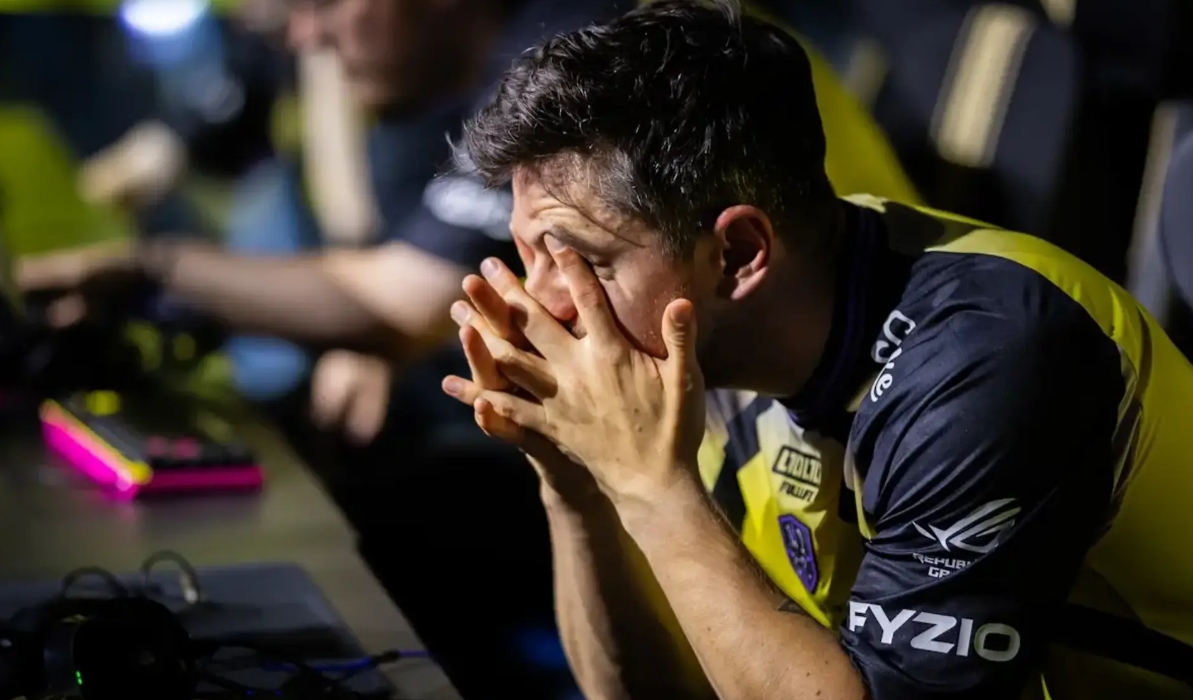
The Fortnite professional community is discussing the return of the legendary tandem of Kyle “Mongraal” Jackson and Martin “MrSavage” Andersen. The MM duo has officially confirmed their partnership for the 2026 season, planning to regain leadership in the highest echelon of competitive esports. The official announcement took place after a 40-second video clip, which instantly garnered millions of views and confirmed the couple’s participation in the FNCS 2026 series.
Table of Contents
Tournament schedule and the duo’s first steps in the 2026 season
The players intend to complete a full cycle of competitions, which is now based on the “duet” format. The training process and official matches will start from the following stages:
-
FNCS Trial — the start of qualifications is scheduled for January 31, 2026.
-
Divisional cups and Majors are a consistent promotion to gain ranking points.
-
FNCS Major 1 is the first major LAN tournament where the team will perform under the guidance of a Bloodx analyst.
Player Form Analysis: from Inactivation to Global Championship
The history of the couple’s performances clearly demonstrates their potential. Kyle Jackson took a long break from his career from 2021 to 2023, returning to action only with the release of the Fortnite OG update. Taking into account the experience of the 2024 and 2025 seasons, the team demonstrated stability by finishing eighth at FNCS 2025 Major 1 Europe. Based on this, experts predict their entry into the top 3 at the upcoming Global Championship with a prize pool of $ 10,000,000.
In addition, Martin Andersen has already proved his worth by reaching the finals of the 2025 World Championship with Nicolas “Chap” H. and Lennard “rezon ay” Sill, where he took ninth place. The duo’s current synergy at the Winter Invitational trials has confirmed that their mechanics and understanding of the Doom’s Castle map remain the benchmark for the professional scene.
Equipping the Gods of Fortnite 2026: Technological Doping of Bugha, Clix and Peterbot in Chapter 7
The death of standard gaming has come: in 2026, the difference between an esports player and lobby fodder is measured not in skill, but in microseconds of input lag. While the noobs are stuck in textures, the Fortnite elite represented by Bugha, Clix and Peterbot are utilizing the power of Unreal Engine 5.4 at exorbitant speeds. Catch the inside: if your hardware doesn’t produce a stable 300+ FPS, you’ve already lost the rotation.

Monitor Armageddon: 500+ Hz as a Survival Standard
The 360 Hz epoch is officially recognized as archived. Chapter 7 is dominated by panels where the refresh rate blurs the line between reality and rendering. The basis of victory is a visual flow without ghosting.
-
Bugha has bet on the Alienware AW2725DF. This is a 27-inch OLED monster producing 550 Hz.
-
Thanks to the 1440p resolution and HDR backlight, he sees enemies in the dark areas of the map, where ordinary LCD panels produce “black porridge”.
-
Clix prefers the ASUS ROG Swift PG27AQN (540 Hz) with a custom overdrive profile at “extreme” to achieve a 0.03 ms response.
Comparative analysis of the “Eyes” of Pro players in 2026
| Player | Device | Refresh Rate (Hz) | Panel Type | Resolution |
|---|---|---|---|---|
| Bugha | Alienware AW2725DF | 550 | OLED | 1440p |
| Clix | ASUS ROG Swift PG27AQN | 540 | QD-OLED | 1440p |
| Peterbot | Samsung Odyssey G7 (2026) | 600 | Mini-LED | 1440p |
Manipulators: Magnetic Levitation and 47 Grams of Rage
In 2026, a mouse weighing more than fifty grams is considered to be professionally unsuitable. The keyboard segment was captured by magnetic switches with the Hall Effect, allowing you to edit buildings with the speed of thought.
-
New generation sensors: 70% of the pro scene has been switched to Logitech G Pro X Superlight 2.5. The 47 g weight and PixArt 3950 sensor provide 1:1 tracking at 50K DPI.
-
Zero input delay: Peterbot sets a polling rate of 8K Hz, which minimizes micro-friezes during sharp Piece Control.
-
Analog advantage: The Razer Huntsman V3 Pro keyboard allows you to set the activation point from 0.1 mm. Bugha uses binds: Wall — Q, Ladder — Mouse4, Editing — F.
Graphics optimization: RTX 5090 vs Unreal Engine 5.4
Honestly, even the RTX 5090 suffocates if you turn everything on ultra. Esports players use a hybrid method: the power of Nanite and Lumen is preserved for the clarity of geometry, but the effects are sacrificed for the sake of 450 FPS.
-
API: Strictly DirectX12.
-
Scaling: DLSS 3.5 in Quality mode is the base.
-
Reflex: The On + Boost mode provides a system delay of around 5 ms. Peterbot Preset (Configuration: i9-14900K + RTX 5090):
-
View Distance: Medium (loot and load visibility balance);
-
Shadows: Off (removing shadows is crucial for detecting “rats”);
-
Post-processing: Off;
-
Result: 350-450 stable frames in Zero Build.
Peripherals and Console Oppression
For those who prefer a gamepad, Mero (the legend of the PS5 Pro) sets the trend for DualSense Edge. The main parameter is Linear Response and the use of the rear lobes for jumping and building, so as not to take your fingers off the sticks. Comfort is provided by the Secretlab Titan Evo chairs with active cooling and Audeze Maxwell planar headphones for perfect step positioning.