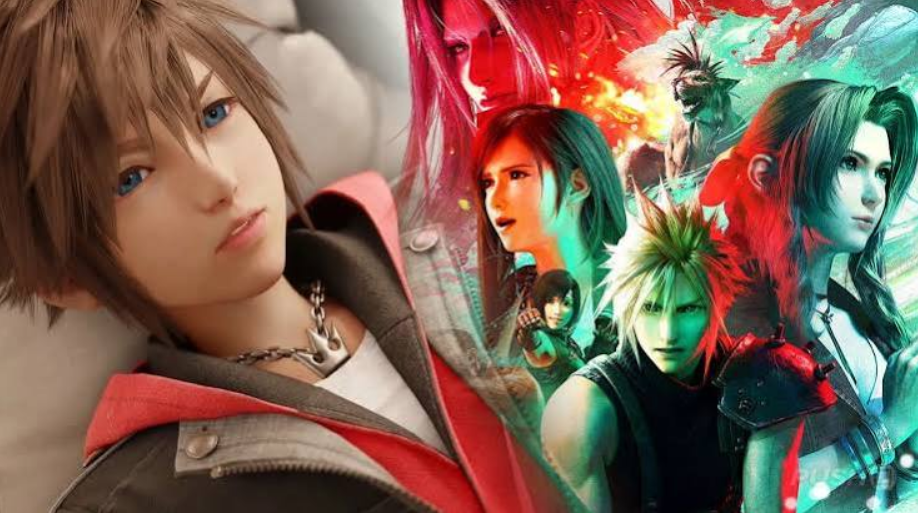
On June 24, 2026, at a shareholders’ meeting, Square Enix answered the question on every fan’s mind: will future Final Fantasy remakes be as ambitious as the FFVII trilogy, or will the company return to more intimate formats? The company’s answer was more than just news, it was a strategic manifesto. Each subsequent remake will have a unique approach based on player expectations and market trends. No templates. No “like last time.” But what does this mean in practice—and how do the already announced projects fit into this logic? We explore the full table of approaches below.
Table of Contents
What was said at the shareholders’ meeting—verbatim and to the point
The question was blunt: will the new remakes resemble the FFVII Remake Trilogy—with an open world, action-packed combat, and a trilogy of three full games—or will the company consider something more modest, like a visual remaster that preserves the classic mechanics?
Square Enix’s response is a model of corporate balance, but with a clear direction. We quote from the translation: “As part of our market-focused approach, we engage in research and experimentation to determine what best suits today’s consumers, based on current needs and market trends.” And the key phrase: “Specific titles may require specific mechanics.”
This isn’t evasiveness. It’s a principle: each remake is a unique case. Decisions on scale, combat system, and the degree of reworking will be made not according to the “like FFVII” template, but according to the formula “what this specific game and its audience need.”
FFVII Revelation: A Single Ending, but a Unique Path for Everyone
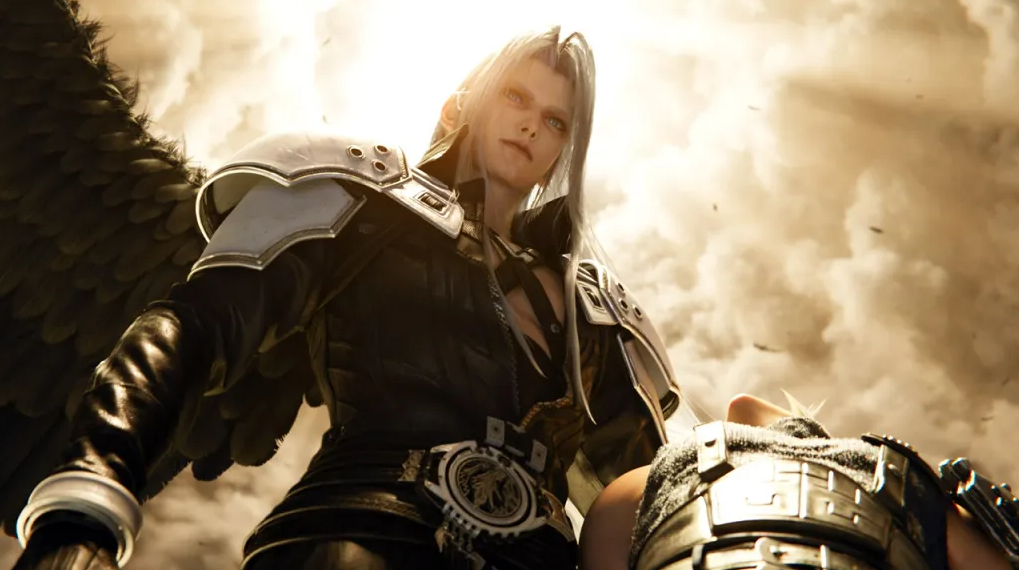
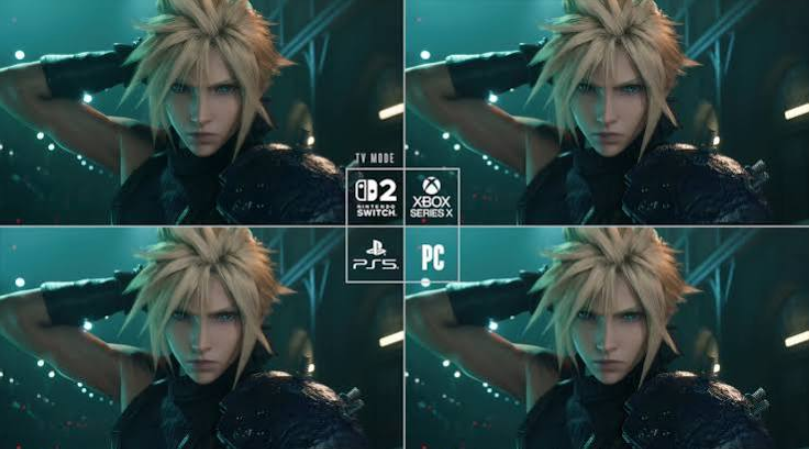
The paradox of Square Enix’s strategy is best illustrated by the final game in the trilogy, Final Fantasy VII Revelation. On the one hand, director Naoki Hamaguchi explicitly stated that the game will have a “single ending” for all players. On the other, he also said, “We wanted every player—every fan—to have a unique experience leading up to the final battle.”
How does this fit together? Through the choice system. Some scenes and dialogue in Revelation will change depending on the player’s decisions throughout the game. Hamaguchi clarified that this refers to “a change in the approach and depth of the plot points for these characters in the final chapter.” The ending, as a point, is the same for everyone. The path to it is unique to each player. This is the “unique approach” in action: not breaking canon, but giving the player a sense of authorship over their own version of the story.
How does the choice system work in Revelation?
Unlike traditional RPGs with multiple endings, Revelation doesn’t ask the player to choose the fate of the world with a single button press at the end. Influence is cumulative. Hamaguchi explained that “the characters’ attitudes and ‘determination’ will differ depending on the direction you choose in your party.”
Simply put, Cloud and his companions in your version of the game may make decisions differently than in your friend’s playthrough. This isn’t a game design trick, but a direct implementation of the principle stated at the shareholders’ meeting: the approach is determined by player expectations, not by franchise inertia.
Comparing Approaches: Final Fantasy Resonance, FFVII Trilogy, and Pixel Remasters
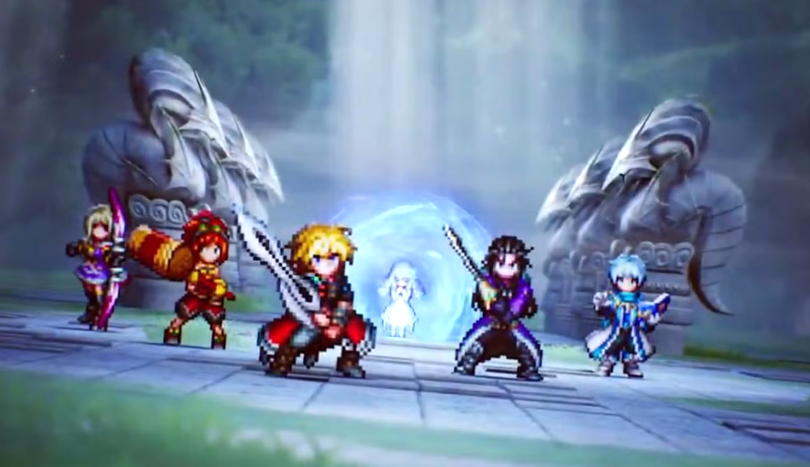
While Revelation is preparing for spring 2027, Square Enix is releasing a project this year that perfectly exemplifies its “unique approach” from a different perspective. Final Fantasy Resonance, based on the mobile game Brave Exvius, is releasing on October 22, 2026, on PS5, Xbox, PC, and both versions of the Nintendo Switch.
This is the first HD-2D remake in the series’ history—pixel graphics with volumetric lighting and modern detail. More importantly, according to industry publications (Eurogamer, Yahoo), Resonance will return to a turn-based combat system. There’s no official confirmation from Square Enix at the time of publication, but if the rumor is confirmed, it would directly answer the shareholder’s question about “small projects”: the company is testing a format that is as far removed from the scale of the FFVII Trilogy as possible, while still remaining a full-fledged remake, not just a remaster.
Comparison Chart: Three Square Enix Approaches to Remakes
FFVII Remake Trilogy – How Success Changed Square Enix’s Strategy
Without the success of FFVII Remake (2020) and Rebirth (2024), this conversation would not be happening. It was the trilogy that proved that a remake could be more than just a reissue, but a standalone artistic statement. But it also created the expectation that “all remakes will be like this.” Square Enix gently but firmly dispelled this expectation at its shareholder meeting.
The key quote from the response: “We will continue our development efforts, evaluating what truly resonates in the current market environment for both original games and new remakes.” In other words, the FFVII Trilogy isn’t a model, but an experiment. A successful one, but not the only possible one. Resonance is a different experiment. And future remakes, whether FFIX, FFVI, or something else, will be the third, fourth, fifth—each with its own logic.
What’s next? What remakes might Square Enix make next?
The Final Fantasy remake timeline by mid-2026 looks like this:
-
2020 — FFVII Remake (the first part of the trilogy)
-
2024 — FFVII Rebirth (the second part)
-
2026 (October 22) — Final Fantasy Resonance (HD-2D)
-
2027 (spring) — FFVII Revelation (the finale of the trilogy)
Beyond this list are rumors of a FFIX remake and constant fan requests for reimaginings of the earlier games in the series. Square Enix’s response gives the company carte blanche: any of these projects could be large-scale, intimate, experimental, or classic. The decision will be made not “by analogy,” but “on a case-by-case basis.” For players, this means one thing: comparing future remakes to the FFVII Trilogy is pointless. They will be done differently – because it was not inertia that decided this, but strategy.