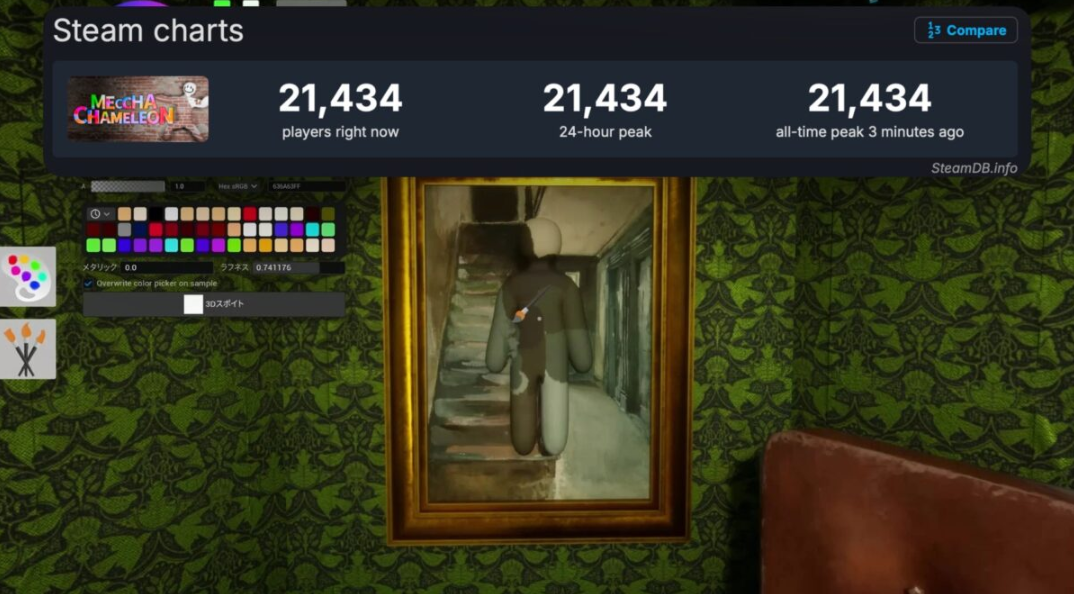
Hide-and-seek, not just any old game, but one that involves sticking to walls and matching colors—the idea was a hit. The indie game Meccha Chameleon, by developer lemorion_1224, sold almost half a million copies in its first three days on sale. It was released on June 10th, according to analytics service Gamalytic. Modest in scope? Certainly. But the concept proved remarkably sticky—literally.
The premise of the game is simple: you’re a chameleon that blends into any surface. Wall, floor, ceiling—the difference is small. Stick to it, match the color, and your opponent passes you by. The mechanics are simple, but addictive. And this despite the project currently having 75% positive reviews on Steam, based on over two thousand ratings. It’s not perfect, but for a solo developer, it’s more than respectable.
By the way, the author goes by the nickname lemorion_1224. Is he an enthusiast, a former modder, or a student who finished the project over the summer? There are no exact figures. But Meccha Chameleon’s success once again confirms the old adage: an original idea is sometimes more important than a million-dollar budget.
Table of Contents
How much did Meccha Chameleon earn after its release?
Let’s get down to the numbers. Nearly 500,000 copies sold in 72 hours is a strong indicator of popularity, and it’s not just a monetary value. The game’s price on Steam varies by region. In the US, it’s $4.99, in Europe, it’s €4.99, and in Russia, it’s around 250 rubles (the launch price was 199 rubles, but they raised it after its viral success). Let’s take an average purchase price of $3.50, taking into account discounts and regional pricing.
Multiply: 500,000 x $3.50 = $1,750,000 in revenue. But Steam takes 30%, leaving approximately $1,225,000. From this amount, taxes, payment system fees, and possible refunds (approximately 5-7% for indie games) must be subtracted. The developer could have received approximately $1,050,000 net—over a million dollars in three days.
Comparison with other indie hits 2025-2026:
So, Meccha Chameleon isn’t a record-breaker, but for a single player and such a low price, the result is outstanding. Especially considering the game doesn’t have multiplayer and was put together in a hasty manner.
Is Meccha Chameleon worth buying in 2026?
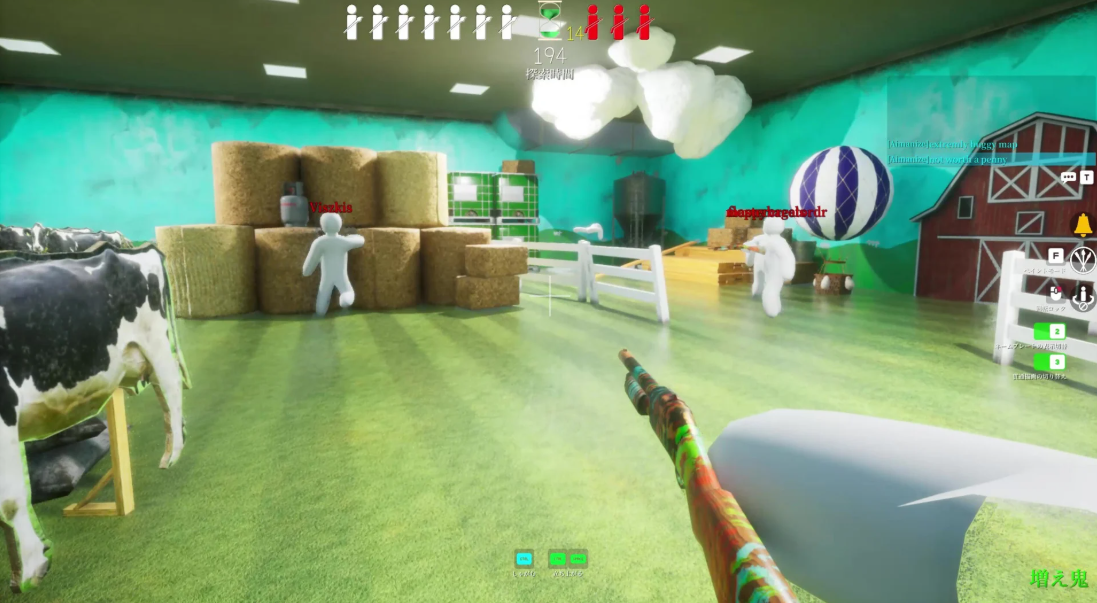
Good question. It’s only been a short time since its release, but it’s already possible to form an objective picture.
Pros:
-
The mechanics are original. Neither Witch It nor Party Animals give you that “I’m a wall” feeling. Sticking to any surface and real-time color matching are features that make the flaws forgivable.
-
Low entry barrier. You’ll get the hang of it in a couple of minutes, even if you’ve never played hide-and-seek.
-
Price: Even after the price increase (currently around 299 rubles on Steam), it’s cheaper than a cup of coffee. The risk is minimal.
Cons:
-
Little content. There are only 8 maps. The characters are a single chameleon with skins. You’ll see everything in an hour or two.
-
Online traffic is declining rapidly. In the early days, there were 15,000 players at peak, now it’s around 2-3,000. Finding a party at night is difficult.
-
Technical issues: the camera sometimes clips into textures, and there’s a delay in sticking to moving objects. The developer promises patches, but hasn’t released any yet.
VPEsports.com verdict: If you’re looking for an evening of hide-and-seek with friends (either online or on a single PC with split-screen—yes, that option is available), don’t hesitate. For 4 dollars, you’ll get an interesting experience. Solo players are better off looking at more intense games like Propnight or Dead by Daylight. If you’re a fan of indie hits, you can’t miss this one; it’s a small piece of history.
Worth it in 2026? Now, yes. In six months, probably not. Games like these have a bright, but short lifespan. Seize the moment.