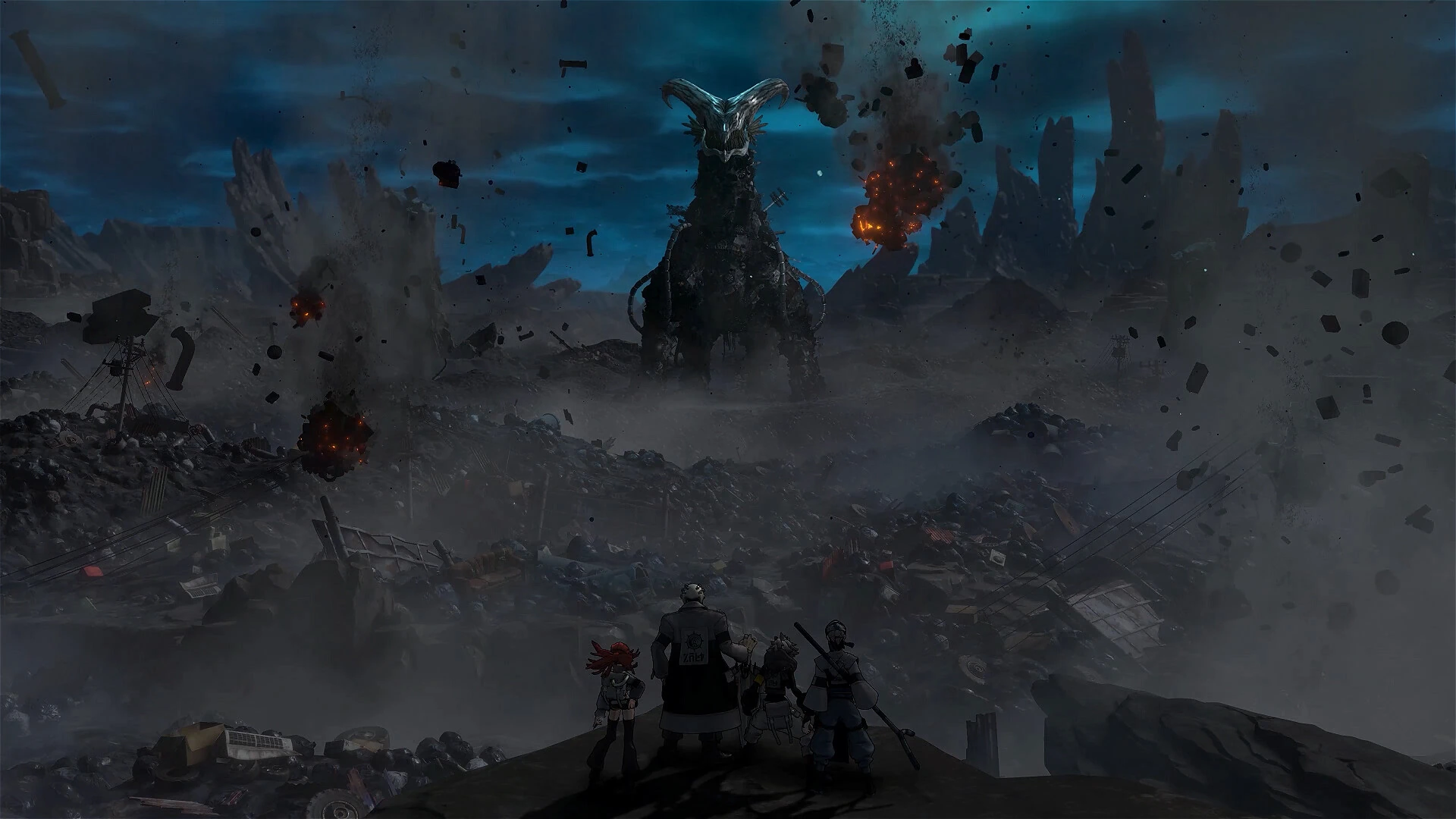
Kojima Productions has confirmed Bill Skarsgard as the protagonist of PHYSINT, its developing action-espionage project. A new poster photographed by Hideo Kojima places Skarsgard beside Charlee Fraser, while Don Lee and Minami Hamabe remain part of the announced ensemble. The update establishes the leading performer but does not provide a release date or final platform list.
Table of Contents
The lead actor gives the project a clear focal point
Skarsgard is attached to the lead role rather than a short promotional appearance. His performance will help define a protagonist whose name and full objective remain unrevealed.
Performance capture can connect facial detail, movement and voice across cinematic and playable scenes. The announcement is meaningful without being treated as proof that production is near completion. Naming the lead actor gives the project a human reference before the protagonist’s biography is revealed. Skarsgard can shape posture, hesitation and physical confidence through performance capture, details that are particularly valuable when an espionage story depends on reading uncertain intentions. The new poster also gives the production a coherent visual tone without revealing the operative’s history. Costume and expression can suggest restraint and danger while the story keeps his loyalties unknown.
The cast points to characters with different goals
Charlee Fraser appears on the new poster beside the lead. Don Lee and Minami Hamabe are also confirmed members of the cast.
Their exact relationships have not been explained, so assigning allies and enemies would be speculation. Future reveals can clarify how each performer connects to the central espionage conflict. The announced cast already covers performers with very different screen presence. Keeping their allegiances undisclosed preserves the central tension: an operative may need information from someone who is neither a permanent ally nor a simple enemy. Fraser’s presence beside Skarsgard indicates importance but not a fixed relationship. The same image can support partnership, rivalry or temporary cooperation, all familiar sources of pressure in espionage fiction.
Action espionage needs clear interactive systems
Kojima Productions describes PHYSINT as a game that works across interactive and cinematic forms. Stealth information, player control and failure states must remain clear even when scenes aim for film-like framing.
A convincing agent should be able to observe and improvise rather than only follow scripted corridors. The first unedited gameplay will show how the announced ambition becomes a repeatable system. Cinematic framing can strengthen suspense, but the player still needs to understand cover, visibility and the consequence of a failed approach. PHYSINT will become easier to judge once an uninterrupted mission shows how camera direction and player choice coexist. A game can borrow close framing and actor detail from cinema while leaving routes and timing to the player. That balance is the central design question behind the project’s film-and-game ambition.
The Xbox publishing relationship is now explicit
Xbox will publish PHYSINT as part of its wider work with Kojima Productions. That relationship also covers OD, but the two projects have different premises and casts.
The announcement does not yet confirm every store or device on which PHYSINT will appear. Steam and other platforms remain unconfirmed until Kojima Productions or Xbox names them directly. Xbox publishing support can provide production resources without answering the platform availability question by itself. Until the platform list is published, the accurate position is limited to the partnership, the genre and the cast that Kojima Productions has formally introduced. The publisher announcement confirms institutional support, not a release platform menu. Buyers should wait for a formal store or device list before treating any PC or console version as available.
The update answers one question and leaves the schedule open
There is no official launch day or window in the casting announcement. Further casting news is promised as development continues.
A poster and lead actor can establish tone, but they cannot show mission structure or technical performance. For now, the firm news is Skarsgard’s role and the growing ensemble around him. The absence of a release window is significant because casting, scanning and camera tests can happen long before a game reaches its final systems. The new material establishes creative direction; later demonstrations must still explain missions, progression and the balance between stealth and direct action. Casting news is valuable because it identifies the performer carrying the central role. It does not replace the later need for gameplay, a launch window and an explanation of how missions connect.