No More Slimes launches on Xbox and Windows PC on 21 August. The action game places the player against large groups of bouncing slimes. Cards, relics and skill trees provide different ways to improve a build during play.
The simple enemy idea creates a clear challenge: control space before the screen becomes crowded. The upgrade systems should help players choose how to clear groups, damage stronger targets and remain mobile.
Table of Contents
Controlling large enemy groups is the first practical problem
Large enemy groups can close safe movement routes. An ability that damages several targets may be more useful than a stronger single hit. The correct choice depends on how quickly new slimes appear. Positioning remains important even with automatic or repeated attacks. Players should move toward open space before the current area becomes dangerous. Waiting until every route is blocked leaves fewer solutions.
Clear enemy colours and attack warnings help the player read the screen. More effects should not make important danger harder to see.
Cards and relics can create build combinations
Cards may add active effects, while relics can change passive behaviour. A lightning effect and a bouncing weapon support different kinds of area control. Combining them should create a recognisable play style. A good choice offers a trade-off. More damage may require closer range. Safer movement may reduce immediate power. Decisions become less interesting when one option is always stronger.
Skill trees can provide a longer direction across the session. Players need enough information to understand which later upgrades connect with the current branch.
| Type of upgrade | Effect during one attempt |
|---|---|
| Cards | Active effects during combat |
| Relics | Changes to passive effects |
| Skill trees | A plan for the character build |
| Movement options | Safer movement through groups of enemies |
Progress should keep each attempt understandable
Many upgrade systems can become difficult to read. The game should explain whether an effect changes damage, range, speed or frequency. Similar words need consistent meanings across every menu. A summary after the run can show which abilities produced value. That information helps players test a new combination instead of choosing upgrades only from memory.
Failure should arrive from a visible mistake or an underpowered build. Sudden damage hidden under effects would make improvement harder.
The release supports play on console and PC
No More Slimes includes Xbox Play Anywhere. Players who own the supported digital version can move between an Xbox console and a Windows computer through one account. The feature suits a game built around repeatable sessions. The visual tone is bright, but the screen pressure can still create a demanding action loop. Players who prefer relaxed combat should check difficulty and accessibility settings.
The release will show whether cards, relics and skill trees remain easy to understand when many enemies are present. The strongest builds should feel powerful while still rewarding movement and planning.
Build planning should remain readable during combat
Cards, relics and skill trees create several layers of choice. The player needs to understand which layer changed an attack. Clear icons and short descriptions can prevent the build from becoming a list of effects that are difficult to compare.
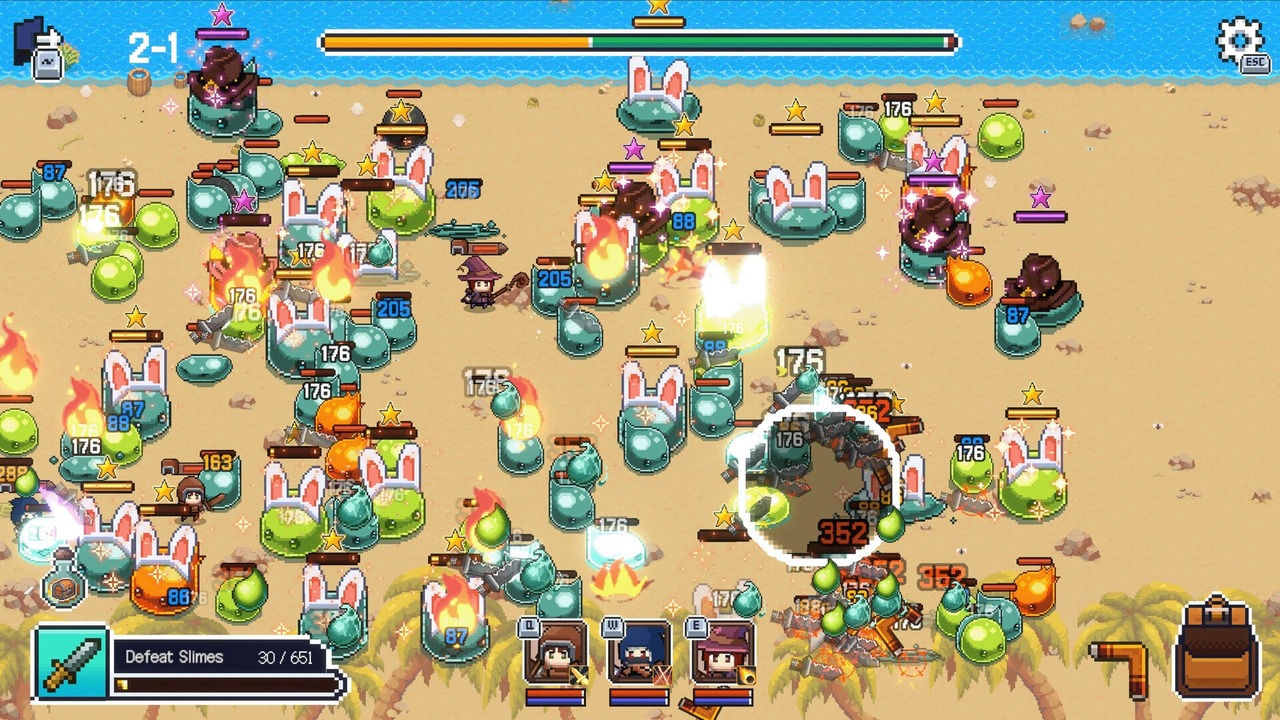
A useful card may solve an immediate problem without fitting the long-term plan. Taking it can keep the current run alive, but it may reduce later synergy. That tension gives each reward value beyond a simple ranking from weak to strong.
Relics work best when they encourage a behaviour. An effect tied to movement, timing or a particular card type asks the player to adapt. A passive numerical bonus is easier to use, but several similar bonuses can make different runs feel identical. The skill tree provides the stable part of progression. It should support experimentation without removing the challenge of early encounters. Players need enough freedom to try another route while still learning the basic rhythm of combat and resource use.
The interface must explain combined effects
A build can contain several effects that trigger from the same action. The interface should show their order and current value without requiring the player to remember every description. A short combat log or clear icon can answer why damage changed. Comparison is equally important at a reward screen. Players need to see whether a new card replaces, upgrades or simply joins the current set. That distinction affects draw consistency and may be more important than the card’s isolated strength.
Clear information does not remove discovery. The game can hide rare combinations while explaining the rules of each component. Players then feel responsible for finding the synergy, and unexpected results remain understandable after they appear.