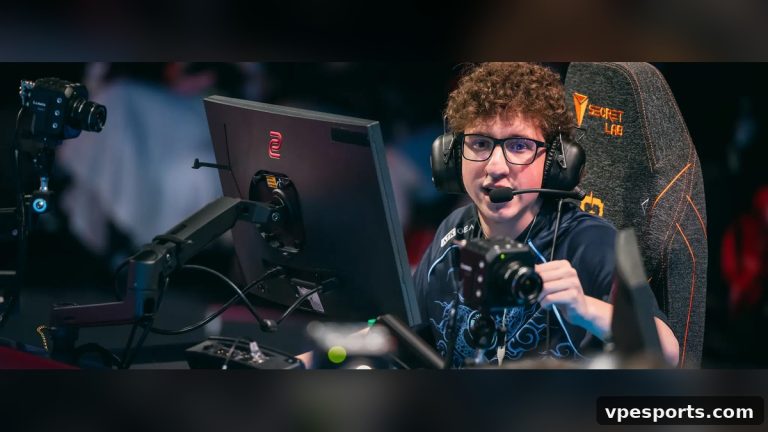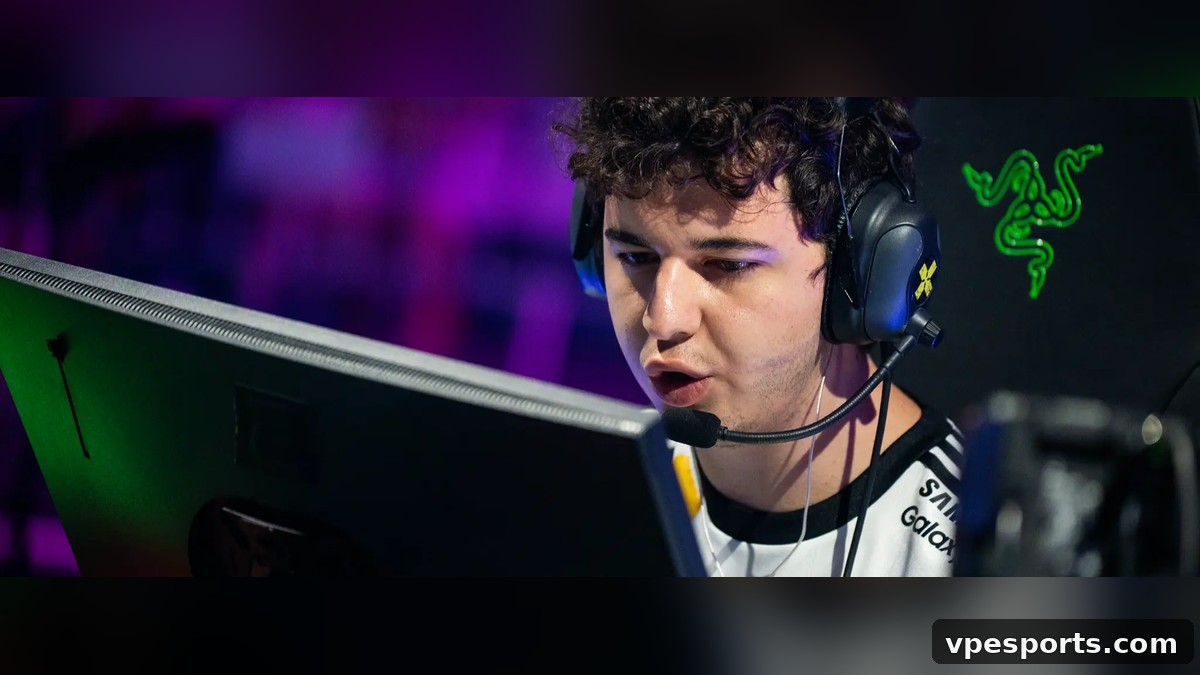
FUT Esports controller Eray “yetujey” Budak said his team must produce more unexpected solutions after Karmine Corp beat FUT 0-2 in the upper bracket final of VCT 2026: EMEA Stage 2. The August 28 series in Barcelona sent FUT to the lower bracket, although the team had already secured a place at VALORANT Champions 2026. For yetujey, that qualification did not explain the defeat. He said FUT wanted to win, but its established approach became too recognizable when Karmine Corp challenged it. The central issue, in his assessment, was adaptation. FUT had a plan, rules and aggressive compositions it trusted, but Karmine Corp found answers once those ideas were on display. Yetujey’s response was not limited to disappointment over one series. He identified practical areas where FUT needs to change: its map pool, its calls after timeouts and its ability to avoid repeating a pattern that opponents can anticipate.
The result also carried an emotional element for the Turkish player. Team Heretics supporters had backed FUT because a FUT victory would have preserved Heretics’ chance of reaching VALORANT Champions 2026. Yetujey apologized to those supporters and to Turkish fans, saying he was saddened after seeing the backing FUT received. At the same time, he rejected the idea that FUT’s secured Champions berth reduced the team’s motivation. He said the team approaches tournaments wanting to win and beat every opponent. Karmine Corp’s victory secured the organization’s first VALORANT Champions appearance and ended Heretics’ qualification hopes. FUT, meanwhile, moved into the lower bracket. That setting gives yetujey’s comments added weight: the team is not questioning whether it wants to compete, but whether it can respond when an opponent counters the first version of its game plan. His account of the loss frames flexibility as the difference between following familiar rules and finding a solution that fits the opponent in front of them.
FUT’s plan became easier to counter
Yetujey said Karmine Corp repeatedly caused problems for FUT because KC could counter the team’s preferred style. He compared that challenge with Team Heretics, another opponent he described as capable of disrupting FUT’s game plan. In his view, the series showed that a team cannot keep applying its original rules unchanged when the opponent plays differently. “Karmine Corp are always good against us. It’s like Heretics, because they always counter our game plan, and Karmine Corp did the same today,” yetujey said. “Sometimes you can’t follow your rules; you just need to adapt to the enemy. Karmine Corp play a different style, and we just couldn’t adapt.
They just beat us.” He also credited Karmine Corp’s improvement since Stage 1. Yetujey said the coaching change appeared to give the roster more confidence and freedom in the game. He specifically said N4RRATE and LewN were very good in the series, describing their individual impact in direct terms. That assessment did not shift responsibility away from FUT. Yetujey said FUT can show the level it displayed at Masters and in Stage 2, making the problem primarily about the team’s own execution and response. The loss therefore became a clear example of the adjustment he believes FUT must make. A prepared structure can be useful, but it cannot become a script that opponents recognize and counter. Yetujey’s emphasis was on giving the team room to react rather than continuing with a call simply because it fits the original plan.
His examples of predictability were specific. Yetujey said FUT should improve its map pool because the team had not shown Abyss. He also said Sunset changes because FUT’s composition there is more aggressive. After a first game, he believes opponents can understand that tendency and expect FUT to play aggressively. Timeouts were another concern. Yetujey said FUT’s decisions after timeouts were especially poor because the team regularly went for ultimate-based rounds, creating a cue for opponents. He pointed to a Lotus B attempt in which FUT ran at B with an Omen ultimate.
Karmine Corp triple-peeked B and fought them, and yetujey said the round was over after ten seconds. The example supported his wider point that even a normal ranked player can anticipate an ultimate round after a timeout when ultimates are available. The practical lessons from yetujey’s assessment are: – Expand the map pool, including the option FUT has not shown on Abyss. – Avoid making aggressive compositions on Sunset an easily expected response after an opening game. – Change post-timeout decisions so an available ultimate does not automatically signal an ultimate-based round. – Allow more freedom when the opponent has already read the team’s usual rules. “We should do something more unexpected,” he said. “We need to adapt our game style. We can’t keep trying to do something we’ve already tried.” For yetujey, being less predictable is not a call to abandon structure altogether; it is a call to recognize when structure has become visible and to choose a different answer.
Liquid is FUT’s lower-bracket opponent
FUT will face Team Liquid in the lower bracket final. The winner will advance to a grand-final rematch with Karmine Corp, the team that defeated FUT in the upper bracket final. The matchup supplies a direct competitive test for the changes yetujey described, but it also follows comments he made before Liquid had advanced. At that time, yetujey spoke positively about both possible lower-bracket opponents. He nevertheless highlighted Ayaz “nAts” Akhmetshin, saying he likes to play against the Team Liquid player and has a great deal of respect for him. “If Liquid win, it will be okay for us as well, because I always like to play against nAts,” yetujey said. “I have so much respect for him.” The lower-bracket final is consequently more than a route toward another match with KC. It places FUT against an opponent yetujey openly respects while requiring the team to show that its review of the Karmine Corp defeat can translate into decisions during the match. FUT’s stated aim remains to reach the Grand Final, but its own player has defined the standard for doing so: adapt when the expected option has stopped working.
- Map pool: yetujey said FUT should improve its map pool and noted that the team had not shown Abyss.
- Sunset approach: he said FUT’s more aggressive composition can become expected after opponents see it in an opening game.
- Timeout calls: he said FUT often uses ultimate-based rounds after timeouts, allowing opponents to anticipate the decision.
- Adaptation: yetujey said FUT needs more freedom and unexpected solutions instead of repeating ideas opponents have already read.

| Series context | Confirmed detail |
|---|---|
| Upper bracket final | Karmine Corp defeated FUT Esports 0-2 in VCT 2026: EMEA Stage 2 on August 28 in Barcelona. |
| Champions impact | Karmine Corp secured its first VALORANT Champions appearance, while Team Heretics’ qualification hopes ended. |
| FUT’s next match | FUT will face Team Liquid in the lower bracket final; the winner advances to a grand-final rematch against Karmine Corp. |
| Player perspective | Yetujey said FUT wanted to win despite already having secured its VALORANT Champions 2026 berth. |
Yetujey’s remarks turn the Karmine Corp loss into a useful diagnosis rather than a simple verdict on FUT’s level. He credited KC’s ability to counter FUT while also accepting that FUT must take responsibility for its own responses. The clearest supported takeaway is the connection between preparation and freedom: FUT needs a broader set of options, but it also needs the confidence to depart from familiar rules when opponents are waiting for them. That is the standard yetujey has set for the team’s next performance.