
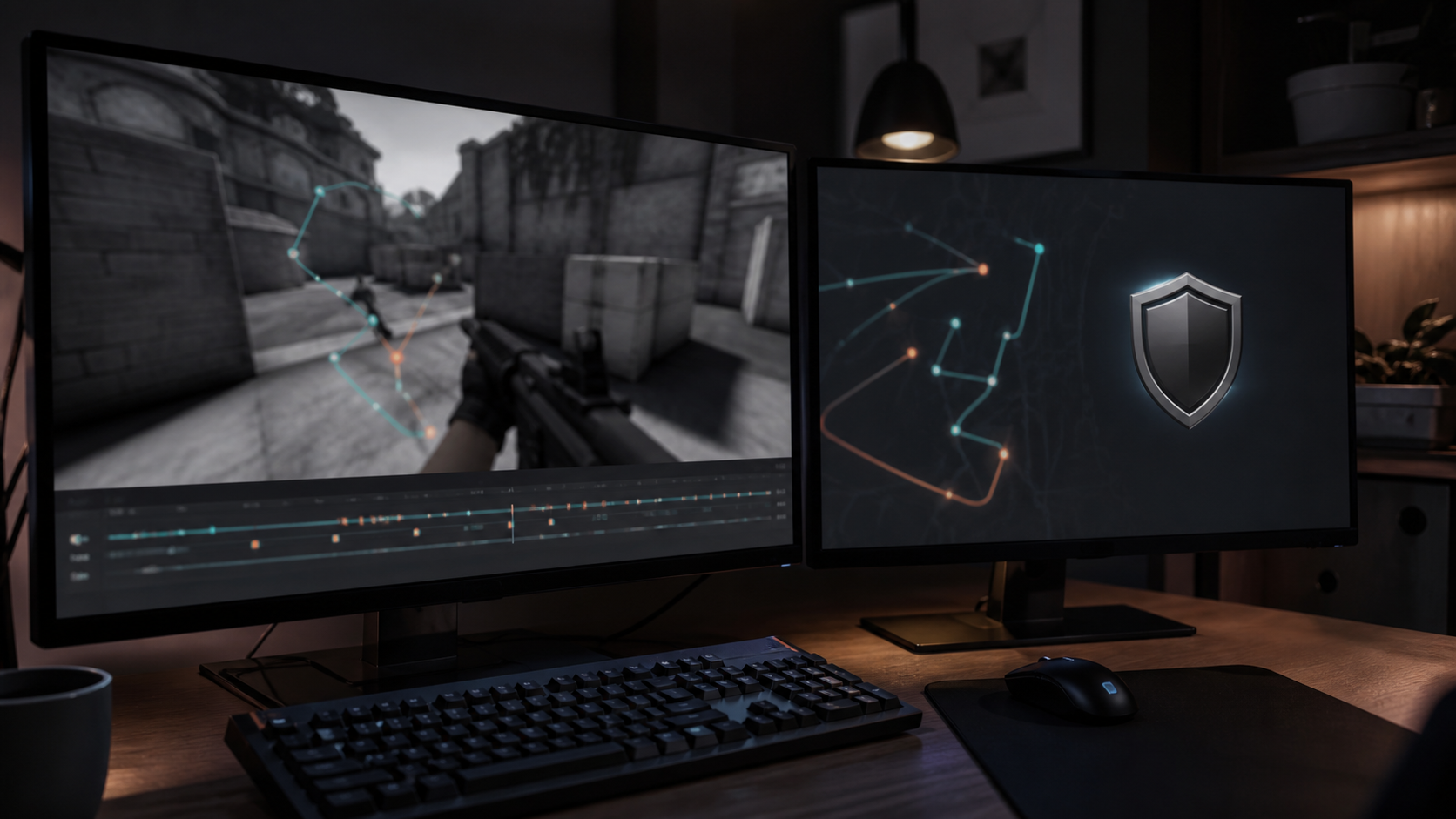
Valve is reportedly preparing to launch a new version of the Overwatch anti-cheat review system for Counter-Strike 2. The information comes from prominent Valve insider Gabe Follower, who detailed the upcoming system in a recent YouTube video. The new Overwatch will operate independently from the game client, marking a significant architectural shift from its predecessor in CS:GO.
According to the insider, the system is designed to strengthen the fight against cheaters by allowing selected community members to review suspicious gameplay moments. Unlike the integrated version that existed in CS:GO, this new implementation will function as a separate program or website where flagged moments are sent for analysis.
Gabe Follower explained that the developers are currently preparing Overwatch for a public release. Access to the system will be strictly controlled through an invitation mechanism. Each invite can be used only once and is tied to a single account, preventing widespread distribution or misuse of the review privileges.
The insider noted that the system will closely resemble the Overwatch model used in CS:GO, where trusted players evaluated demo footage to identify potential cheaters. However, the new version introduces important operational differences. Valve is strongly recommending that participants do not share what they observe during reviews with other people. This measure is intended to prevent cheat developers from reverse-engineering the logic that VACnet uses to detect suspicious activity.
One significant change from the CS:GO era is that individual verdicts rendered by Overwatch reviewers will not directly affect the suspected player. Instead, the insider stated that the verdicts will probably be used to improve the training of VACnet, Valve’s machine learning anti-cheat system. This represents a shift toward using community input as training data rather than as a direct ban mechanism.
How the New Overwatch Differs from the CS:GO Version
The original Overwatch system in CS:GO was a community-driven initiative where experienced players with high Trust Factor scores reviewed reported gameplay demos. Reviewers would watch anonymized footage and submit a verdict on whether the suspect was using aim assistance, wallhacks, or other external software. Sufficiently consistent guilty verdicts could lead to a permanent game ban.
The new system for Counter-Strike 2 takes a fundamentally different approach. By operating independently from the game client, Overwatch becomes a standalone tool rather than an integrated feature. The insider specifically mentioned that there will be a third-party program or website dedicated to the review process. This architectural change may allow Valve to update and maintain the system more flexibly without requiring full game patches.
The shift in how verdicts are used is equally notable. Rather than directly punishing suspected cheaters, the community reviews will serve as labeled data to refine VACnet’s detection algorithms. This approach could help Valve scale its anti-cheat efforts more effectively, as machine learning models improve with larger and more accurate training datasets. The insider also suggested that public sharing of Overwatch cases on platforms like YouTube will likely be discouraged or prevented, further protecting the integrity of the detection methods.
- The new Overwatch will operate as a standalone program or website, independent from the CS2 game client.
- Access will be strictly invite-only, with each invitation usable only once and tied to a single account.
- Reviewers are strongly advised not to share case details with others to protect VACnet’s detection logic.
- Individual verdicts will not directly affect suspected players; instead, they will be used to train and improve VACnet.
The insider did not provide a specific release date for the new Overwatch system, stating only that Valve is preparing it for public launch in the near future. The exact implementation details remain unclear, including how invitations will be distributed and what criteria will determine reviewer eligibility. The CS:GO version relied on the Trust Factor system to select participants, but no confirmation has been given about whether a similar mechanism will be used for CS2.
The Legacy of Overwatch and Its Role in Counter-Strike
Overwatch was a popular and widely discussed feature during the CS:GO era. It represented Valve’s effort to involve the community directly in maintaining competitive integrity. Selected reviewers needed to maintain a high Trust Factor score, which measured various behavioral and account-related signals to assess a player’s reliability. The system gave dedicated players a tangible way to contribute to the health of the game beyond simply reporting suspected cheaters.
The transition to Counter-Strike 2 brought significant technical changes, including a new engine and updated networking architecture. These changes likely necessitated a rethinking of how community-based anti-cheat review could function. The decision to decouple Overwatch from the game client and focus its output on machine learning training suggests Valve is pursuing a more scalable and automated approach to cheat detection while still leveraging community expertise.
Gabe Follower’s track record as a Valve insider adds weight to the report, though the information remains unconfirmed by Valve officially. The developer has not made any public announcement regarding the new Overwatch system. Until an official statement is released, the details should be treated as a credible but unverified leak about Valve’s ongoing anti-cheat development efforts for Counter-Strike 2.
| Feature | CS:GO Overwatch | New CS2 Overwatch (Reported) |
|---|---|---|
| Integration | Built into the game client | Standalone program or website |
| Access method | High Trust Factor requirement | Strictly invite-only, single-use invites |
| Verdict impact | Could lead to permanent game ban | Used to train VACnet, no direct player impact |
| Case sharing | Allowed on platforms like YouTube | Strongly discouraged to protect detection logic |
The reported development of a new Overwatch system signals Valve’s continued investment in anti-cheat measures for Counter-Strike 2. By redesigning the community review process to function independently and feed directly into VACnet’s machine learning training, the developer appears to be pursuing a more modern and potentially more effective approach to combating cheaters. The strict invite-only access and emphasis on confidentiality further indicate a deliberate strategy to stay ahead of cheat developers.
As with all unconfirmed reports, the CS2 community will need to wait for an official announcement from Valve before the full scope and timeline of the new Overwatch system become clear. The information provided by Gabe Follower offers a detailed preview of what players might expect, but the final implementation could differ from the current description.


Comments