
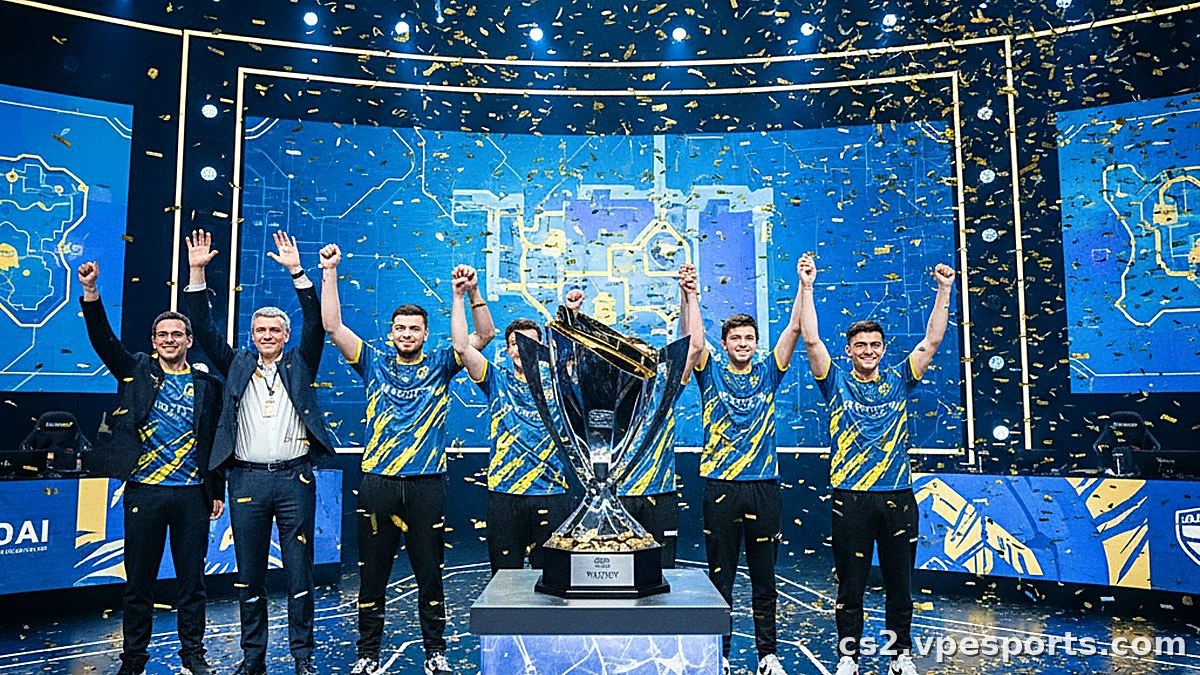
Team Vitality’s Performance Manager, Jack Birtwhistle, has offered a rare and candid look into the psychological challenges that accompanied the end of one of Counter-Strike’s most dominant runs. In an extensive interview, he detailed how the team grappled with a loss of humility after their historic 37-series winning streak was broken in 2025.
Birtwhistle, who joined the French organization in November 2023 with a background in professional rugby, has been a key architect of the support structure behind Vitality’s era-defining success. His work focuses on the mental and performance aspects that help a team of elite players consistently compete for and win titles, a role he describes as making a ‘1% difference’ to bring out the best version of the roster.
This run eventually extended to a staggering 37-series winning streak, excluding best-of-one matches, which comprised 31 best-of-three and six best-of-five series victories at major events between February and July 2025.
The streak was finally halted with a 2-0 loss to MOUZ in the semi-finals of IEM Cologne. This defeat not only ended the series run but also marked the conclusion of a seven-title consecutive championship streak for the organization. Reflecting on that period, Birtwhistle identified a critical internal failure that made the fall particularly difficult to manage.
The Struggle with Humility After Perfection
Birtwhistle was direct in his assessment of the team’s mindset when their invincibility came to an end. He stated that the biggest challenge during that time was a lack of sufficient humility. The team’s standard had become perfection itself, and the expectation was that they were flawless in Counter-Strike, rarely losing a map or a best-of-three series.
When the losses began to happen, frustration grew among everyone. The performance manager explained that the team struggled immensely to handle the required humility and to accept their new reality as a team that was no longer invincible. The psychological shift from being unbeatable to facing defeat created a difficult environment, and Birtwhistle noted that no amount of mental performance coaching can compensate for poor individual execution or a game plan that isn’t working. He emphasized that while he can guide players, he cannot take the steps for them, a philosophy he likens to a sherpa helping someone up a hill.
This period of adjustment was a stark contrast to the structured, process-oriented approach that had defined their rise. To build that winning culture, Birtwhistle had introduced several concepts borrowed from his rugby experience. One key method was ‘theming,’ where a defining concept is chosen for a season. For their dominant 2025 run, the team adopted the theme of ‘The Man in the Arena,’ inspired by the Tom Brady documentary. The core message was to ignore criticism from outsiders who have not experienced the pressure of competition and to focus entirely on their own process and performance.
The theme was chosen partly because of the parallels between the New England Patriots’ dynasty and a Counter-Strike season. Just as a legendary sports team faces years of playoff losses and injuries alongside championships, a CS team will win and lose trophies. The goal was to define success not by winning everything, but by the discipline and dedication shown every single day, a concept captured by Brady’s quote about being a Super Bowl champion on the first Monday of pre-season.
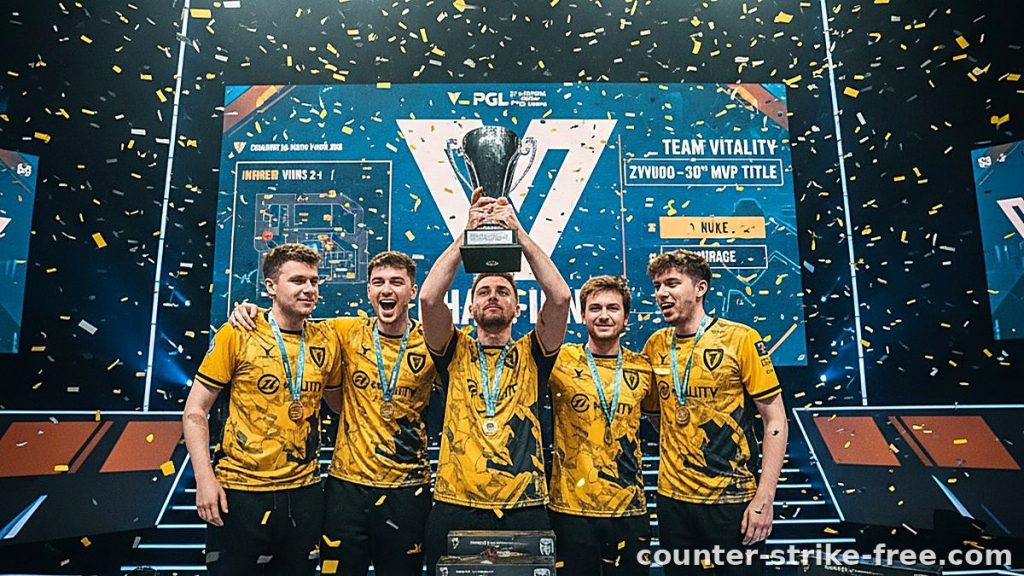
- A ‘traffic light’ check-in system using a simple form where players rate different categories as green, yellow, or red to quickly identify and address issues.
- Values dinners and structured team conversations to openly discuss challenges, such as struggles with adaptability or maintaining a team-first mentality.
- A focus on ‘periodization’ to plan when the team should peak for the most important events of the season.
The structures that built the dynasty are now being refined as Vitality looks to return to championship form. After a quarter-final exit at the Cologne Major and an early elimination from the online stage of BLAST Bounty Season 2, the team’s staff took time to reflect on their methods.
A New Structure for the Esports World Cup
Heading into the Esports World Cup, Birtwhistle and the coaching staff, including Rémy “XTQZZZ” Quoniam and MaT, are implementing a revised approach to player accountability. The team recognized that they had perhaps placed too much trust in the same system without pushing the players harder on their ‘do your job’ value, particularly after extended breaks.
Birtwhistle explained that the staff missed an opportunity to be more explicit about the trade-off for time off. The expectation was that players would return ready to perform at their best, but the team’s individual form was not at its peak leading into the Cologne Major. The new plan involves managing what Birtwhistle calls ‘the gray’—the unstructured time between scheduled practices and meetings. The solution is to put more structure into the calendar and hold players more accountable for their work during those periods, creating better connection and alignment by doing the work together rather than simply expecting it to be done independently.
This refined structure will be put to the test immediately. The Esports World Cup, taking place in Paris, France, from August 12 to 23, has already defined its groups and opening matchups. Vitality is set to face 100 Thieves in their first match of the competition.

| Concept | Description |
|---|---|
| Theming | Adopting a season-defining concept, such as ‘The Man in the Arena’ from the Tom Brady documentary, to unify the team’s focus on process over external criticism. |
| Traffic Light System | A periodic Google form check-in where players rate team values and map feelings as green, yellow, or red to quickly surface and address issues. |
| Managing the Gray | A new initiative to structure previously unscheduled time in the calendar, increasing player accountability and ensuring work is done collectively. |
Jack Birtwhistle’s insights reveal that the foundation of Vitality’s historic success was not just firepower, but a deeply considered performance framework. The end of their 37-series streak exposed a human vulnerability to a loss of humility, a challenge the organization is now actively addressing with a more structured and accountable environment. As they prepare to debut at the Esports World Cup against 100 Thieves, the team is not discarding the system that brought them nine titles and back-to-back Major championships, but rather evolving it to ensure their next era of dominance is built on an even more resilient foundation.
Comments