
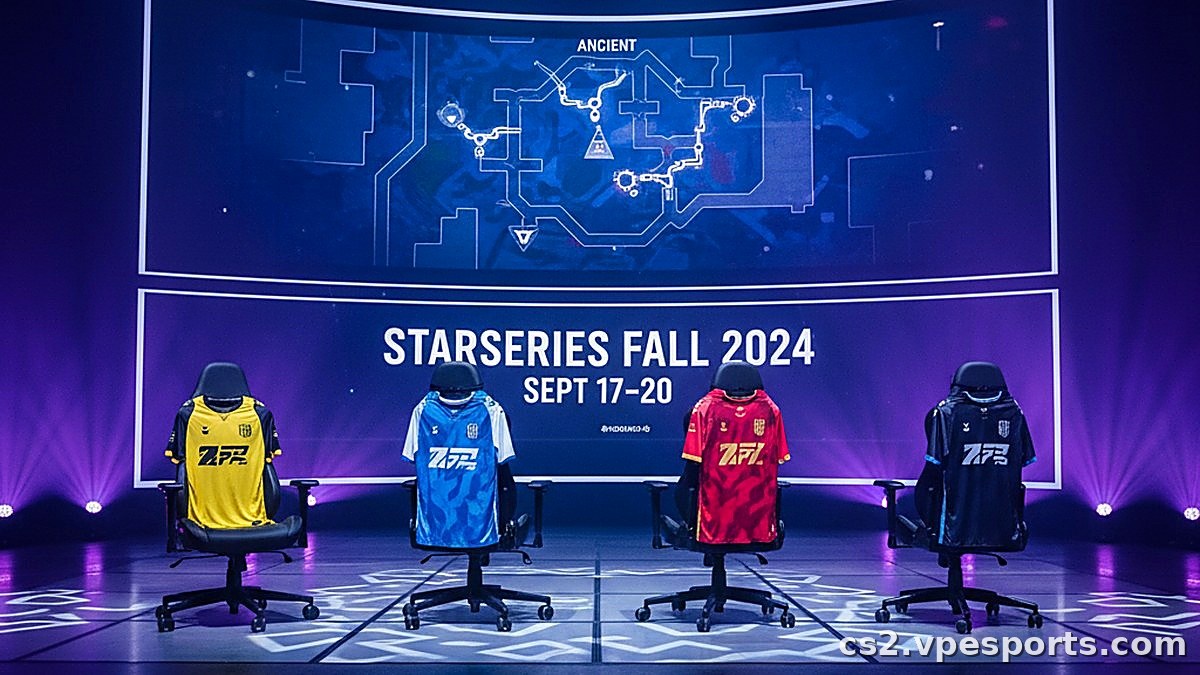
The four-day sprint format of StarSeries Fall, running September 17–20, has already forced the four directly invited teams to rethink their bootcamp schedules. With only eight main event slots and a $500,000 prize pool, the tournament’s compact structure means that any team dropping a single best-of-three series could be packing their bags before the weekend. Team Vitality, Natus Vincere, MOUZ, and FURIA have accepted their invitations, but the remaining four berths will be decided through closed qualifiers that are yet to be fully detailed.
FURIA’s spot is intriguing because it throws a South American squad into a European-dominated field where map vetoes often decide the outcome before the first pistol round. The Brazilian roster has historically struggled to maintain discipline on slower, utility-heavy maps like Ancient, which could become a liability if their opponents force them into those picks. MOUZ, meanwhile, has been quietly building one of the most adaptable map pools in the region, capable of shifting between the structured pace of Nuke and the loose aim-duels of Mirage without losing cohesion.

The Qualifier Path: High Risk, Limited Prep Time
The closed qualifiers represent the only route to the main stage for teams that missed direct invites, and the format will likely mirror past StarSeries events with double-elimination brackets and Bo3 series. Organizations hovering just outside the top eight in the Valve Regional Standings will need to win multiple consecutive series to secure a spot. The compressed timeline also means that qualifier winners will have minimal time to study their main event opponents or adjust to the venue environment before matches begin on September 17.
Past StarSeries qualifiers have produced surprise runs from rosters that later broke into the top ten, and this year’s field is expected to include a mix of established second-tier teams and regional champions from Europe, North America, and Asia. Teams with specialized map strategies—such as a signature setup on Vertigo or a well-rehearsed CT-side on Anubis—could exploit opponents who lack preparation time for niche picks.
Format Uncertainty and the Four-Day Crunch
StarLadder has not yet confirmed the exact format for the main event, but the four-day duration leaves little room for a traditional GSL group stage followed by a full playoff bracket. A simpler structure, possibly a single-elimination bracket or a round-robin group stage, is more likely given the time constraints. Regardless of the format, the absence of a losers’ bracket means that every series carries elimination stakes from the opening round.
- Main event runs September 17–20 with eight teams.
- Direct invites: Vitality, NaVi, MOUZ, FURIA.
- Four slots open through closed qualifiers (dates TBD).
- Prize pool totals $500,000.
Invited Teams: Roster Context and Map Pool Dynamics
Team Vitality enters as one of the most structurally sound squads in the world, with a system that maximizes ZywOo’s impact in post-plant scenarios and mid-round clutches. Natus Vincere, despite ongoing roster instability, retains a core that can dominate on maps where they establish early round control through their aggressive CT-side setups. MOUZ has built a reputation for punishing opponents on Inferno and Overpass through methodical utility usage and disciplined rotations. FURIA’s chaotic, high-tempo style can dismantle even well-drilled opponents if they win the opening duels, but the compressed schedule leaves little room for recovery if their aggression backfires.
| Team | Region | Key Map Strength |
|---|---|---|
| Team Vitality | Europe | Post-plant execution on Nuke |
| Natus Vincere | Europe | Early round control on Mirage |
| MOUZ | Europe | Utility-heavy setups on Overpass |
| FURIA | South America | High-tempo entries on Inferno |
| TBD (Qualifier 1) | Various | To be determined |
| TBD (Qualifier 2) | Various | To be determined |
| TBD (Qualifier 3) | Various | To be determined |
| TBD (Qualifier 4) | Various | To be determined |
The qualifier schedule has not been announced, meaning the full main event field will likely not be finalized until late August. The four directly invited teams have already begun their preparation cycles, but the compressed timeline means that qualifier winners will have little more than a week to adapt. StarLadder’s decision to cap the main stage at eight teams ensures that every slot is earned, and the $500,000 prize pool guarantees that every series matters from the opening round.


Comments